10/Aug/2023
The organization highlights the need for Amazonian countries to have defined actions involving the demarcation of indigenous lands, titling of quilombola territories and the creation of protected areas.
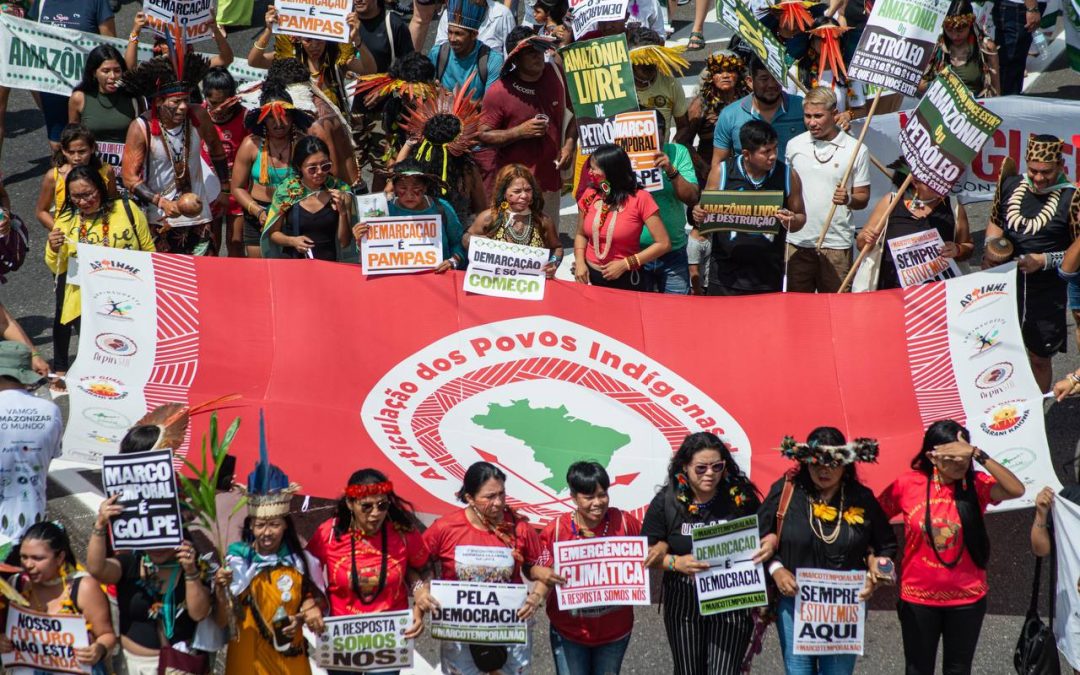
The eight presidents of the member states of the Amazon Cooperation Treaty Organization (ACTO) signed last Tuesday, August 8th, the Letter of Belém . The Letter is the main document of the Amazon Summit, which ends this Wednesday (09/08), in the capital of Pará. The Articulação of the Indigenous Peoples of Brazil (Apib), a national organization of reference of the indigenous movement, considers the Letter of Belém frustrating and demands concrete goals for the demarcation of indigenous lands.
“The document should be more ambitious. We understand there is a diversity of perspectives involving eight countries, and we recognize that political commitments were made, but the absence of specific and objective goals related to indigenous peoples and the environment is frustrating”, says Kleber Karipuna, executive coordinator of Apib.
Among the demands, Apib highlights the need for the Governments to define actions to address the point of no return in the Amazon (a term used by specialists to refer to the point at which the forest loses its ability to regenerate itself), which involves the demarcation of indigenous lands, titling of quilombola territories and the creation of protected areas. In addition to the monitoring and protection of territories and policies to support the sustainable use of those territories.
The indigenous movement also considers as disappointing the suspension of the announcement of demarcation of two indigenous lands during the Amazon Summit, as reported in the newspaper Folha de São Paulo . According to the report, the territories to be demarcated would be the Rio Gregório Indigenous territory, in Tarauacá (AC), and Acapuri de Cima, in Fonte Boa (AM). They are part of a list of 13 indigenous lands that are ready to be homologated , which was presented by the working group of Indigenous Peoples of the Transitional Government, of which Apib was part.
“The Government included the homologation of these 13 territories as part of the goals of the first 100 days of government. This goal was not met and, for the Summit, there was an expectation that other territories would be announced. The delay in this process has concrete Impacts on the indigenous peoples who are dealing with violence on a daily basis ”, emphasizes Dinamam Tuxá, who is also the executive coordinator of Apib.
Assembly of the Peoples of the Earth for the Amazon
Indigenous leaders from Apib and the Coordination of Indigenous Organizations of the Brazilian Amazon (Coiab) were in Belém for the Assembly of Peoples of the Earth for the Amazon , held between August 4th and 8th.
The Assembly was part of the political efforts of the indigenous movement to influence the IV Meeting of Presidents of the Signatory States of the Amazon Cooperation Treaty Organization (ACTO), Amazon Dialogues and the Amazon Summit.
During the Assembly, protection policies for isolated peoples were discussed, threats of exploitation by large mining companies and the oil industry, demarcation of ancestral territories, in addition to the resumption of the “time frame” case in the Federal Supreme Court (STF) (This would deny the claims of Indigenous communities to their territories if the communities cannot show that they were present on their lands when the 1988 Constitution was enacted).
On August 7, indigenous organizations in the Amazon published a document, “Letter from the Indigenous Peoples of the Amazon Basin to Presidents” . Delivered to the Amazonian presidents, the letter highlights the importance of dialoguing with the Indigenous movement to stop and solve the global climate crisis.
“Without us, there will be no Amazon; and, without it, the world as we know it will no longer exist. Because we are the Amazon: its land and biodiversity are our body; its rivers flow in our veins. Our ancestors not only preserved it for millennia, but also helped to cultivate it”, says an excerpt from the document.
30/Jun/2023
Brasilia – DF, Brazil
June 30, 2023
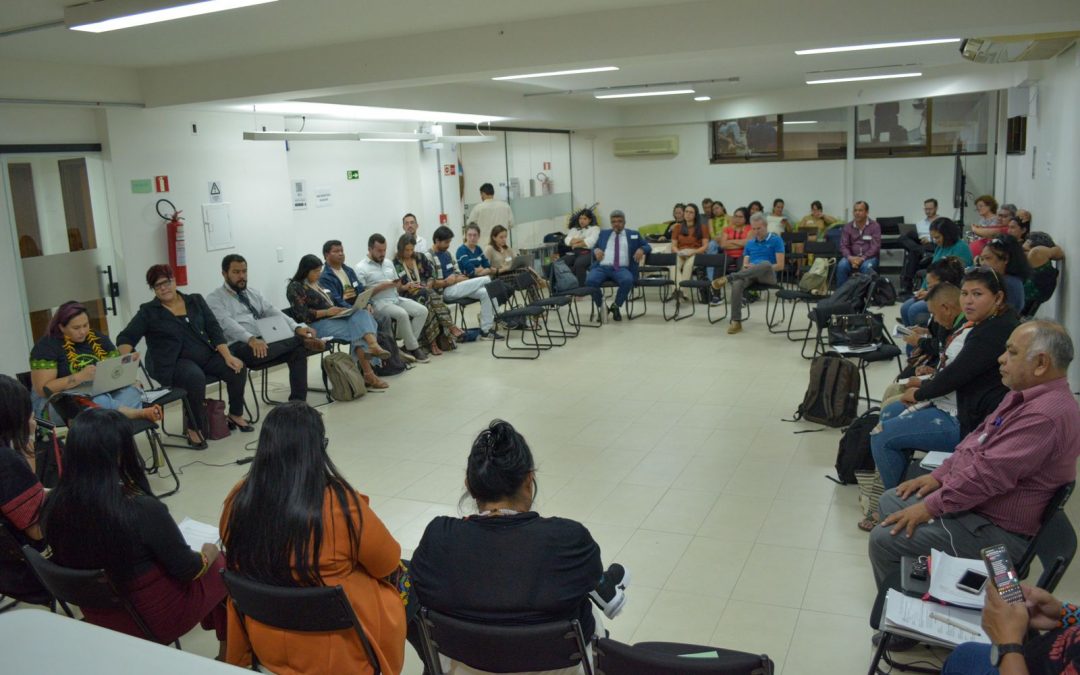
1. We, Indigenous peoples and organizations and allies who met in Brasilia from June 28th to 30th, 2023, with the objective of evaluating and promoting a diagnosis of the construction process and deliberations regarding the holding of the Amazon Summit, which will take place in Belém – PA on the 8 and 9 of August 2023, after the Amazon Dialogues (4, 5 and 6 of August), and which intends to produce a consensus position regarding the forest to be presented in future global debates on climate action and the protection of biodiversity.
2. In view of the aforementioned proposal, we insist that the Indigenous peoples of the Amazon Basin, as true experts, deep connoisseurs and protectors of forests, still do not have the necessary and indispensable conditions to effectively participate in the processes of dialogue, proposition and construction of the aforementioned Summit.
3. We consider that dealing with the Amazon agenda without the effective participation of the Indigenous Peoples who inhabit it, demonstrates the non-recognition of our lives and the roles we play in favor of the maintenance and defense of the forests. Once again, we are faced with debates and construction of proposals about our territories without our guaranteed participation, which reveals the recurrent colonialist practice that seeks to silence our protagonism, while supplanting our voices and autonomy in decision-making spaces.
4. Before this scenario, we reaffirm our self-determination and demand the effective inclusion in the spaces, as well as the articulation and construction, especially for the Amazon Summit, as Indigenous peoples of the entire Amazon Basin, holders of the practices and knowledge essential to the maintenance of the climate balance and biodiversity.
5. We announce the creation of the Working Group that seeks to represent national and regional Indigenous organizations from the 09 countries that make up the Amazon Basin (Brazil, Colombia, Peru, Ecuador, Venezuela, French Guiana, Guyana, Suriname and Bolivia) with the objective of advocating from the perspectives of Indigenous Peoples, the propositions of the Amazon Summit and all subsequent processes until COP 30 in 2025.
6. We, the Indigenous peoples and organizations of the five countries that are part of the Amazon Basin present at this meeting, demand that our own forms of territorial organization and traditional and original occupation, which are independent and prior to State recognition, be considered.
7. Discussing the future of the Amazon without Indigenous peoples is equivalent to violating our original rights and all the work we do for human life on the planet.
INDIGENOUS ORGANIZATIONS THAT SIGN THIS LETTER:
Coordination of Indigenous Organizations of the Brazilian Amazon – COIAB
Articulation of the Indigenous Peoples of Brazil – APIB
Articulation of Indigenous Peoples and Organizations of the Amazon – APIAM
Roraima Indigenous Council – CIR
Coordination of Organizations and Articulations of the Indigenous Peoples of Maranhão – COAPIMA
Organization of the Indigenous Peoples of Rondônia and Northwest Mato Grosso – OPIROMA
Articulation of the Indigenous Peoples of Tocantins – ARPIT
Manxinerune Tsihi Pukte Hajene – MATPHA
Union of Indigenous Women of the Brazilian Amazon – UMIAB
Indigenous Council on Climate Change – CIMC
Confederation of Indigenous Nations and Peoples of the Eastern Cacho and Bolivian Amazon – CIDOB
Confederation of Indigenous Nationalities of the Ecuadorian Amazon – CONFENIAE
Organisatie van Inheemse Volken in Suriname – OIS
Association of Amerindian Peoples – APA
National Articulation of Indigenous Women Warriors of Ancestry (ANMIGA)
ALLY ORGANIZATIONS THAT SIGN THIS LETTER:
Avaaz
The Nature Conservancy Brazil – TNC Brazil
World Wide Fund for Nature Brazil – WWF Brazil
Amazonian Cooperation Network – RCA
Amazon Watch
Voices of Just Climate Action – VAC
16/Nov/2022
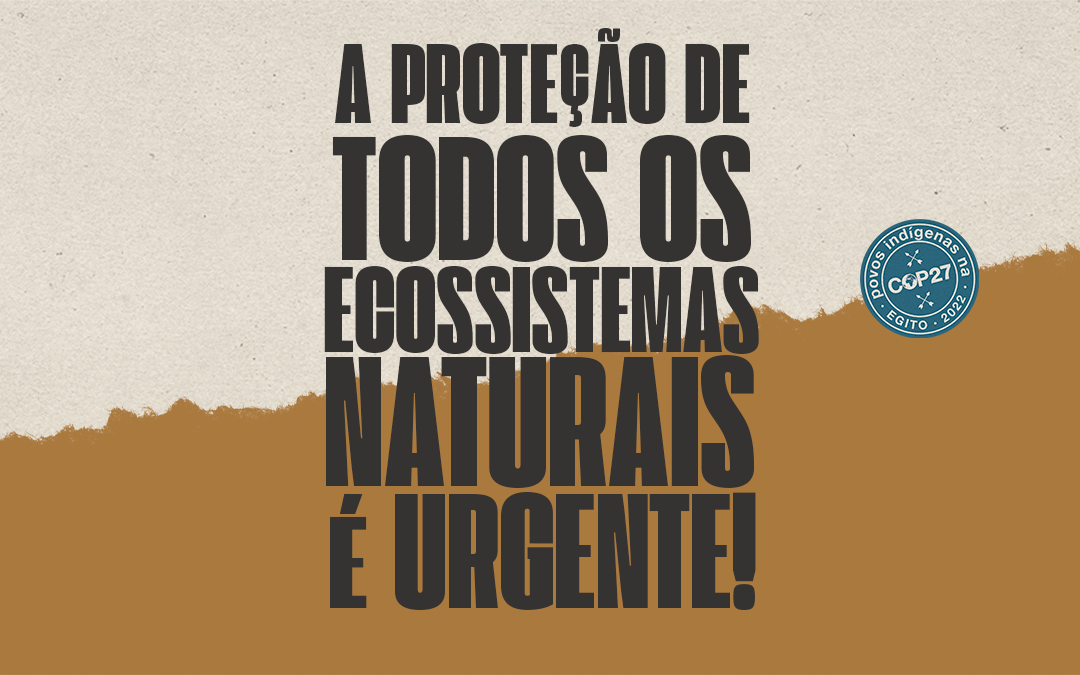
We, from the Brazil’s Indigenous People Articulation (APIB) and the National Coordination of Articulation of Rural Black Quilombola Communities (CONAQ) emphasise our position in defence of all natural ecosystems in Brazil. It is extremely important that climate negotiations take into account not only forests, but also savannas, grasslands, wetlands and all the different expressions of nature around the world. These landscapes also contribute to the fight against climate change and are part of the solutions for a more sustainable, inclusive and socially just world.
We urge the European Union to take the necessary and urgent measures to prevent imported deforestation, as well as the land conversion of other native wooded lands. This is crucial in the Cerrado context, as most of the soy exported to the European Union is produced in this highly threatened biome.
The Cerrado is not a degraded landscape; it is the world’s richest savanna. It is home to hundreds of indigenous people, cultures and territories, as well as to communities of quilombolas, geraizeiros* and other traditional cultures and populations. It is also the largest agricultural frontier in the world, bearing the largest impact on soy imported by Europe. Monitoring tools are available to ensure the protection of the Cerrado – all we need is political will!
The same goes for all other natural ecosystems that are not forests: Pampas, Pantanal, Caatinga, as well as for the Atlantic Forest. If the European regulation against deforestation restricts itself to only protecting forests, it will have very limited impact – as almost 75% of the Cerrado would remain unprotected. The same would happen to 76% of the Pantanal and of the Pampas and almost 90% of the Caatinga. Moreover, the European regulation would have a perverse effect, as it would intensify the pressure of destruction on these ecosystems and on its people.
Ultimately, by being restricted to forests, the European regulation against deforestation would have the opposite effect of its original objective. This is why this law must also include “native other wooded lands” (primary savannas), rather than being restricted to native forests only.
This would increase the Cerrado protection from 26% to 82%, Pantanal protection from 24% to 42% and of the Caatinga from 11% to 93%. The Brazilian Cerrado is losing nearly a million hectares each year, and this destruction is increasing. An eventual revision of the law to be discussed in 2 years will not prevent the loss of millions of hectares of valuable ecosystems, the emission of millions of tons of carbon, nor violent attacks on hundreds of traditional people and territories. Therefore, we reiterate our claim:
THE EUROPEAN LEGISLATION ON DEFORESTATION MUST ENSURE THE RESPECT OF THE HUMAN RIGHTS OF ALL INDIGENOUS, QUILOMBOLA AND TRADITIONAL PEOPLE, AND PROTECT THE ENTIRE CERRADO NOW, BY INCLUDING NATIVE AND PRIMARY “OTHER WOODED LANDS” IN THE SCOPE OF THE LAW TEXT TO BE APPROVED THIS YEAR.
For technical details on this topic, refer to the following documents:
Egypt, Sharm el Sheikh, 15 November 2022
ARTICULATION OF THE INDIGENOUS PEOPLES OF BRAZIL – APIB
14/Nov/2022
Apib note to the new Lula Government and the world
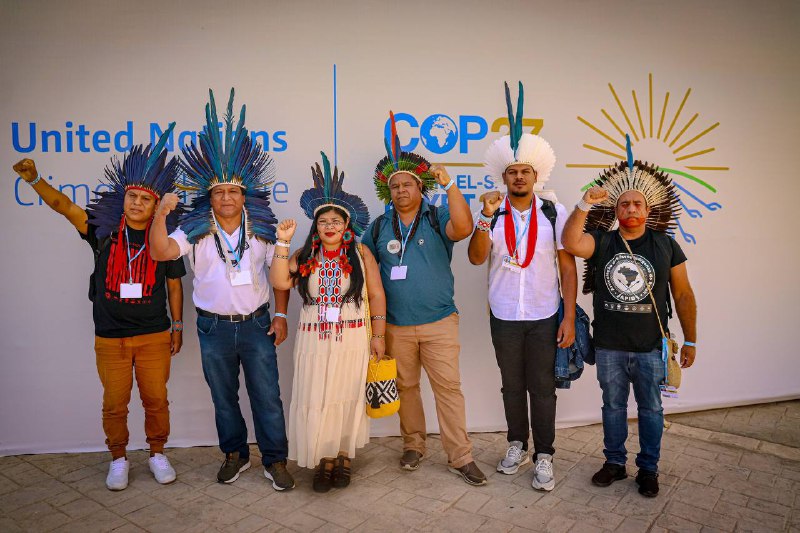
The Articulation of the Indigenous Peoples of Brazil (Apib), together with its grassroots organisations, is present at the 27th UN Conference on Climate Change to reaffirm what needs to be done to tackle the global climate crisis: RECOGNIZE AND GUARANTEE LAND TENURE RIGHTS OF OUR INDIGENOUS LANDS!
We are in Egypt with an Indigenous delegation composed of women, men and young people who live in all 6 ecosystems in Brazil. We occupy this space because we know that for our Lands and Lives to be protected, it is still necessary to demarcate the minds of humanity. Government representatives, activists, leaders of human rights and socio-environmental organisations need to understand and support indigenous peoples in this ancestral mission of protecting our MOTHER EARTH.
For the whole world, this is the COP that marks the return of Brazil to the discussion and agendas on climate change, human and socio-environmental rights, after the last four years of a genocidal and ecocidal misgovernment. President Lula’s election victory, supported by Apib and all its organisations, marks a new moment for Brazil on the national and international scale.
Without our territories, greenhouse gas emission rates would be even more drastic. In 2021 alone, Brazil recorded the highest increase in the dumping of CO2 into the atmosphere in the last 19 years. A total of 2.42 billion tons of these pollutants were dumped.
On the international scenario, the European Parliament is in the process of approving the anti-deforestation law (FERC) and needs to ensure traceability of commodities beyond forests. Demanding that commodities producing companies respect the preservation of our biodiversity and the rights of indigenous peoples is crucial at this time. EU law needs to demand traceability of commodities from all native and primary vegetation. Only then the consumer markets will be taking action for a chain free of deforestation and indigenous blood. The Cerrado, Caatinga, Pampa and Pantanal also need to be framed in the Law’s concept of vegetation, in addition to forests like Amazon and Atlantic Rainforest, regardless of the UN Food and Agriculture Organization’s (FAO) definition of forests.
Of the promise made by countries and philanthropic institutions at the last COP26, in 2021, to guarantee 1.7 billion for indigenous peoples and local communities, only 19% was applied. Of this amount, only 7% was allocated directly to indigenous peoples’ organisations, according to a report by the group of funders of this proposal. In other words, for another year, indigenous peoples continue being directly impacted by the climate crisis, but without direct access to financial mechanisms to strengthen their actions to fight it.
Faced with this scenario, we, the indigenous movement, represented by Apib, reinforce to president Lula and his entire transition team that
- The demarcation of the Indigenous Lands be placed as a central agenda in the fight against climate change by the Lula Government;
- The five Indigenous Lands, which have been fully demarcated and are only awaiting the homologation decree, be signed as an act of commitment with the indigenous peoples in the first days of the government;
- The Lula Government supports the inclusion of the Cerrado, Atlantic Rainforest, Caatinga, Pampa, Pantanal and Amazon biomes in the Anti-Deforestation Law of the Parliament;
- Commitment to ZERO deforestation;
- Response on the request made by Apib to the Transition Government to include the participation of indigenous leaders in the space of construction of the transition process for rediscussion on the indigenous agenda within the Government (Funai, Sesai…) and the recently created Ministry of Indigenous Peoples;
Egypt, Sharm el Sheikh, 14 November 2022
ARTICULATION OF THE INDIGENOUS PEOPLES OF BRAZIL – APIB
15/Sep/2022
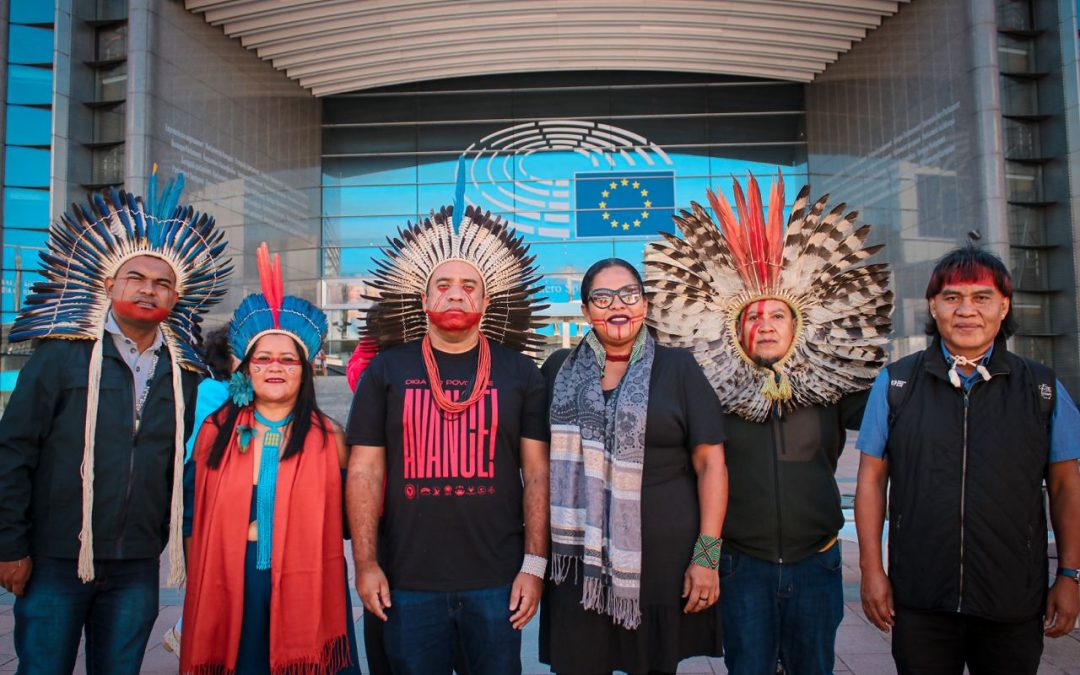
The European Parliament voted yesterday, September 13th, on the draft law for Forest and ecosystem-risk commodities regulation (FERC). Among the results of the debate, the inclusion of respect for international agreements and treaties on the rights of indigenous peoples stands out, as APIB had been defending since the beginning of the proposal of this legislation. However, another of APIB’s main demands, which was the protection of all ecosystems, regardless of the definition of forest cover, was not included.
The FERC law, also known as the deforestation-free products law, will include measures that oblige companies producing commodities to respect international human rights legislation, which includes guaranteeing the rights of Indigenous Peoples. The Members of the European Parliament (MEPs), meeting yesterday (13) in Strasbourg, France, voted on the draft law and reviewed the suggested changes. Among the proposals accepted by the MEPs, there is the prerequisite that Indigenous Peoples have guaranteed access to free, prior and informed consultation on the production of commodities, as advocated by Convention No. 169 of the International Labor Organization (ILO). No product may be imported into the European Union without the responsible company obtaining the consent of the affected Indigenous Peoples to install a commodity production activity close to their lands.
Another of the accepted proposals was the revision of the law annually (every year), instead of every two years as was initially foreseen. MEPs did not give in to pressure from business lobbies and leather was included in the group of commodities regulated by the regulation for deforestation-free products. This implies a major victory, as leather is one of the main products potentially responsible for deforestation imported by the European Union. In addition to all commodities considered by the first law proposal -beef, palm oil, soy, wood, coffee and derivatives (such as chocolate and furniture)- the regulation voted today also considers the traceability of deforestation in the pork, sheep, goat and poultry meat, as well as corn, rubber and paper products.
The important role played by financiers of commodity production chains, was also considered. MEPs included regulation for European banks and investors to not finance deforestation and human rights violations.
The European Parliament is aware that the creation of a law for deforestation-free products in European Union countries will not end deforestation. Commodities with a forestry risk that can be sold in markets other than the European one. Then, the European Parliament proposes a cooperation program between countries to apply measures to stop forest destruction. The MEPs proposed that the European Commission be responsible for drawing up maps that identify countries with high deforestation risks, in order to support international cooperation programs. Likewise, they insisted on the need for good governance within the affected countries by deforestation, as well as the protection of the rights of Indigenous Peoples, traditional populations and other people who depend on nature.
Parliament requested assistance so that small producers can comply with the rules established by the FERC law, among which they highlight, for example, the need for geolocation traceability of products. It is fair and necessary to build partnership and cooperation programs to help small producers make a transition to sustainable agricultural and livestock production.
In addition, the legislation will include access to independent and impartial justice bodies to oversee the impacts of deforestation caused by commodity production, but only on an administrative basis. Companies cannot be directly prosecuted by penal or criminal law through the mechanisms established by FERC. Furthermore, the Euro-parliamentarians rejected the request to include in the anti-deforestation law the need for compensation mechanisms for Indigenous Peoples affected by commodity production chains.
“What this law needs is to be stricter in the traceability of these products. Indigenous Peoples are not looking for compensation, we want measures to avoid the impacts and, in case of illegalities, criminal prosecution for companies and not only administrative penalisations”, explains Dinamam Tuxá, APIB coordinator.
Another of the most important demands that was left out was the protection of all ecosystemes – regardless of the FAO definition of forests applied in the FERC law. “In addition to what this law recognized, we would like a much more ambitious regulation, recognizing and protecting other ecosystems for the guarantee and protection of these territories also under threat from the advance of agribusiness”, says Tuxá. “We understand that the non-recognition of other ecosystems within this law will put even more pressure on deforestation outside the Amazon forests. This brings us concern because these are productive areas that are already in a lot of conflict and that, in many places in Brazil, agribusiness have drastically advanced over indigenous territories”. Protecting only some natural areas opens a gap for commodity production chains to be moved from one region to another without solving the deforestation problem. APIB insists on the need to review this point in the coming months of debate before final approval of the text.
The result of the vote was the last step in the elaboration of the text of the FERC law which was presented to the European Parliament in November 2021. However, the legislation can still undergo changes, as a result of negotiations between the European Parliament, the European Council and the European Commission. This process, known as “trilogs”, aims to conclude a final version of the legislation by the end of the year 2022, approximately. Only after the final approval by all member states of the European Parliament, the law can come into force.
09/Sep/2022
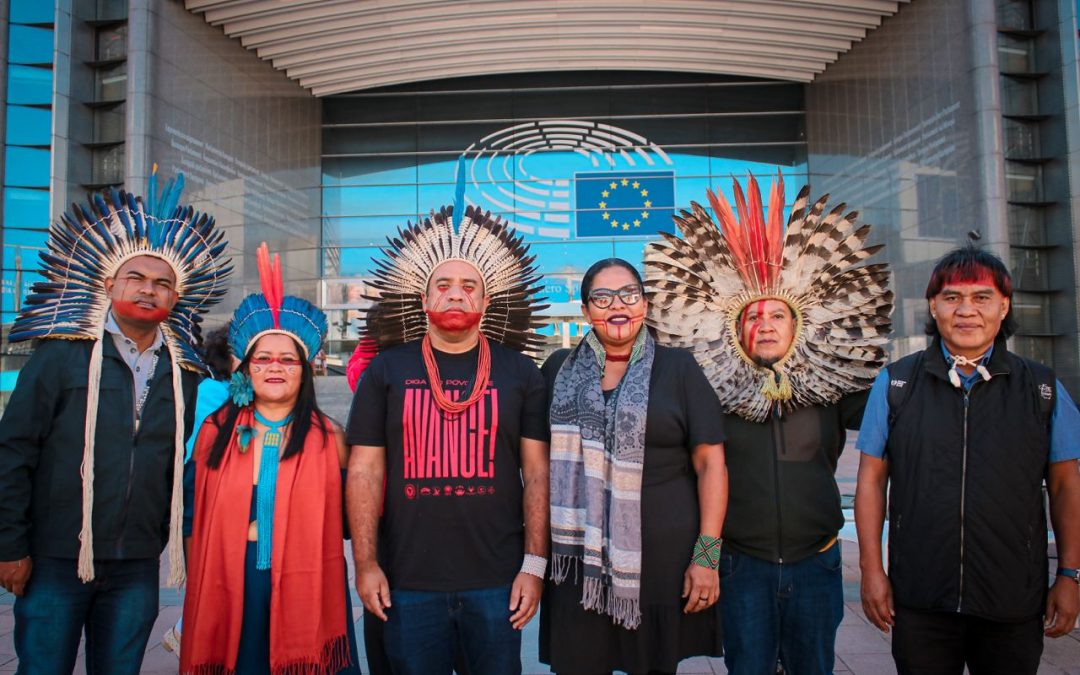
On September 13th, the European Parliament will vote on the Proposal for a regulation on deforestation-free products (FERC law), also called the Deforestation-free products law. APIB has been following the construction of the legislation since 2020 as it has some gaps that prevent from guaranteeing the effective protection of Indigenous Peoples against the pressure of commodity production.
The Articulation of Indigenous Peoples of Brazil (Apib) promotes a campaign to guarantee the rights of indigenous peoples in the FERC regulation, which will be voted on by the European Parliament on September 13th. With the campaign named “We are all ecosystems” (Somos Todos Biomas), the organization also seeks to include all Brazilian ecosystems in the new legislation.
The FERC law provides sanctions to minimize the risk of deforestation and forest degradation associated with products placed on the EU market. However, the definition of forest defined by FAO and considered by the legislation is very reduced and excludes a good part of biomes and natural areas, which would be left out of protection. Increasing the traceability of production chains only in some biomes announces a threat of displacement and intensification of commodity production in the unsupervised natural areas, which historically have already suffered such pressure.
In the case of Brazil, if the law is applied according to the current proposal, the Amazon forest would be the only biome with the largest protected forest area (84%) from the threats of illegal deforestation for the production of commodities, followed by the Atlantic Forest, Mata Atlántica, (71%). By contrast, only a small part of Cerrado (26%), Caatinga (10%), Pantanal (24%) and Pampas (11%) biomes would be considered as forest to be protected by Deforestation-free products law, according to data from MapBiomas.
The Indigenous Peoples of Brazil, which are distributed throughout all the country and located in all biomes, are already suffering today the pressure of commodity production through: 1) illegal invasion and deforestation of their lands; 2) violence, threats and killings of indigenous leaders and activists who struggle for environmental and indigenous rights; 3) socio-environmental pressure through deforestation, fires and the intensification of large-scale agricultural activities around Indigenous Lands with the use of pesticides that pollute lands and rivers.
According to a crossing data study carried out by APIB with the location of Indigenous Lands in Brazil and the IPAM database about the land-use changes in a buffer of 25 km distance around: 29% of the territory around the Indigenous Lands is deforested, while within indigenous borders there is only 2% of deforestation. The data also shows that most of the deforested areas around Indigenous territories are lands under permanent cattle pastures (producing meat and leather) and soybean production, but also sugarcane, rice or cotton stand out among other commodities.
As a result of the growing risk of environmental degradation caused by some productive sectors, the proposal for a regulation on deforestation-free products aims to minimize consumption of products coming from supply chains associated with deforestation or forest degradation, and increase EU demand for and trade in legal and ‘deforestation free’ commodities and products. This, in turn, is expected to reduce GHG emissions and global biodiversity loss.
Nevertheless, all biomes have the same importance in achieving an environmental balance and APIB requests, first of all, that all natural areas should be protected by this legislation. We also demand respect for international treaties and agreements that protect human rights and indigenous rights, in particular, to provide a greater guarantee for the protection of the Indigenous Peoples of Brazil. In this regard, National legislations become insufficient when governments such as the current one of Jair Bolsonaro, with an openly anti-indigenist position, risk the lives of the guardians of the forests and biodiversity. Even with the pressure of globalization and commodities production, Indigenous Peoples struggle to continue living in an interrelationship of respect and sustainability with the forest. For this reason, APIB asks for the European Parliament to consider a more comprehensive deforestation-free products law that claims the protection of all types of vegetation and the world’s biodiversity, the survival of Indigenous Peoples and traditional populations, as well as the global climate balance to guarantee a good life for current and future generations.