It is with profound sadness and outrage that I express my deepest and most sincere condolences to the family members of Firmino Silvino Prexede Guajajara and Raimundo Guajajara who at this moment are feeling the pain and sadness of losing a loved one to such cruelty, that made victims among the Guajajara People today. The Indigenous People lived in the villages Silvino (Cana Brava Indigenous Land) and Severino Descendência village (Lagoa Comprida Indigenous Land), both in the state of Maranhão, where, 35 days ago had already gone through the murder of Paulo Paulino Guajajara, who acted as a guardian of the forest.
I feel a mix of pain and anger toward yet another crime that hovers over my Guajajara people. This crime is a reflection of the escalation of hate and cruelty incited by the nefarious political spectrum of Jair Bolsonaro’s perverse and racist government, which continues to attack us daily, denying our right to exist and inciting the historical sickness that is the racism the Brazilian people still suffers.
We are adrift, without the protection of the Brazilian state, whose constitutional role is being neglected by the current authorities. The federal government is an outlaw government, criminal in its political practice, and operates in a genocidal manner to expel us from our territories, butchering our culture, bleeding our roots.
The state of tension, insecurity and persecution against the Indigenous Peoples of Brazil only increases. We are being attacked, decimated, and it is always worth remembering that an attack on Indigenous life is an attack on humanity itself, since, Indigenous Peoples from around the world, are the defenders of 82% of all global biodiversity.
No more bloodshed!
Enough of impunity!
We demand action be taken immediately and justice to be enforced!
We demand that the right authorities clarify the facts by rigorously punishing these criminals so that the sense of impunity no longer motivates criminal actions against our people, brutally striking Indigenous lives down.
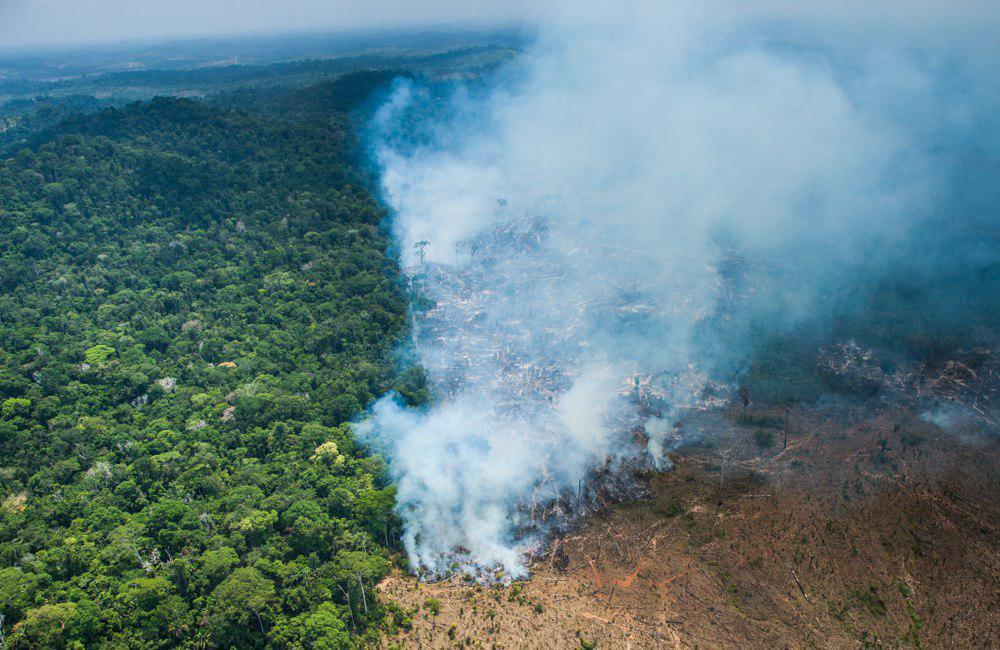
The Spacial Research Institute (Inpe) publicized on the last November 18th new data confirming the AMazon deforestation increasing in 29.5% from August 2018 to July 2019, reaching a 9.762 km² area. It’s about the worst increasing percentage from the last two decades.
This is the largest deforestation rate on the last 10 years, an alarming data, a harmful harvest, fruit of the anti-environment speech and policy from the current government, On the last months, the president Jair Bolsonaro and Ministry of Environment, Ricardo Salles, scolded and criticize the environmental organs agents rigidity of inspections against the illegal loggers and encouraged illegal panning, indigenous lands and conservation units invasions with their speeches. The government also revoked the Decree that prevented sugar cane planting on Amazon and Pantanal, biomes where the soy and cattle raising already make damages.
This way, the capital force gets encouraged by the official speech, advance and want to appropriate from the territories, in order to exploit till exhaustion the natural goods stocks there existent.
No wonder where finishing today on Europe the ‘Advocacy Tour Indigenous Blood: Not a Single Drop More. We have been for 35 days on a circulation denouncing and warning the world about the atrocities that are happening in Brazil. We’re asking for Europe’s solidarity not to ratify the Mercosul deal, just like creating laws that can curb, give transparency, traceability, and punishment to the companies that buy products that come from conflict areas or indigenous lands. It is required that all parts – being State, companies and civil society -assume their responsibility in relation to the problem that the climate crisis represents to humanity in the 21st Century. The moment is dramatic and urgent!
The deforestation data must be considered by the international community as crime proof against nature and humanity. Appropriate measures must be taken against the current Brazilian government destroying wrath.
With the indigenous and environment policies dismantling, the systematic systemic attacks to our lives and the State Policies that ensure this life and the biodiversity respect, we are, as peoples, condemned to extermination.
Today we, indigenous peoples, are 5% of the world population and, even with that number, we are responsible by 82% of the world’s biodiversity preservation. That is, the systematic attacks that have been undertaken against our territories also are attacks against whole humanity.
It is required that global society wakes up urgently and the Bolsonaro government fascist saga be stopped on the streets, social media and by national and international institutions. We don’t have a plan B, because we don’t have a planet B. This is a help request, a warning scream from Indigenous Peoples from Brazil.
on occasion of the G-7 Summit in Biarritz, France (August 2019)
The dramatic increase in the number of fires in the Brazilian Amazon during 2019, with 32,748 ocurrences registered between January 1st and August 14th (60% above the average of the previous three years) following an alarming increase in the rate of deforestation over the past year, has provoked outrage and protests in Brazil and around the world, to the point where this issue has been urgently included in the agenda of the G-7 summit to be held in Biarritz, France.
Problems of deforestation and burning in the Amazon have a long history; however, the worsening of this situation in 2019 is a direct result of the behavior of the government of President Jair Bolsonaro. Factors intensifying the environmental crisis in the Amazon, associated with the federal government, include:
The refusal to demarcate indigenous lands, along with attempts to open up territories for exploitation by mining, hydroelectric dams and agribusiness interests, disrespecting the Federal Constitution;
The deliberate and systematic dismantling of the operational capacity of IBAMA, the federal environmental agency, and other institutions responsible for enforcement against illegal acts of public land grabbing, forest clearing and burning, logging and mining;
Public statements by President Bolsonaro concerning his commitment to loosening enforcement and suspending fines for illegal activities, sending a clear signal of impunity that encourages environmental crimes;
Budget cuts, persecution of employees and dismantling of the structure of ICMBio, the federal agency responsible for the management of protected areas;
Backsliding in the legal framework for environmental licensing of infraestructure, mining and agribusiness projects, characterized by high social and environmental impacts and risks;
Abandonment of the Action Plan for Prevention and Control of Deforestation in the Amazon (PPCDAm) launched in 2004 and largely responsible for a major decrease in deforestation rates between 2005 and 2012;
Manipulation of agencies responsible for environmental protection, through nomination to high-level government posts of individuals linked to the immediate interests of agribusiness and other sectors that should be subjected to public regulation;
Attempts to discredit technical institutions of the federal government responsible for monitoring deforestation and other environmental problems, as in the case of the National Space Research Institute (INPE).
The increase in deforestation and burning in the Amazon, associated with land grabbing and illegal exploitation of timber and other natural resources, is directly connected to rising acts of violence against indigenous peoples, traditional communities and social movements; violence that has remained in impunity, in the great majority of cases. Meanwhile, President Bolsonaro has encouraged the criminalization of social movements and NGOs, reaching the absurdity of blaming them for increased burning in the Amazon.
Such actions, omissions and discourse have made Brazil a global outcast in an area where the country was previously a protagonist. This threatens the Amazon, the largest heritage of Brazilians, the well being of the population and the global climate, which cannot withstand emissions from the destruction of the Amazon. Ironically, this situation now threatens the future of the Brazilian agribusiness sector that the president claims to defend.
The Brazilian government urgently needs to take responsibility for leading a series of efforts, involving public, private and civil society actors, to address this grave problem, including among other concrete actions:
Effective support for urgent actions to combat environmental crimes associated with public land grabbing, deforestation, burning and illegal exploitation of natural resources, led by IBAMA and other agencies responsible for monitoring and enforcement, with guarantees of necessary funding;
Elimination of obstacles to the demarcation of indigenous lands, together with recognition of the territorial rights of quilombola communities and other traditional populations;
Suspending legislative bills aimed at rolling back environmental protections, in line with a recent proposal presented by former ministers of the environment of Brazil;
The re-creation of the steering committee and resumption of activities of the Amazon Fund (Fundo Amazônia);
Resumption of the Action Plan for Prevention and Control of Deforestation in the Amazon and neighboring tropical savannah (Cerrado), ensuring adequate financial resources, transparency and participation of government entities and civil society.
At the same time, we urge G-7 member countries present at the Biarritz Summit to take concrete steps to:
Guarantee effective mechanisms to avoid imports of commodities from agribusiness, mining and timber sectors that originate from areas characterized by recent deforestation and violations of human rights in the Amazon;
Implement effective policies of prevention and ‘due diligence’ for investments of companies and financial institutions in projects in the Amazon that involve high levels of risk and violations of human rights and environmental legislation;
In the case of an effective change in positions of the Bolsonaro government, contribute to efforts by government and society to address deforestation and burning in the Amazon, with the means necessary for implementing climate change policies in line with the objective of 1.5o C of the Paris Agreement.
August 26, 2019
Co-signing organizations:
Articulação dos Povos Indígenas do Brasil – APIB Associação Terra Indígena do Xingu – ATIX Associação Floresta Protegida
Associação Alternativa Terrazul
Associação das Comunidades Montanha e Mangabal Associação Indígena Aldeia Maracanã- AIAM Associação de Pesquisa Xaraiés MT
Articulação pela Convivência com a Amazônia – ARCA Articulação Internacional de Atingido(a)s pela Vale Amazon Watch
Coordenação das Organizações Indígenas da Amazônia Brasileira – COIAB
Coordenação Nacional de Articulação das Comunidades Negras Rurais Quilombolas – CONAQ
Cáritas Brasileira Regional Minas Gerais
Centro de Formação do Negro e Negra da Transamazônica e Xingu
Clínica de Direitos Humanos – Universidade Federal de Minas Gerais
Coletivo de Mulheres do Xingu
Comitê Nacional em Defesa dos Territórios Frente a Mineração
Coletivo Mura de Porto Velho
Comitê em Defesa da Vida Amazônia na Bacia do Rio
Articulation of Brazilian Indigenous Peoples – APIB Association of the Xingu Indigenous Territory – ATIX Protected Forest Association
Alternative Association Blue Planet
Association of Communities Montanha & Mangabal Maracanã Village Indigenous Association – AIAM Xaraiés Research Association – MT
Articulation for Coexistence with the Amazon – ARCA International Articulation of People Affected by Vale Amazon Watch
Coordination of Indigenous Organizations of the Brazilian Amazon – COIAB
National Coordination of Rural Afro Brazilian Quilombola Communities – CONAQ
Caritas Brazilian Regional Minas Gerais
AfroBrazilians Training Center of the Transamazon and Xingu
Human Rights Clinic, Federal University of Minas Gerais
Xingu Women’s Collective
National Committee in Defense of Territories Against Mining
Mura Collective of Porto Velho (Rondônia) Committee in Defense of Amazonian Life in the
Madeira
Conectas Direitos Humanos
Conselho Indigenista Missionário – CIMI Fórum Mudanças Climáticas e Justiça Social Fórum da Amazônia Oriental – FAOR
Fórum em Defesa de Altamira Fórum Bem Viver
Fundação Darcy Ribeiro GT Infraestrutura Greenpeace Brasil Instituto Raoni Instituto Makarapy Instituto Kabu
Instituto Socioambiental – ISA Instituto Madeira Vivo – IMV Instituto Fronteiras International Rivers – Brasil
Movimento dos Trabalhadores Rurais Sem Terra – MST Movimento de Mulheres Campesinas – MMC Movimento pela Soberania Popular na Mineração-MAM Movimento Fechos Eu Cuido
Movimento Tapajós Vivo Movimento Xingu Vivo para Sempre Mutirão Pela Cidadania
Operação Amazônia Nativa – OPAN Pacto das Águas
Planète Amazone Proteja Amazônia
Rede de ONGs da Mata Atlântica – RMA Rede GTA
Rede Brasileira de Arteducadores – ABRA Rios de Encontro – Marabá
Sindiquímica – PR Uma Gota no Oceano WWF-Brasil
Madeira River Basin Conectas Human Rights
Indigenist Missionary Council – CIMI
Forum on Climate Change and Social Justice Forum of Eastern Amazônia – FAOR
Forum in Defense of Altamira Forum for Well-Being
Darcy Ribeiro Foundation Infrastructure Working Group Greenpeace Brasil
Raoni Institute Marakapy Institute Kabu Institute
Socioenvironmental Institute – ISA Madeira Alive Institute
Frontiers Institute International Rivers – Brazil
Movement of Landless Rural Workers – MST Movement of Peasant Women – MMC
Movement for Popular Sovereignty in Mining-MAM Movement Caring for Fechos
Tapajós Alive Movement
Xingu Forever Alive Movement Coalition for Citizenship
Operation Native Amazonia – OPAN Pact for Waters
Amazon Planet Amazon Protection
NGO Network for the Atlantic Rainforest – RMA GTA Network (Amazon Working Group) Brazilian Network on Art-Educators – ABRA Rivers of Encounters – Marabá
Sindiquimica – PR
A Drop in the Ocean WWF-Brazil
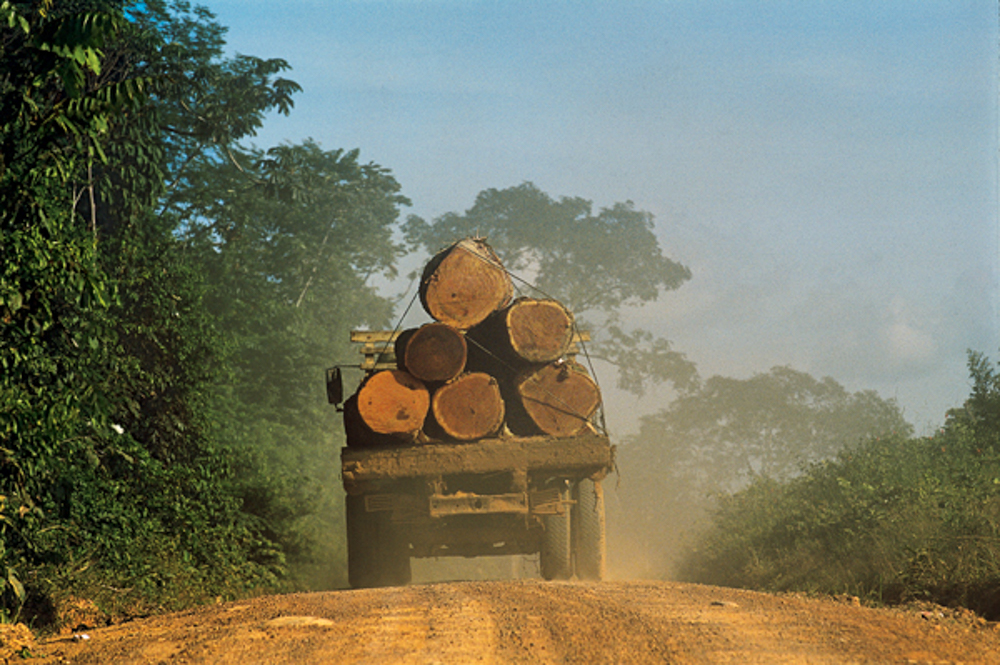
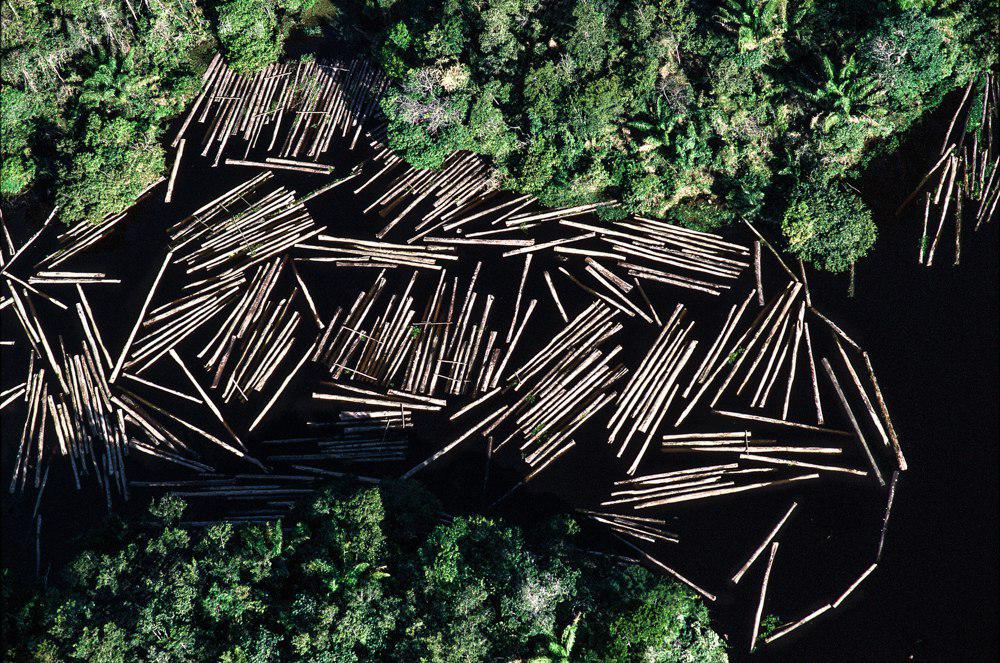
The Coordination of Indigenous Organizations of the Brazilian Amazon (COIAB), hereby expresses extreme concern about the rapid destruction of the Amazon rainforest, home to our families and to all the resources we need to live. The related record rates of deforestation and outbreaks of fire are a consequence of the anti- indigenous and anti-environmental genocidal speeches of this government. Loggers are taking our land and irresponsible landlords are taking advantage of the weakening of environmental surveillance to advance into our homes (Amazon).
The weakening of enforcement is a result of Bolsonaro’s speech of violent attacks on the Amazon rainforest and our indigenous relatives who live there. Deforestation and a record wave of fires are destroying environmental protection areas and our territories, highlighting the dire consequences of this government’s attitudes to our current and future survival. As an example, we draw attention to the fires currently occurring on Bananal Island, Tocantins and in the Apyterewa Indigenous Land, in southern Pará, where indigenous peoples, including groups in voluntary isolation, live. The fires are destroying the remaining forests in these regions, vital spaces for the survival of our relatives. The state of Mato Grosso leads the current number of fire outbreaks. In addition to a strong agribusiness, Mato Grosso is home to many of our relatives. There are also isolated people in the state of Mato Grosso, many of whom have not yet had their presence recognized by the Brazilian state, which may also be in the process of escape and violence due to the current high rates of deforestation and fire. The states of Pará, Mato Grosso, and Amazon lead the ranking of deforestation this year, it is precisely where a significant population of our people is. It is also in this region that most of the last isolated peoples in Brazil live.
We will not admit such destruction to our homes… Amazon! They want to wipe us out, but the people of this land will not let you. We will fight for you and us.
We, the Council of Wajãpi Villages-APINA, want to disclose new information about what is happening in Wajãpi Indigenous Land. And we want to request the support of the federal police or the army again to ensure the safety of Wajãpi Indigenous People.
Yesterday, July 30, 2019, in the morning, we received the Senator Randolfe Rodrigues’ visit. He came to listen to us about what is happening in our Indigenous Land and to seek clarification of some information he had received. The Senator said that he would continue to support us for the police keeping going on investigating the invasion until arresting the invaders. And to remain in Wajãpi Indigenous Land, protecting our communities until we can ensure that the invaders are not in our land anymore. Also, he invited some Wajãpi to go to the Public Federal Ministry to relate what they saw and know about the invaders.
Yesterday, by the end of the afternoon, we received information from the residents of the CTA Village located beside the 210-Highway. About 6 p.m., a young person from that village went to take a bath in the igarapé near the village when he heard someone yelling, “Hey!” behind him. When he turned, he saw a tall and strong man who has big curly hair and beard and was pointing a gun at him. The weapon seemed to be a 12-gauge automatic rifle. Then, the young person became very afraid and went running to the village to call someone to help. Soon later, he came back to the igarapé with five more men. They did not find the invader, but they saw tracks of two people without shoes, each of them walking in different directions. They took photos and made videos of the tracks they saw to show to the police. However, they decided not to follow the tracks because it was growing dark. According to the young person, the man he saw was wearing a black long-sleeved shirt. After receiving that information from the residents of CTA Village, residents of other villages next to the highway organized themselves to watch the section of the highway located inside the Wajãpi Indigenous Land, during the whole night.
Today, in the morning, the residents of CTA found new tracks of two people near the village and let the other Wajãpi communities know. Then, the residents of the villages near the highway organized groups to search for the invaders. They are still searching for them until now.
We, the Wajãpi, want to thank the great support that we are receiving of organizations related to our Indigenous social movement, as APOIANP, COIAB, APIB, AMIM, Hutukara, CIR, FOIRN. As well as the support of the Senator Randolfe Rodrigues, the former Senator João Capiberibe, the federal deputy Joênia Wapixana. Also, the support of partner organizations as Iepé, CIMI, and the support of other civil society organizations as OAB, Associação dos Juízes pela Democracia, Associação Brasileira de Antropologia, Sociedade de Arqueologia Brasileira, Greenpeace, WWF, Rede Eclesiástica Pan Amazônica, and many others. In addition to the UN, the Organization of American States, and people from the whole world.
We, members of the Wajãpi Village Council, would like to share new information about what is happening in our Indigenous Land and ask once again for support from either the Federal Police or the Army to ensure the safety of the Wajãpi people.
Yesterday (07/30/19), we received a visit from Senator Randolfe Rodrigues during the morning. He came to hear our perspective about what is happening in our Indigenous Land and asked for better clarification on some information he has received.
The senator declared he will keep on supporting us so that the police can continue investigating the invasion until they arrest the invaders. He also said we should stay in the Wajãpi territory, protecting our communities until we are sure the attackers are no longer inside. Moreover, he invited some Wajãpi people to the physical location of the Federal Prosecution Service to report what they saw and what they know about the invaders.
Last evening, we received some information from the residents of the CTA village, located on the limits with the BR 210 highway. Around 6 pm, a young man from that village went to bathe in the stream nearby the village and heard someone shouting “Hey!” from behind him. When he turned around, there was a tall, strong man with long curly hair and beard pointing at him with a weapon that looked like an automatic 12-gauge shotgun. He got very scared and ran back to the village to call someone for help. Right after that, he returned to the stream with five other men but they no longer found the invader. They found two pairs of barefoot footprints, each of them going in a different direction. They took some pictures and made some videos to present to the police. They decided, however, not to follow the tracks because it was getting dark. According to the young one, the man with the shotgun was wearing a long sleeve black t-shirt.
After receiving this information from the CTA residents, people from other villages by the highway got together to guard the entire portion of the highway located inside the Wajãpi Indigenous Land limits over the night.
This morning, CTA residents found new tracks of two people near the village and warned the other settlements. The residents of the villages by the highway formed groups to search for the invaders. They are still searching.
We, the Wajãpi people, would like to use this note to thank for the great support we are receiving from the organizations of our indigenous movement, such as APOIANP, COIAB, APIB, AIM, Hutukara, CIR, FOIRN, Senator Randolfe Rodrigues, former Senator João Capiberibe, MP Joênia Wapixana, from support organizations as our partner Iepé, CIMI, other civil society organizations like OAB, Association of Judges for Democracy, Brazilian Association of Anthropology, Brazilian Archaeological Society, Greenpeace, WWF, Pan-Amazonian Ecclesial Network and many others. Not to mention the UN, the Organization of American States (OAS) and people from all over the world.
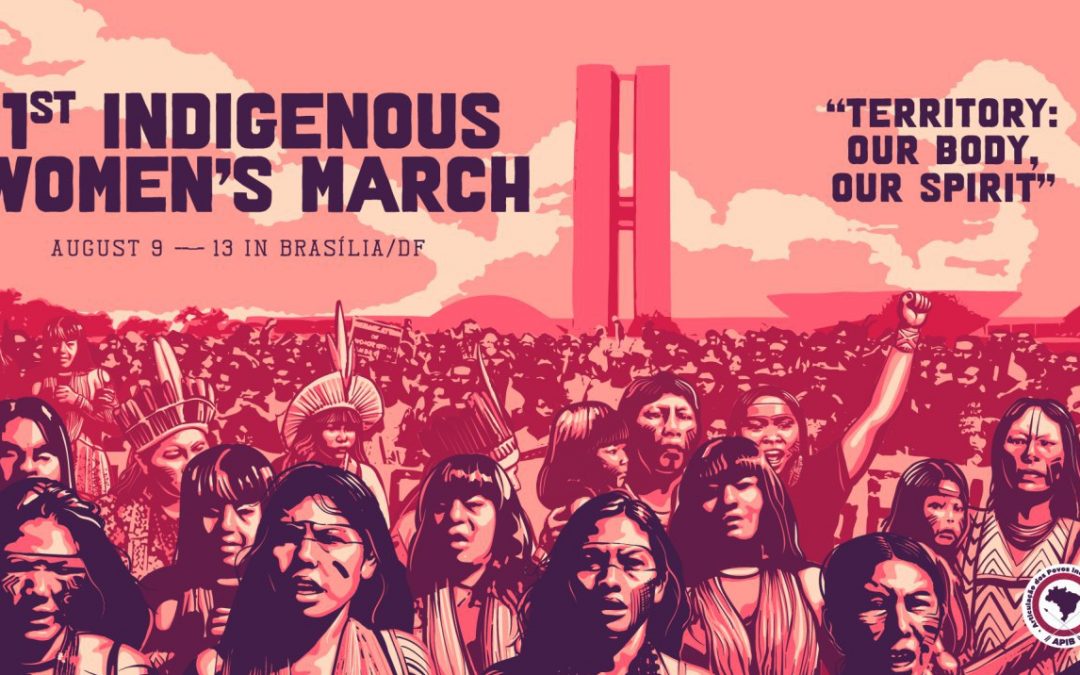
The first Indigenous Women’s March will be held from August 9 to 13 in Brasilia, where will gather two thousand women from the most different peoples, from all over Brazil.
With the theme “Territory: our body, our spirit”, the goal is to give visibility to the indigenous women’s actions, discussing issues inherent to their diverse realities, recognizing and strengthening their protagonism and capacities in defense and guarantee of human rights, in particular the care of mother earth, the territory, the body, and the spirit.
The Indigenous Women’s March will be much more than the name literally suggests. The proposal is to hold a large gathering of indigenous women: from August 9 to 12, the “National Indigenous Women’s Forum”, which will discuss issues raised during the women’s plenary at the ATL 2019 (Free Land Camp 2019), followed by the Indigenous Women’s March on August 13.
Within the framework of unity and empowerment, the idea is to join the Daisies’ March, an act that brings together women from the countryside and the forest, in a great national demonstration for women’s rights and protagonism, from a new vision of sustainable development and social justice.
The National Indigenous Women’s Forum is necessary since threats to indigenous’ rights are spreading throughout Brazil in the current political conjuncture, which demands an immediate reaction, especially since women are the most affected by agrobusiness, climate change, machismo, and racism.
Besides, on August 9, the International Day of Indigenous Peoples is celebrated, a very significant date that will also be reinforced at the Forum.
The meeting will be held with indigenous women’s resources, support from partner organizations and donations raised here: http://bit.ly/MarchaMulheresIndigenas. Your contribution is fundamental to ensure the leaders’ arrival and the realization of the meeting. You can also collaborate by donating miles of travel, food supplies, blankets and mattresses to who’s in Brasilia. More information at [email protected].
We, the members of the Wajãpi – Apina Village Council wish to disclose the information we have today, July 29, 2019, regarding the invasion occurred in the Wajãpi Indigenous Land.
Last Sunday, July 28, 2019, police teams arrived at Mariry Village in the early afternoon and headed to the Yvytotõ village, accompanied by our warriors. When they arrived, there was no one there, just the footprints of the invaders. The police marked the points on their GPS and took pictures.
Our warriors brought the police team to a place where the invaders had hidden themselves on July 26, but they found no one there either. After that, the police claimed that they could not look for the invaders inside the forest by following the vestiges we showed them, then they returned to the Mariry village and from there to the Aramirã post, where they arrived around 9:30 p.m.
At the Aramirã Indigenous Post, the police met with representatives of Funai, of the Apina, of the villages in the Aramirã region and of the Pedra Branca City Hall, in Amapá. They said that the region of the Yvytotõ village is difficult to reach and that they had no means to remain and continue the search there due to the difficulties one has of moving and feeding oneself in the forest.
During the meeting, the superintendent of the police promised he would study the region around the Yvytotõ village using satellite images to check for evidence of irregular gold mining within the Wajãpi Indigenous Land. If the images show any vestiges, they will fly over to check. After this meeting, the police teams returned to Macapá, Amapá’s capital.
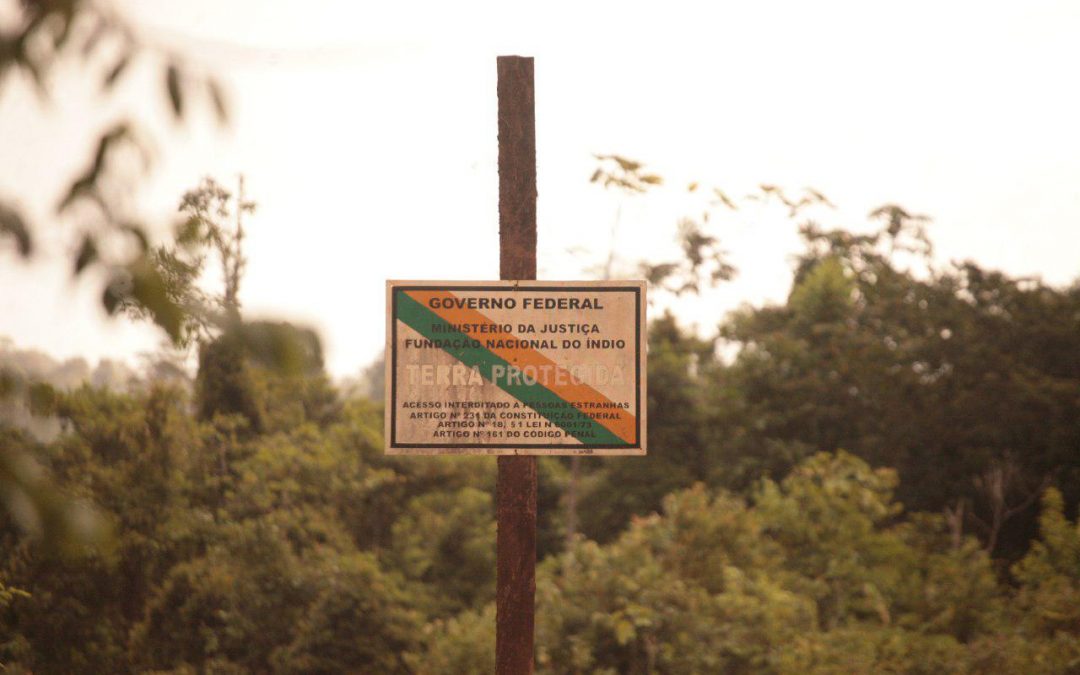
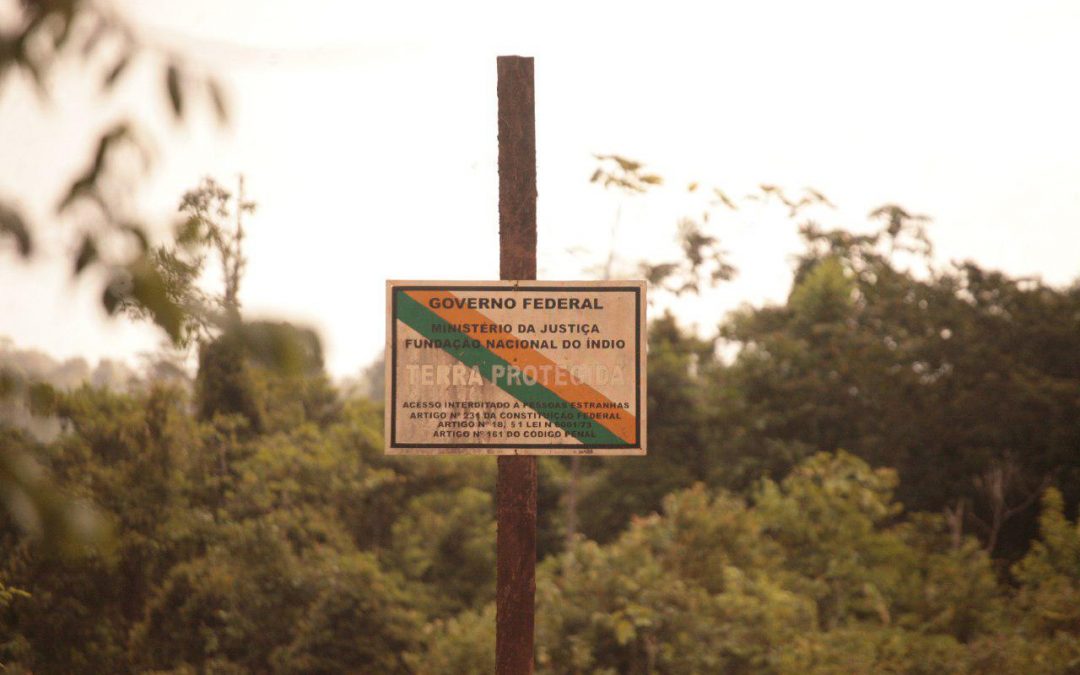
We, the Wajãpi Indigenous People, remain very concerned about the irregular prospectors who have invaded the northern region of our Indigenous Land. In our villages of this region, our families are very afraid of going out to their fields or hunting in the woods. Some communities have left their villages to join families from other villages so as to feel a bit safer.
That’s why our warriors from all over the Wajãpi Indigenous Land are organizing themselves to help the Mariry village warriors who continue to search for the hidden invaders, and we are asking Funai’s support to locate them.
As soon as we have any new information, we will post more of these Notes.
Aramirã Post – Wajãpi Indigenous Land, July 29, 2019.
We, the Council of Wajãpi Villages – APINA, want to release the information so far available about the invasion of Wajãpi Indigenous Land.
On Monday, July 22nd, by the end of the evening, the Indigenous chief called Emyra Wajãpi was violently killed in the region of his village called Waseity, near the Mariry village. No one from Wajãpi Indigenous People testified his death. His death was noticed and disseminated to all Wajãpi communities just in the following morning, on Tuesday, July 23rd. In the next few days, kinfolk looked into the local. They found tracks and clues which indicate that the death was caused by non-Indigenous people, outsiders from the Wajãpi Indigenous Land.
On Friday, July 26th, the Wajãpi from Yvytotõ village, located at the same region where the death happened, met a group of armed non-Indigenous people near their village. Then, they warned the other Wajãpi communities by radio. During that same night, the invaders came to Yvytotõ village and got into the house, threatening the residents. The afraid Yvytotõ villagers ran away to the Mariry village located nearby the very next day.
On Friday night, we reported it to the federal government, through the National Indian Foundation (FUNAI), and to the Public Federal Ministry of Brazil about the invasion. At that occasion, we requested the presence of the Federal Police on the site. Early on the morning of Saturday, July 27th, residents of Karapijuty village sighted another invader near their village.
Saturday, we spread the news to our allies, in an attempt to hurry up the coming of the Federal Police. Also, a group of Wajãpi warriors from other regions of the Indigenous Land went to the area of Mariry village to support its residents until the Federal Police arrives. In the evening of Saturday, representatives of FUNAI arrived in the Wajãpi Indigenous Land. They went to the Jakare village to interview relatives of the deceased chief who moved there. Soon after, the representatives of FUNAI came back to Macapá (capital of Amapá, Brazil) to contact the Federal Police. Meanwhile, the Wajãpi warriors stayed guarding nearby the place where the invaders were, and the villages located on the exit route from the Wajãpi Land. In that same night, some people heard gunshots in the region of the Jakare village, near the 210-Highway, where there were no Wajãpi.
On July 28th, in the morning, a group of federal policemen and the BOPE Special Police Forces arrived at the Wajãpi Indigenous Land (TIW) and went to the place to arrest the invaders. And this is all that we know so far. Once we have more information, we will release a new document.
Posto Aramirã – Wajãpi Indigenous Land, July 28, 2019.
Indigenous leaders from the South and Southeast of Brazil occupied the Ministry of Health in the fight against the dismantling of the Indigenous Health policies and for the dismissal of Silvia Nobre, the current National Secretary. Today several points are blocked in the South and Southeast regions, with new blockades expected in other areas of the country, while the leadership group remains in the Ministry of Health in Brasilia. The National Secretary appointed by Bolsonaro’s Government as the first indigenous person to occupy this role, does not know, does not respect, does not dialogue with indigenous peoples, and has been acting in an authoritarian way, as it is the characteristic of this government. We will not accept the dismantling of our indigenous health subsystem that was won by us.