
18/Sep/2020
While the Brazilian Federal Government is passively watching the devastation of our biomes by criminal fires, the Head of the Institutional Security Office, General Heleno, has published a serious accusation on his social networks. The General claims that the Articulation of the Indigenous Peoples of Brazil (APIB) and the indigenous leadership, Sonia Guajajara, committed a crime against the country.
APIB rejects the declaration. We understand that the biggest crime against our country is the omission displayed by this government in face of the destruction of our biomes, of our protected areas, of the illegal fires and land grabbing, of the deforestation and of the invasion of our lands and the theft of our wealth.
On the eve of the United Nations General Assembly, the whole world is witnessing these crimes, which are too big to be concealed. Instead of attacking individuals who work to protect the environment and guarantee the rights of Brazilian indigenous peoples, the authorities should use this moment to fulfill their constitutional oaths and present the nation with a plan to fight the fires that afflict the country and, in doing so, protect the economy and Brazil’s international reputation.
The accusations, in addition to being frivolous and false, are irresponsible, as they endanger the personal security of those mentioned.
APIB is evaluating appropriate response measures.

26/Aug/2020
Coordinated by APIB, ‘Maracá – Indigenous Emergency’ is a collective production directed by the following contibutors; Bia Lessa, APIB coordinator Sonia Guajajara, indigenous leader Célia Xakriabá, singer and composer Maria Gadú, Mídia Ninja coordinator Marielle Ramires, artist Laura Lima, designer Pedro Inoue and coordinator of 342 Amazônia Mari Stockler. The production was also made possible by Mídia NINJA who edited and co-produced the project and by Mídia India.
To save lives threatened by the Covid-19 pandemic, the Articulation of Indigenous Peoples of Brazil (APIB) is launching a web series this Weds 26th August at 19h. With more than 50% of people directly affected by Covid-19 and more than 27 thousand indigenous people infected by the virus, the series “Maracá – Indigenous Emergency” aims to mobilize international networks of support for the emergency plan drawn up by indigenous peoples to face this moment of crisis.
The eight-episode series will be available on APIB networks (@apiboficial) and will feature appearances from more than 200 personalities including artists, scientists, activists and indigenous and non-indigenous researchers from different countries. Episodes will be released twice-weekly on Wednesdays and Sundays, on the 26th and 30th of August and on the 2nd and 6th of September on APIB’s Youtube channel. Livestreams will also be held at 7 pm on the opening days of the episodes, with the participation of indigenous leaders and other supporters.
The webseries is a follow-up to the Maracá – Indigenous Emergency live event held on August 9 to draw attention to the seriousness of the Covid-19 crisis in Brazil and to increase collective efforts to face the pandemic. Among the primary objectives of the initiative is the collection of funds to finance relief actions in indigenous territories. This can be done virtually through a QR code and via the website (emergenciaindigena.apib.info).
Hundreds of notable artists and personalities from diverse bakgrounds came together to create Emergência Indígena, bringing together names including Maria Bethânia, Cacique Raoni, Ai WeiWei, Sonia Guajajara, Caetano Veloso, Joenia Wapichana, Dráuzio Varela, Tuyra Kayapó, Anitta, Kretã Kaingang, Criolo, Dinaman Tuxá, Jane Fonda, Nara Baré, Philip Glass, Cacique Babau, Wagner Moura, Kerexu Guarani, Camila Pitanga, Benki Ashaninka, Milton Nascimento, Djuena Tikuna, Thomas Lovejoy, Gean Pankararu, Margareth Menezes, Célia Xakriabá, Lenine, Shirley Krenak, Eliane Brum, Joziléia Kaingang, Chico Buarque, Eloy Terena, Alec Baldwin, Puyr Tembé, Mother Nivia, Paulo Tupiniquim, Sebastião Salgado, Fidelis Baniwa, Zé Celso, Marivelton Baré, Nando Reis, Marcos Xucuru, Emicida, Elizeu Guarani, Djamila Ribeiro, Lindomar Terena, Teresa Cristina, Giovani Krenak, Gaby Amarantos and many others.
‘We make our maracas resound so that indigenous lives impacted by the pandemic are remembered and to draw society’s attention to what is happening to us’, warns Sônia Guajajara, APIB coordinator. The maraca is a striking symbol of indigenous peoples and is present in rituals of both struggle and celebration.
The series format features eight episodes divided by theme and woven together with texts drawn from the speeches of Brazilian indigenous leaders (Chief Raoni, Sonia Guajajara, Kretã Kaingang, Marcos Xukuru, Shirley Krenak, among others). Speeches were read and interpreted by the invited personalities, and are accompanied by a montage of documentary footage and illustrations of indigenous peoples.
INDIGENOUS EMERGENCY
To date, 27,034 indigenous people have been infected by Covid-19 in Brazil and 717 have lost their lives to the disease, according to data from APIB’s National Committee for Indigenous Life and Memory. One hundred and fify-five indigenous ethnicities have been directly affected, an alarming situation that gets worse every day, because in addition to the threat of the virus, racism, illegal deforestation, agribusiness and the criminal action of loggers continues to advance into indigenous territories.
‘We are politically and spiritually prepared to continue to advance in the fight, seeking organs of control to guarantee the physical, cultural and territorial integrity of the indigenous peoples’, says Dinamam Tuxá, APIB coordinator.
Faced with the negligence of the Brazilian government in guaranteeing the protection of indigenous peoples during the pandemic, the emergency response plan, entitled Indigenous Emergency, was drawn up by APIB together with its grassroots organizations, doctors and researchers.
The coordinated campaign was launched at the end of June, informed by expert guidance on comprehensive and differentiated medical care, legal actions with a political impact and communication and information strategies on preventive measures.

17/May/2020
We, the traditional Councils of the Guarani & Kaiowá People, Aty Guasu (General Assembly of the Guarani & Kaiowá People), Kuñangue Aty Guasu (Great Assembly of Guarani & Kaiowá Women), RAJ (Guarani & Kaiowá Youth Movement), Aty Jeroky Guasu (General Assembly of Guarani & Kaiowá Shamans), hereby announce that we stand in the face of yet another massacre with the arrival of COVID-19 in our Tekohás (indigenous territories), and we make this appeal for our survival.
We are approximately 51,000 Guarani & Kaiowá, the second largest indigenous population in Brazil, located in the State of Mato Grosso do Sul, and we find ourselves in a State of Emergency. It has been 520 years of massacres and diseases, brought to us during our violent experience of colonisation in Brasil. We are left with few of our elders, the guardians of our traditional knowledge. Their lives and the lives of our communities are at risk, and the loss of the history of a People. Who will be held responsible for the death of our People?
In the first three days of tests, the Indigenous Reserve of Dourados (RID), the most populated reserve in Brasil, today (16th of May 2020) announced 10 confirmed cases of Coronavirus in the community. All Guarani & Kaiowá villages are under alert, setting up protective barriers and blocking access to their territories. The data presented by the Special Secretary of Indigenous Healthcare point to multiple suspected cases in diverse Guarani & Kaiowá territories, which extends beyond the under-reported number in Brazil as a whole.
The living conditions in indigenous villages don’t permit domestic isolation, and encourage rapid and large-scale transmission, and given the high lethality of COVID-19 we urgently need support areas for the isolation of confirmed patients.
We are in the largest Special Indigenous Healthcare District (DSEI) in Brasil, where 70% of patients are Guarani & Kaiowá. With the advance of Coronavirus in indigenous villages, following the epidemiological bulletin of the Secretary of Indigenous Healthcare (SESAI), the city of Dourados, with few hospital beds available, will not be able to support the number of indigenous people infected. The Secretary of Indigenous Healthcare is in URGENT need of being strengthened to confront this pandemic.
Local municipal authorities are weakened, but even so the Federal Government wishes to transfer indigenous healthcare to municipal bases. The situation presented by COVID-19 just serves to demonstrate the incapacity of municipalities to address the healthcare needs of indigenous peoples in our territories, such that not even emergency services manage to attend the villages furthest from urban centres.
The contact networks of the confirmed cases are being traced and tested. This brings concerns considering that the Indigenous Reserve of Dourados has the largest Guarani & Kaiowá population in the state, a total of 17,300 indigenous people. Medical teams are working to contain the spread of the virus, and following the confirmation of these first cases the indigenous healthcare response plan moves into its second stage, where wide- scale testing will be carried out among the indigenous population. The Secretary of Indigenous Healthcare only provides basic medical attendance, and urgently needs State Health Services (SUS) to take joint responsibility for providing indigenous populations with specialised medical support during the crisis.
We of the Aty Guasu (General Assembly of the Guarani & Kaiowá People), Kuñangue Aty Gauss (Great Assembly of Guarani & Kaiowá Women), RAJ (Guarani & Kaiowá Youth Movement), and Aty Jeroky Guasu (General Assembly of Guarani & Kaiowá Shamans) are calling for specialised healthcare support for indigenous people, the URGENT fortification of the emergency services which respects the specificities of our People: ambulances, hospital beds, alternatives to isolation in our community, protection for workers and their family contact networks, respirators, and spaces for our dead in the cemeteries.
All donations of humanitarian aid for survival are welcome: food, masks made with three layers of cotton, sanitation products for communities, water tanks for storage, and seeds to plant in our gardens.
We recommend that the entire Guarani & Kaiowá community stay in their Tekohás (indigenous territories), and that all leaders assume responsibility for blockading all entry points to indigenous territories to protect the health of the Guarani & Kaiowá People, permitting entry only to healthcare workers and humanitarian aid.
We thank all support and we pay tribute to all workers who are on the front lines of the Coronavirus pandemic. We express our solidarity to all the families who are in mourning.
This is not only a health crisis, it is the genocide of our people, whose treatment is racist and inhumane. IT IS URGENT! We are asking for HELP!
Signed,
ATY GUASU , KUNANGUE ATY GUASU, RETOMADA ATY JOVEM e ATY JEROKY GUASU.
Contact details for more information:
Aty Guasu – General Assembly of the Guarani & Kaiowá People
+55(0)67996574194 / +55(0)67996220420 / +55(0)67998949098
Kunangue Aty Guasu – Great Assembly of Guarani & Kaiowá Women
+55(0)679963422972 / +55(0)67999259450 / +55(0)67992737058 / +55(0)67997156477 / +55(0)67999415652
RAJ – Guarani & Kaiowá Youth Movement
+55(0)67996271302 / +55(0)67992250496
Guarani & Kaiowá Tekohas, 16th of May 2020.
15/May/2020
Mother Earth faces dark days. The world is going through its biggest social, economic and political crisis caused by the covid-19 pandemic, which just affects human beings, putting humanity in deep reflection and in resistance for the preservation of life. We indigenous peoples, just like non-indigenous people, also suffer from and are victimized by this virus that has already claimed thousands of lives on the planet.
It is time to reflect on our way of life until now. The various environmental crises such as global warming and intensive deforestation were the harbinger of what we are experiencing today, they were the warnings of mother earth that our way of existing needs be rethought and now we must practice solidarity.
For Brazil and the world, this viral war may be new, but for us Indigenous peoples it is not. We know it already because we were victims of such diseases that were used as strategies during the invasion of Brazil to exterminate our peoples, our identity and our way of life.
In Brazil we are going through difficult days, of great sadness and several crises. There have already been more than 10 thousand lives lost, including 64 indigenous victims, whose stories were cut short due to the deep neglect and absence of public policies capable of ensuring the preservation of those lives.
They are not just numbers, they are people, they are memories and stories of the Apurinã, Atikum, Baniwa, Baré, Borari, Fulni-ô, Galiby Kalinã, Guarani, Hixkaryana, Huni Kuin, Jenipapo Kanidé, Kariri Xocó, Kaingang, Karipuna, Kokama, Macuxi, Mura, Munduruku, Pandareo Zoro, Pankararu, Palikur, Pipipã, Sateré Maué, Tariano, Tembé, Tikuna, Tukano, Tupinambá, Tupiniquim, Warao and Yanomami, all affected by the pandemic!
The ongoing political crisis in Brazil, in addition to accentuating the shadows over our democratic system, shows the cruel face of fascism in motion, dividing the country into two poles; those who defend lives; and the unfortunate side of those who defend only the economic system, the large landowners and the land grabbing that are the historical basis of racism and provider of social and economic inequalities.
This wing is responsible for the spread of fascism and authoritarianism underway in Brazil; defending only the genocidal elites, it leaves clear its institutional racism. For this, they use the strategy of underreporting to downplay the impacts of this health crisis that heavily affects indigenous populations and the Brazilian people.
There are several bureaucracies established to question the self-declaration of indigenous peoples, such as in the case of the Kokama of the Amazon region who were questioned as to whether they were in fact indigenous and were demanded to present their RANI, that is, their indigenous identity documentation. What’s more, other peoples have been denied access to basic food provision, such as the Kaingang, who, when claiming these benefits, were told they needed to prove not only their real need, but also their identity as a people, compromising their food security and their social isolation.
It is clear that the Brazilian State creates barriers to prevent indigenous peoples from having their rights guaranteed and that it deliberately promotes a policy of social cleansing through its tactic of underreporting.
The starvation of Sesai (Special Secretariat for Indigenous Health), deliberately promoted by the Bolsonaro government with its gradual dismantling, only reinforces its genocidal and social cleansing nature. Since its inception, there has been a clear attempt to extinguish Sesai, from the model for hiring indigenous health professionals, to the weakening of social control by dissolving the Forum of Presidents of Indigenous Health District Councils (Condisi) and budget cuts. In other words, measures that express the determination to dismantle the differentiated indigenous health policy.
Throughout Brazil there are more than 30 ethnic groups impacted by fatalities from covid-19, of whom the majority are elderly, who are our living treasures, our source of ancestral and cultural continuity.
The attitude of suspending the demarcation of indigenous lands, the weakening of FUNAI’s constitutional powers through IN 09/2020, militarization under the command of environmental control bodies through Decree 10.341 / 2020, the attacks on the Atlantic Forest promoted by the Minister of the Environment, the advancement of illegal mining and the actions of rural militias who cause fires and illegal invasions in the Amazon, goaded by this government, are factors that directly contribute to the fragility in indigenous territories and are responsible for the intensification of land conflicts in the country. These measures have increased deforestation in the Amazon and left our biodiversity vulnerable across the country.
There are several difficulties to be measured in the fight against covid-19: scarcity of drinking water in indigenous territories to guarantee sanitary measures as recommended by the World Health Organization; transport for the most serious cases due to Covid-19 infection; travel to urban areas to get emergency aid; respect for health recommendations by agencies when dealing with indigenous people; adequate accommodation in Support Houses for Indigenous Health (Casais) and others …
There are many challenges in the face of the enormous humanitarian crisis facing civilization. To this end, we remain firm, as our ancestors did, who for more than 520 years have resisted, fighting, whether for the right to territory, to overcome dictates of the dictatorship, as well as other epidemics, the landowners’ bullets or the lengthy attempt to make our cultures and ways of life invisible.
In times of pandemic, the collective struggle and solidarity that has rekindled in the world will only be complete with indigenous peoples, as the cure will not only be in the principle of action, but in the activation of our human principles.
Coalition of Indigenous Peoples of Brazil (APIB)
Brazil, May 9th 2020.

09/May/2020
We, indigenous peoples, organizations and leaders from every region of Brazil, have been gathering for 16 years in the federal capital for our annual Free Land Camp (ATL), the Great National Indigenous Assembly. Due to the need for social isolation imposed by the Covid-19 pandemic, we have held ATL online with a great number of discussions, debates, seminars, testimonies and livestreams throughout the week. For 520 years we have been resisting all kinds of invasions; besides physical violence, forced labor, and the plunder and expropriation of our territories, diseases were used as the main biological weapon to exterminate us. Currently, we are being attacked by the worst virus in the history of our country: the Bolsonaro government. Thus we have come to publicly denounce the following issues.
We denounce to national and international public opinion, that we, indigenous peoples of Brazil, more than 305 peoples, speakers of 274 different languages, are in the crosshairs and victims of a genocidal project of the government of Jair Messias Bolsonaro. Since the beginning of his mandate, he has chosen us as one of his priority targets, saying that he would not demarcate an inch more of indigenous land, and that all land demarcation carried out until now would have been forged, and therefore should be revised.
As soon as he took office, Bolsonaro issued Provisional Measure 870/19, which determined the dismantling of the National Indigenous Foundation (FUNAI) and its powers, transferring the responsibility for environmental licensing and land demarcation to the Ministry of Agriculture, led by the Ruralist Caucus, a parliamentary faction renowned for its hostility towards our peoples, represented in the figure of the agriculturalist Minister Teresa Cristina, also known as the “muse of poison” [for her work to deregulate the use of pesticides]. The suspension of this Provisional Measure by the National Congress required a great deal of effort on our part and from our allies.
Bolsonaro dismantled public policies and bodies that had until then, albeit precariously, served our peoples, appointing people who are openly against indigenous rights, such as the president of the National Indigenous Foundation (FUNAI), federal police officer Marcelo Augusto Xavier da Silva. A former adviser for the Ruralist Caucus during the Parliamentary Inquiry Commission (CPI) of FUNAI / INCRA in 2017, which incriminated civil servants, indigenous leaders, indigenist representatives and attorneys, Xavier da Silva published in the Federal Official Gazette, on April 22nd 2020, the Normative Instruction No. 09 that “rules on the requirements, regulation and analysis to issue a declaration of limits recognition in relation to private properties in indigenous lands”. Since it aims to legitimize and allow the issuance of land titles to invaders of indigenous lands, this measure contravenes the institutional duty of the indigenous body to protect the rights and territories of indigenous peoples. In addition to this decision by the president of Funai, other measures have been taken against indigenous peoples and their rights, namely: (1) the decision to review or to cancel administrative procedures for the demarcation of indigenous lands, such as the Tekoha Guasu Guavirá territory, in Guaíra and Terra Roxa (Paraná state), of the Avá-Guarani people; (2) the replacement or impairment of Working Groups on identification and delimitation issues; (3) the dismantling or alteration of Boards of indigenous bodies; (4) workplace harassment and bullying of public servants; (5) the continuation of public policies for homologated lands only; (6) the irresponsibility of not equipping, even financially, regional coordinations and grassroots groups in order to protect our peoples and territories from the Coronavirus pandemic; (7) authorizations that allow fundamentalist pastors to enter indigenous territories.
Thus, this government, subservient to national economic interests and international capital, aims to reduce and restrict our rights, especially territorial rights, by encouraging illegal practices on our lands, such as: mining, deforestation, logging, cattle farming, monocultures and land grabbing, which is about to be legalized through the bill 910/19, currently progressing through Congress. Further to these illegal practices, there are the constant threats of large-scale mining operations and various infrastructure projects such as hydroelectric plants, transmission lines and roads. All of these are clear attempts to transform public lands into commodities.
All of these illicit and unconstitutional acts constitute a death project for our peoples. They entail the destruction of our forests, our rivers, biodiversity, our life sources. In short, they entail the destruction of Nature, Mother Earth, a heritage that has been preserved for thousands of years by our peoples and that til today strategically contributes to the preservation of environmental and climatic stability and to the well-being of humanity, providing important environmental services to the planet.
It is this heritage that ruralists, agribusiness and international corporations want to steal from us; by restricting or suppressing our constitutional rights, they are actually claiming that our original rights, and our very existence, constitute an obstacle to their enterprises and their so-called development plans. That is why they are trying to reverse the legal basis of our rights, nationally and internationally, through measures such as Opinion 01/17, the ‘time frame thesis’, which aims to limit our right to the lands we have traditionally occupied to only those occupied on October 5th, 1988, date of promulgation of the Federal Constitution, which in fact, simply recognises a right that was already ours, our original birthright to the land, a right we have had since before the colonial invasion and the emergence of the Brazilian national State.
Our extermination seems to be a matter of honor for the Bolsonaro government, which is taking advantage of the pandemic crisis to intensify its negligence towards our peoples. Thus, it is also trying to put an end to the differentiated public policies won over the last 30 years in the education system, alternative economic activities, environmental laws and especially in healthcare. After attempting to bring an end to the indigenous health subsystem (SESAI) via plans to municipalize or privatize it, the spread of coronavirus in our territories has made clear the government’s genuine desire for our extinction: it does not protect us from invaders, on the contrary, allowing them to contaminate our communities, which could lead to mass extinction, beginning with our elders, who are sources of tradition and wisdom for our peoples, for generations to come. And as if that wasn’t enough, the government encourages harassment and violence by private interests over our natural assets and sacred territories. The recent dismissal of the director of environmental monitoring at IBAMA (the Brazilian Institute of Environment and Renewable Natural Resources) after his actions to crackdown on illegal mining in Tis in southern Pará, reveals the intentions of the current government.
Faced with this institutionalization of genocide by the Bolsonaro government, we alert national and international society, and demand the following actions:
1. The immediate demarcation, regularization, monitoring and protection of all indigenous lands;
2. The revocation of Opinion 001/17 of the Federal Attorney General;
3. The immediate removal of all invaders from indigenous lands – miners, land grabbers, loggers, farmers – given that they are destroying our natural resources along with our cultures, and, at this present time in particular, they are spreading diseases and COVID-19; constituting a serious risk for all peoples, especially indigenous peoples in voluntary isolation;
4. The adoption of measures that restrict the access of outsiders in indigenous communities, including miners, traders, loggers, as well as proselytizing fundamentalist religious groups that demonize, in our very own territories, our ways of life, spiritualities, knowledge, traditional ways of treating diseases;
5. The implementation of actions that aim to guarantee basic sanitation, drinking water, adequate housing and other equipment that ensure good sanitary infrastructure in the communities;
6. The adoption of measures that guarantee good nutritional status in all indigenous communities and the guarantee of a permanent plan for food security and sovereignty for our peoples and communities;
7. The facilitation of health teams to enter and remain in indigenous areas, ensuring that preventative actions to protect against the pandemic are effective and continued;
8. Adequate infrastructure and logistical support for health teams, providing them with all the necessary equipment for carrying out disease prevention, such as medicines, serums, gloves, masks, transportation, fuel;
9. The guarantee of referral hospitals – in municipal and state capitals – for medium and high complexity care, providing clinical tests and proper hospitalization for patients with COVID-19 and other diseases;
10. Financial resources for protective materials for all people in indigenous communities, such as clean water, soap, bleach, alcohol gel, gloves and masks, as well as adequate guidance in the importance of using these materials during the Covid-19 pandemic;
11. Provide adequate training for indigenous health workers, hygiene and environment officials, midwives and all those working in the health sector within communities, to protect and prevent COVID-19;
12. The immediate hiring of health professionals – doctors, nurses, nursing technicians, epidemiologists – to work in indigenous areas, to increase the current healthcare teams;
13. The immediate purchase of COVID-19 tests for as many people as possible in all indigenous communities, in order to get a proper diagnosis of the current situation of the pandemic within indigenous lands and, with this, to improve prevention, control and treatment;
14. End underreporting of infected indigenous people. All cases must be reported, regardless of whether they are in formally recognised indigenous lands or not, even those who live in urban areas. The Ministry of Health and the Emergency Public Health Operations Center must ensure that all indigenous cases and deaths are included in the Covid-19 Epidemiological Bulletin, in order that the complete data guide public policy;
15. The establishment of an Inter-institutional Crisis Committee, with seats guaranteed for indigenous peoples, appointed by APIB, to define strategies for the protection of indigenous peoples, aiming to jointly monitor activities related to territorial protection, food security, aid and benefits, raw materials and protocols against transmission, for all indigenous peoples. This Committee is not to be confused with the National Crisis Committee, which involves only the Special Secretariat for Indigenous Health, and excludes care for indigenous people living outside Indigenous Lands;
16. FUNAI and SESAI, as well as Funai’s Regional Coordinations (CDRs) and Special Indigenous Sanitary Districts (DSEIs) must be incorporated into the Emergency Public Health Operations Center at national, state and municipal levels;
17. The National Congress must shelve all legislative initiatives of the Ruralist Caucus and other sectors of capital that aim to restrict or suppress the fundamental rights of our peoples, especially the original right to the lands that we traditionally occupy;
18 The Judiciary must suspend all proposals for repossession presented by invaders, alleged owners or entrepreneurs, against indigenous peoples who have retaken their traditional lands;
19. The Supreme Federal Court must judge as soon as possible the Extraordinary Appeal – RE nº 1017365, as having General Repercussion, in order to establish, definitively and fully, the Indigenato, the original birthright of traditional occupation of our lands and territories, in order to correct the trajectory of aggression against the indigenous peoples of Brazil.
20. The Bolsonaro government must suspend the execution of any infrastructure (hydroelectric plants, roads, etc.) or agro-industrial works that may impact our territories, since they allow for the presence of non-indigenous people, potential agents for the spread of Coronavirus and other harmful diseases to our peoples and communities.
21. Finally, we demand the revocation of Normative Instruction 09, of April 16th, 2020, published by the president of FUNAI, in the April 22nd edition of the Official Gazette (DOU), which allows, unlawfully and unconstitutionally, the transfer of land titles to private individuals within indigenous areas protected by Brazilian law. The National Congress must also shelve Provisional Measure 910/19, which attempts to legalize the criminal act of land grabbing in Indigenous Territories, Conservation Units and other territories of traditional communities.
To our peoples and organizations we say: always resist, with the wisdom received from our ancestors, for the present and future generations of our peoples. May national and international solidarity redouble in this moment of death, which is reinforced by the negligence of the Bolsonaro Government, but at the same time, a moment for the creation of a new era for our peoples, for Brazilian society and for humanity as a whole.
For the right to live. Indigenous Blood Not a Single Drop More.
Brazil, April 30th, 2020.
XVI Free Land Camp 2020
Coalition of Indigenous Peoples of Brazil (APIB)
National Indigenous Mobilization
08/Apr/2020
Given the Bolsonaro government’s complete neglect in the face of the current crisis, indigenous peoples have taken their own measures to protect communities from the spread of Covid-19. While a national action plan to combat the pandemic has not been established, indigenous peoples have turned to state governments. On April 3, 2020, the Coalition of Indigenous Peoples of Brazil (APIB) sent a letter to the governors of all 26 states and the Federal District requesting the adoption of special measures to protect indigenous peoples in face of threats from the Covid-19 pandemic.
The impacts of the coronavirus pandemic are increasing every day in Brazil. Indigenous peoples are in a situation of great vulnerability, with a real risk that this new virus will cause another genocide, with the potential to decimate whole communities. The arrival of the Covid-19 pandemic among indigenous peoples and territories in Brazil emerges as a scenario of extreme concern, which must be immediately addressed by health authorities and indigenous organizations.
So far the death of two indigenous people has been confirmed. A woman from the Borari people in the municipality of Santarém, in Pará, died on March 20 and another indigenous person, from the Murá people, died on April 5 in the city of Manaus, in Amazonas. And four indigenous people of the Kokama people, including a baby, tested positive for Covid-19 this week, in the municipality of Santo Antônio do Içá, also in Amazonas State.
Indigenous peoples are not only exposed to the novel coronavirus, but also to the marked social vulnerability that makes it difficult to face the epidemic, as well as concerns with food security. Today, many indigenous communities need to buy food in town and depend on social programs, which requires additional measures to help communities implement social isolation strategies.
A number of existing illnesses make indigenous people vulnerable to coronavirus complications. This situation increases the need for access to services in specialized hospitals in capital cities. Indigenous territories are often distant from these towns and do not have adequate essential public services. This situation makes it difficult to identify and/or treat severe cases of coronavirus in indigenous populations.
APIB also reiterates concerns with the situation of indigenous peoples in voluntary isolation and recent contact (“uncontacted peoples”) in the Amazon. APIB proposes the adoption of protection strategies to prevent the entrance of outsiders into these territories, to help prevent the entry of the coronavirus.
APIB has consulted in depth with indigenous healthcare specialists, and proposes the following 10 urgent action points to help protect our communities from the spread of Covid-19:
1. Coordination between all state and municipal health secretariats with indigenous health agencies in order to guarantee access to information on the epidemiological situation and the actions being carried out in each indigenous territory and village, as well as among indigenous populations in urban areas;
2. Guarantee that emergency plans for the care of critically ill patients in the states and municipalities include the indigenous population, making the flow of indigenous patients and requests for assistance explicit and in a timely manner, in conjunction with indigenous health agencies;
3. Articulation with health secretariats, social assistance, and other social policies to enable the isolation and quarantine of those indigenous people who are in transit returning to their territories and need to take these preventive measures before their entry or in the case of suspected infections or confirmed cases of coronavirus;
4. Provision of rapid tests for Covid-19 and supply of these tests to all Special Indigenous Sanitary Districts in order to control the entry of indigenous people who are in urban centers and seek to return to their territories. Tests must be prioritized to control the entry and exit of indigenous territories, in order to ensure the virus does not spread widely among this population;
5. Inclusion of indigenous populations as a priority group in speeding up the provision of the annual flu vaccine;
6. Guarantee of stocks and provision of Personal Protective Equipment (PPEs) for indigenous healthcare workers, as well as suspected and confirmed cases and their family members who may come to town with them;
7. For the duration of this health crisis, ensure the supply of medicines such as Oseltamivir, indicated for the groups most at risk of complications from the coronavirus, which in this case includes indigenous peoples, according to protocols from the Ministry of Health;
8. Support for Special Indigenous Sanitary Districts (DSEI) for training their health professionals to deal with and monitor the coronavirus, as in indigenous territories access to virtual communication is often precarious and insufficient;
9. Provision of hygiene materials and PPEs for all Indigenous Health Centers for patients and their caretakers, as well as health professionals;
10. Include indigenous organizations that are members of APIB in planning and emergency meetings in each state, in order to ensure that the specific needs and realities of indigenous peoples are addressed.
22/Mar/2020
We are living in critical times
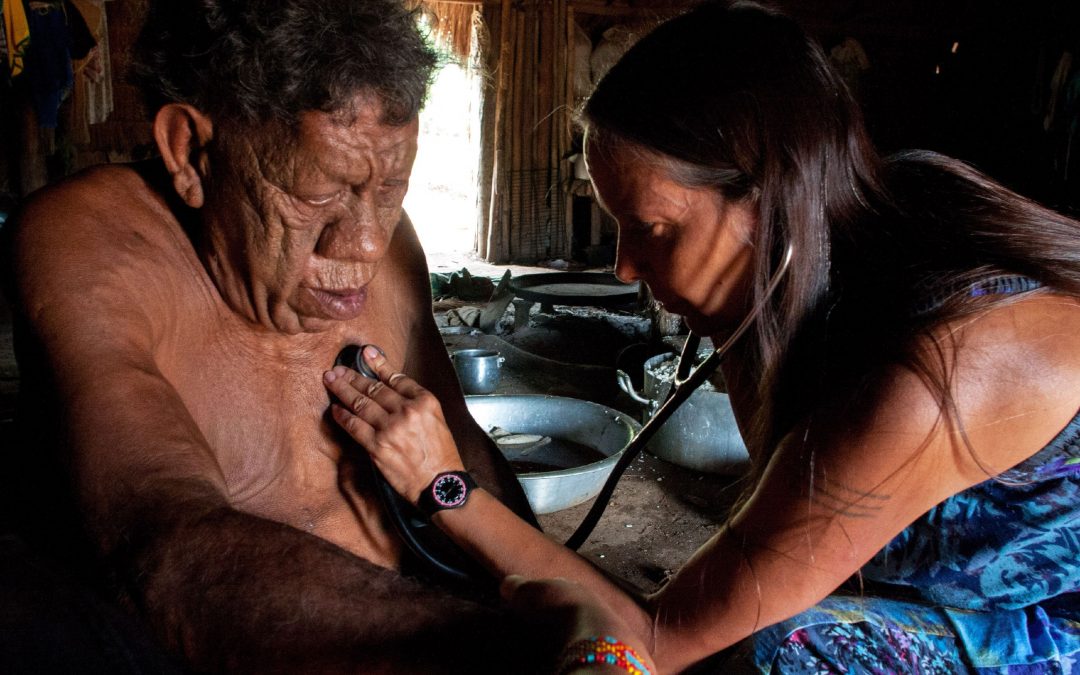
Humankind will face its worst period since World War II. Epidemics are terrible for any society, but we know that for indigenous peoples the impact is even greater. Influenza, smallpox and measles were some of the diseases brought to our territories by non-indigenous people, and slaughtered many of our ancestors.
Coronavirus is another threat. With the fast worldwide spread of the pandemic, it is urgent that we focus our attention on indigenous peoples. The effects on us can be can be devastating! Our communal way of live could enable the fast spread of the virus in our territories if any of us get infected.
Donate now to APIB – Coalition of the Indigenous Peoples of Brazil, with the collected amount we will be able to buy food, medicine and hygiene material for our villages.
Couldn’t donate? Try it by PayPal

20/Mar/2020
Undoubtedly, we, indigenous peoples, are one of the most exposed and vulnerable populations in the face of the current Coronavirus COVID-19 pandemic. Throughout history, we have always been the victims of successive invasions not only by the use of physical violence, firearms and forced labor, but also through the diseases carried by invaders, such as the flu, smallpox and measles, even in the 20th century, particularly during the military dictatorship. Through this day, we suffer from illnesses brought from the outside world to our communities: cardiovascular problems, hypertension, diabetes, gastrointestinal diseases, kidney problems, STDs and respiratory diseases. Coronavirus is another of these threats, another plague produced by capitalist accumulation, therefore, it has a political and an economic origin, and now it has become a public health crisis. We should not have to pay for problems unrelated to our way of life. On the contrary, it is up to the State to provide measures in order to mitigate its historically acquired debts with our peoples and communities.
The Coalition of the Indigenous Peoples of Brazil – APIB therefore publicly demands from the current government an Emergency Action Plan, that includes, among others, the following measures:
• Guarantee the protection of our territories, regardless of the regularization phase they are in, thereby guaranteeing the protection of our peoples, especially indigenous groups in voluntary isolation and the recently contacted.
• Prevent the invasion of indigenous territories by land grabbers, illegal squatters, miners, loggers and others who practice illegal activities in our territories.
• Stop any evictions of communities that have taken action to recuperate and reoccupy their traditional lands, as they seek to guarantee their customary rights, ownership and usufruct.
• Strengthen and allocate additional budget to the indigenous health subsystem – the Special Secretariat for Indigenous Health – SESAI, the Special Indigenous Health Districts (DSEIs) and the Indigenous Health Centers (CASAIs), equipping them to face the new Coronavirus pandemic, especially as many of them are already over-crowded.
• Prevent access to indigenous territories by people who are not authorized nor performing essential assistance services – including tourists and anyone with any other purposes that have not been authorized by our leaders.
• Improve the health subsystem’s preventative care measures to avoid risks of Coronavirus contamination spreading to the villages, especially those close to urban centers or when hospital assistance is necessary. Any Contingency Plan must be widely discussed with the representative bodies of our peoples.
• Immediately revoke FUNAI’s Ordinance No. 419 / PRES., of March 17, 2020, as has also been recommended by the National Health Council (CNS) and the 6th Coordination and Review Chamber of the Federal Public Ministry / PGR. The Ordinance, mainly its 4th article, removes the responsibility of protect isolated peoples from the General Coordination of Isolated Indigenous Peoples, transferring it to regional offices, despite the fact that regional offices do not have qualified staff or structural conditions for such specific and delicate work. For APIB, FUNAI’s ordinance violates both national and international law, including the Federal Constitution, the Statute of Indigenous peoples, Internal Regulations of FUNAI, determinations of the Ministry of Health and of SESAI, the American Declaration on the Rights of Indigenous Peoples, and resolutions from the Inter-American Commission on Human Rights and WHO. It also constitutes an act of irresponsibility as it poses more risk to the integrity of isolated and recently contacted peoples. The Ordinance can only be understood to be motivated by unclear interests, which have already been reported on other occasions by our organization.
Finally, in the absence of political will from the current government to develop a Contingency Plan for disease outbreaks and epidemics, and considering the specificities of our peoples – a communal way of life that facilitates the fast spread of Coronavirus – we request the provision of diagnostic tests for indigenous health units with the utmost urgency from international organizations, especially the World Health Organization (WHO) and the Pan American Health Organization (PAHO).
For the well-being of our elders, the keepers of our wisdom and tradition, and of our children, our future generations, we demand more respect for the specific and differential treatment guaranteed indigenous peoples in the 1988 Constitution.
12/Feb/2020
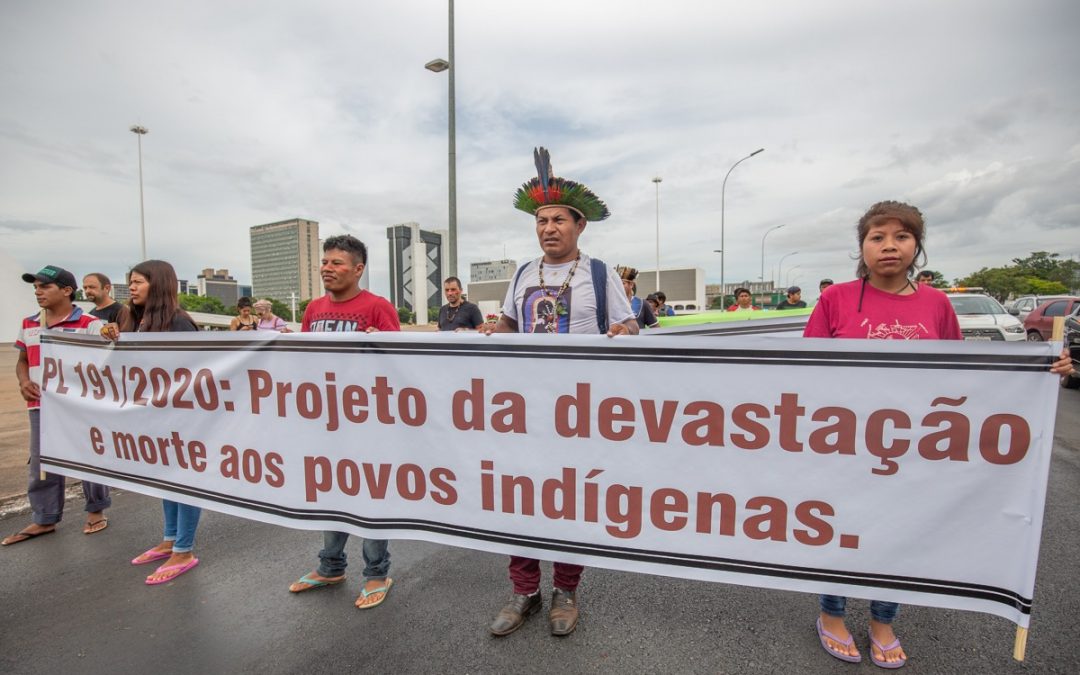
The undersigned organizations – representing indigenous peoples, anthropologists, social, environmental and human rights defenders – that make up the National Indigenous Mobilization (MNI) network express their categorical rejection of Bill No. 191/20, submitted by the President of the Republic, Jair Bolsonaro, to the Federal Congress on February 6 of this year. The bill purports to regulate research into and exploration of mineral resources, hydrocarbons, and hydroelectric power on indigenous lands. The bill fulfills many of this President’s twisted dreams. Since being inaugurated he has defended the economic exploitation of indigenous territories, a policy that represents a nightmare scenario for indigenous peoples.
Once again Bolsonaro has shown his disrepect for democracy, the rule of law, human rights, the Federal Constitution, and international treaties recognizing indigenous rights that Brazil has historically respected. Bill 191/20, recently submitted to the Chamber of Deputies, proposes to open up indigenous territories to the exploitation of minerals, water resources and even agriculture. The law’s proponents claim they merely wish to fulfill the Brazilian Constitution, which clearly expresses the federal government’s duty to protect indigenous territories.
The President and his supporters’ real intent, however is to open indigenous lands up to exploitation by Brazilian and international capital. This project would sentence thousands of indigenous peoples to death. Under this proposal indigenous territories would no longer be recognizable. It would lead to the violation of indigenous peoples’ rights and autonomy, which are secured by law in the Brazilian Constitution and in international treaties. The bill would irreversibly damage indigenous peoples’ exclusive sovereignty over their territory.
Indeed, the project proposes to move indigenous peoples from a state of sovereignty to a state of guardianship, in which they no longer make decisions over how to manage their territory. Instead, the President could move forward with economic development projects on indigenous territories by submitting the action to a purely procedural “consultation.” It also hands the administration of financial resources over to an advisory council that may consist of only three indigenous people and that will be able to decide on its own which groups legitimately represent the interests of affected indigenous communities.
This bill is authoritarian, neocolonial, violent, racist, and genocidal, especially with regard to voluntarily isolated and recently contacted indigenous peoples. The bill resumes an ethnocidal and genocidal perspective against indigenous peoples, contrary to what the Federal Constitution advocates in Articles 231 and 232, because, in addition to eliminating protective policies, it alters the status of currently recognized indigenous territories and points in the direction of no longer recognizing any new indigenous territories. Such policies also contradict various international treaties that Brazil is a party to. We express our utter repudiation and dissent with regard to this bill and its unpredictable impacts. We are united in struggle with the Indigenous Peoples of Brazil in defense of the full extent of their rights as the original inhabitants of this country.
Brasilia, February 10, 2020
Signed:
Articulação dos Povos Indígenas do Brasil – APIB
Articulação dos Povos Indígenas do Nordeste, Minas Gerais e Espirito Santo – APOINME
Articulação dos Povos Indígenas do Sul – ARPINSUL
Associação Floresta Protegida
Associação Indígena Moratu do Xingu – AIMIX
Aty Guasú
Centro de Trabalho Indigenista – CTI
Comissão Guarani Yvyrupa
Comitê Nacional de Defesa dos Territórios Frente a Mineração – CNDTFM
Conselho das Aldeias Wajãpi – Apina
Conselho Indigenista Missionário – CIMI
Conselho Terena
Coordenação das Organizações Indígenas da Amazônia Brasileira – COIAB
Indigenistas Associados – INA
Instituto de Estudos Socioeconômicos – INESC
Instituto Internacional de Educação no Brasil – IIEB
Instituto de Pesquisa e Formação Indígena – IEPÉ
Instituto Socioambiental – ISA
Operação Amazônia Nativa – OPAN
Rede de Cooperação Amazônica – RCA
Greenpeace Brasil
Instituto, Sociedade, População e Natureza – ISPN,
Movimento dos Atingidos pela Mineração – MAM
06/Feb/2020
REJECTION MOTION AGAINST BOLSONARO GOVERNMENT PROJECT TO REGULATE MINING, ENERGY VENTURES AND AGRIBUSINESS IN INDIGENOUS LANDS
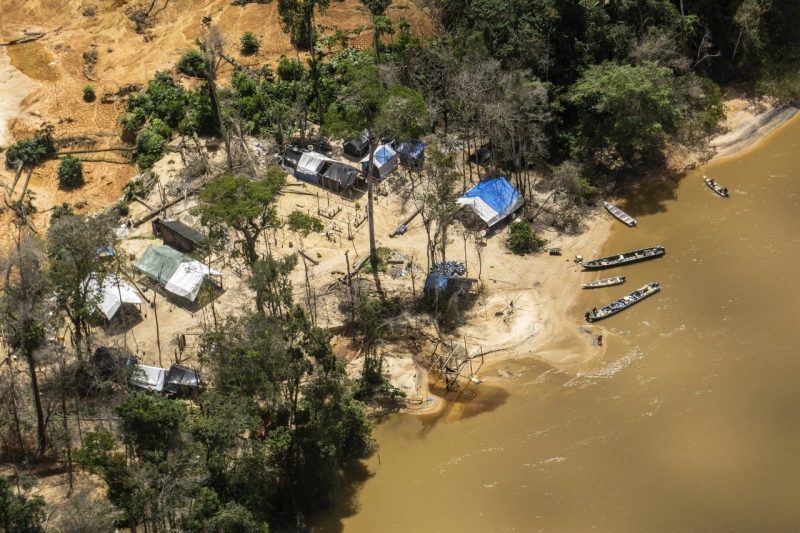
The Coalition of the Indigenous Peoples of Brazil (APIB) comes to the public to express its vehement rejection of the displays of visceral hate and racism that the Bolsonaro government has, since its first day of government, routinely and publicly expressed against the indigenous peoples, organizations and leaders of Brazil, in the last few days materialized by the announcement of a bill that aims to define
“specific conditions for search and mining of mineral resources, including artisanal mining and oil and gas, and production of hydroelectric energy in indigenous lands”, an announcement made up with false good intentions and rhetoric that induce the co-optation and division of the peoples, distorting the real sense of autonomy, to actually also authorize the invasion of indigenous territories through other ventures such as extensive agriculture, livestock production and other predatory ventures.
The vile statement that “The Indian is a human being just like us. He has a heart, he has feelings, he has soul, he has desires, he has needs…” repeats the ethnocentrism of European invaders, who more than 500 years ago massacred millions of our brothers, a practice that nowadays constitutes a non-bailable racial crime.
Bolsonaro government’s “dream” is actually the will to serve the economic interests that boosted its candidacy and that support his government, even if it implies total disregard for national and international legislation that guarantees our fundamental rights, our original right, congenital right, to a traditional occupation of our lands and territories, our right to exclusive possession and enjoyment, and our right to consultation, free, prior and informed consent on any administrative and legislative measures that affect us.
It has to be said, the majority of indigenous peoples and communities in Brazil do not share the desires of a minority of indigenous individuals who delude themselves and bend to the camouflaged evil intentions of this government.
The APIB, therefore, denounces Bolsonaro Government’s manipulation of our right to autonomy and repudiates this death project that is planned in indigenous territories at any cost, with irreversible impacts particularly on isolated and recently contacted indigenous peoples, and calls to all its base and movements, organizations and supportive segments of national and international society to join us in this battle for life and wellbeing not only of indigenous peoples but of all humanity and the planet.
Brasília – DF, February 6, 2020.