18/Sep/2023
Foto Tukumã Pataxó | Apib
The trial for the Time Frame Thesis scheduled for September 20th in the Supreme Federal Court could determine the future of Indigenous Lands in Brazilian territory and mark a turning point for the global climate. The Indigenous movement is mobilizing throughout Brazil and is sending an Indigenous commission from Apib to New York for the Climate Week. The goal is to strengthen international mobilization in defense of the right to Indigenous Lands.
- The threat to Indigenous Lands is a climate threat to all of humanity.
We are of the Earth, and the Earth is within us. If the Earth dies, we -as Indigenous peoples- die.
The Articulation of Indigenous Peoples of Brazil (Apib) is calling for various mobilizations across Brazil this week and is participating in the New York Climate Week to raise awareness about the risks posed by the upcoming vote on the Time Frame Thesis (Marco Temporal), which is scheduled on September 20th. The Supreme Court of Brazil will vote on the legitimacy of a legal thesis promoted by the Brazilian agribusiness sector, which proposes to review the demarcation process of Indigenous lands, and this could directly impact the global climate crisis.
The Time Frame Thesis proposes that only Indigenous peoples who can prove they were living on their lands in 1988, the same year the Federal Constitution was promulgated, can have rights to those lands. This denies the forced evictions of hundreds of communities that could only begin to claim their ancestral lands after Brazil’s redemocratization in the late 1980s.
This week marks the 15th edition of Climate Week in New York, from September 17th to 24th, and the 78th Session of the United Nations General Assembly, from September 19th to 23rd, which will open with the speech by President Lula. In light of these events, a group of 10 Indigenous leaders is in New York to participate in activities during Climate Week. The goal is to internationally alert about the threat that the Time Frame Thesis represents to the lives of Brazil’s Indigenous peoples and to the global climate crisis, as Indigenous Lands serve as a life reserve for the entire planet.
Apib and its regional organizations are strengthening mobilizations in Indigenous territories, cities, and especially in the capital, Brasilia, against the approval of the Marco Temporal thesis, which will be voted on September 20th. The proposal is to closely follow the trial and strengthen the next steps in the Indigenous movement’s struggle. Apib organized over 220 demonstrations in 21 states, including the Federal District, in May and June.
There are still five Supreme Federal Court justices left to vote in the trial. So far, there are four votes against the Time Frame Thesis and two in favor. Justices Edson Fachin, Alexandre de Moraes, Cristiano Zanin, and Luís Roberto Barroso have expressed opposition to the ruralist thesis. The only votes in favor of the anti-Indigenous proposal come from justices appointed by former President Jair Bolsonaro, André Mendonça and Nunes Marques.
On the same day as the Supreme Court vote, the Brazilian Senate is attempting to include in its agenda the project to turn the Time Frame Thesis into law. Ruralist senators seek to create a conflict and confrontation with the Brazilian judiciary in case the Supreme Court annuls the Time Frame Thesis.
In addition to the Time Frame Thesis, another proposal (PL 2903) is currently under consideration, which proposes further setbacks in the rights of Indigenous peoples, such as the construction of roads and hydroelectric plants in Indigenous territories without free, prior, and informed consent of the affected communities. The proposal also aims to allow farmers to sign production contracts with Indigenous people, violating the rights of Indigenous peoples to the exclusive use of demarcated lands.
While some falsely claim that “there is plenty of land for few Indigenous people in Brazil,” Apib argues the opposite, stating that there is plenty of land for few large landowners, and that agribusiness promotes the illegal invasion of Indigenous lands. The organization asserts, “there is no solution to the climate crisis without guaranteeing the rights of Indigenous peoples and the demarcation of their territories.”
Currently, nearly half of Brazil’s land is in the hands of rural producers. According to data published in Brazilian Diario Oficial da União, 41% of the total land in the country is rural properties, 13.7% is Indigenous lands, and 45.2% is designated for other purposes. Indigenous Lands represent a guarantee of life for Indigenous peoples and for all of humanity that depends on the future climate.
The Time Frame Thesis is a modern colonization strategy. “The future of Brazil’s Indigenous peoples is in grave danger, which can affect all of humanity, as it has been shown that Indigenous peoples, thanks to our ways of life, are guardians of nature and, therefore, of the global climate balance,” says Apib’s executive coordinator, Dinamam Tuxá. While 29% of the surrounding territory of Indigenous Lands is deforested, the deforestation rate within Indigenous Territories is only 2%, according to data collected in September 2022 by Apib and the Amazon Environmental Research Institute (IPAM). According to this study, most of the degradation is the result of illegal actions funded by agribusiness sectors, such as soybean plantations and extensive livestock farming. Similarly, scientists emphasize the importance of Indigenous Territories, where biodiversity is considerably higher than in the rest of the national territory.
Currently, the Supreme Federal Court is adjudicating a proposal that seeks to change the demarcation process of Indigenous Territories in Brazil through the Time Frame Thesis. At the same time, the National Congress is trying to turn the Time Frame Thesis into law and legalize crimes that promote Indigenous genocide and environmental destruction. But who is financing this threatening scenario? National and foreign companies such as Bunge, Xp, Kinea, Bradesco, Ducoco, Groupe Lactalis, among others, as well as international banks and investment funds, contribute to Brazilian agribusiness, which would be the main beneficiary if the Marco Temporal were approved, as recent reports from De Olho nos Ruralistas show.
A few farmers and entrepreneurs benefit from the profit of agribusiness at the expense of the lives of Indigenous peoples and the global climate balance. Illegal land invasions, assassinations of leaders and activists, and violence resulting from land disputes have increased in recent years. Allowing the occupation of Indigenous lands for the enrichment of a few is a modern form of colonization in which settlers seek to take over more and more hectares of national territory.
The Time Frame proposal exists as a consequence of the economic and political power of agribusiness. If approved, crimes will increase, and agricultural and natural resource extraction will intensify. The first to pay this bill will be Indigenous peoples. “Those responsible for continuing Indigenous genocide and worsening the climate crisis will be marked in history. Many will be accomplices of the new colonialism that threatens the survival of us, Indigenous peoples who inhabit the vast territory called Brazil, and the future of all humanity, because there is no solution to the climate crisis without the participation of Indigenous peoples,” emphasizes Dinamam Tuxá.
Relevant activities of Apib during the 15th edition of Climate Week from September 17th to 24th:
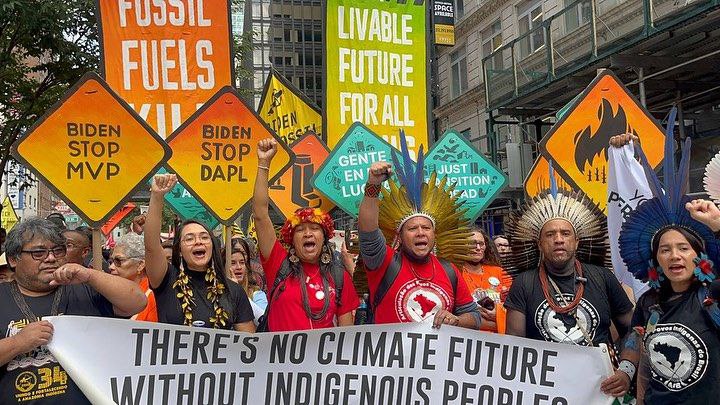
Apib participated on September 17th in the Climate Week March on the streets of New York in support of the Fight Fossil Fuel Strike. The indigenous delegation of Apib denounced the threat posed by the Time Frame Thesis, and they emphasized the indigenous emergency situation regarding extractive industries and agribusiness that cause multiple instances of violence in our territories. In addition, among the activities that make up the Climate Week agenda, it is worth noting that the executive coordinators Kleber Karipuna, Dinamam Tuxá, and other members of the indigenous delegation will participate on Tuesday 19th, in the talk “FCLP: Rights, Participation and Benefits for Indigenous Peoples and Local Communities in Forest Climate Financing” organized by the Forest and Climate Leaders Partnership organizations. On September 22nd, a portion of the delegation will be present at the dialogue co-organized with H.E. Razan Al Mubarak, the current president of the International Union for Conservation of Nature, to assess progress in the COP28 agenda with the aim of collectively identifying meaningful and respectful ways of involving Indigenous Peoples in the COP.
- Please see photos and videos of the March and other events on the Climate Week agenda where the Apib delegation was present:
Apib Audiovisual Material – 15th edition of Climate Week in New York
About Apib
The Articulation of Indigenous Peoples of Brazil (Apib) is a national reference body of the indigenous movement in Brazil, created from the bottom up. It brings together seven regional indigenous organizations (Apoinme, ArpinSudeste, ArpinSul, Aty Guasu, Terena Council, Coaib, and Guarani Yvyrupa Commission) and was born with the purpose of strengthening the unity of our peoples, fostering coordination among different regions and indigenous organizations in the country, as well as mobilizing indigenous peoples and organizations against threats and violations of indigenous rights.
Learn more about the Time Frame Thesis:
https://Apiboficial.org/marco-temporal/
For more information and to schedule interviews, you can contact the Apib press service:
[email protected]
Communication management – Samela Sateré Mawé – +55 (92) 98285 5077
International communication service – +55 (65) 99686 6289 / +55 (21) 96665 5518 / +55 (92) 99430-3762
31/Aug/2023
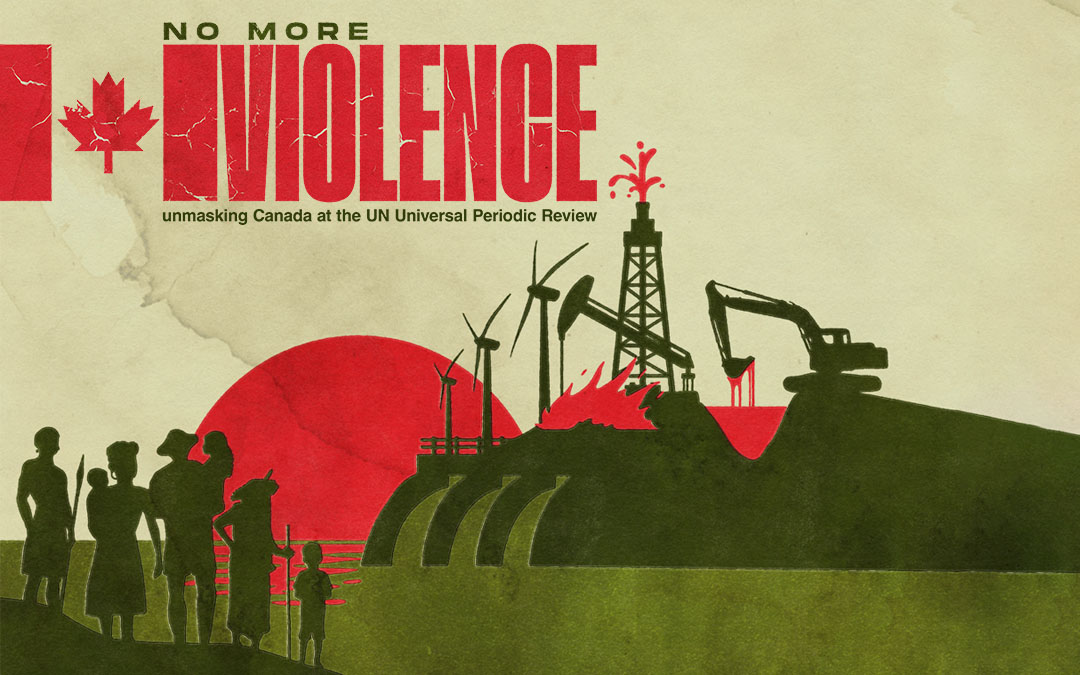
Geneva, August 31, 2023 – A groundbreaking report titled “Unmasking Canada: Rights Violations Across Latin America” was unveiled at the United Nations Universal Periodic Review Process (UPR) pre-session in Geneva, spanning from August 28 to September 1, 2023. This in-depth investigation highlights extensive human rights and environmental breaches by Canadian companies in Latin America and the Caribbean.
Compiled through the collaboration of over 50 civil society organizations, the report implicates 37 Canadian projects across nine countries in the region. Of these, 32 projects have been found responsible for environmental rights infringements, including 105 oil spills in Peru’s Block 192, directly linked to Frontera Energy. Additionally, the right to Free, Prior, and Informed Consent was violated in 26 projects, exemplified by dubious practices in Ecuador’s Warintza project managed by Solaris Resources Inc. Violent confrontations tied to 16 projects are also highlighted, with a notable incident in Peru in July 2023, where 20 individuals were injured.
While Canada positions itself as “climate forward,” this report challenges such a portrayal, emphasizing Canada’s protection of extractive industries that are responsible for significant human rights and environmental harm. In response to these findings and anticipating Canada’s UPR on November 10, 2023, the report advocates for UN member states to impose legally binding resolutions on Canada, compelling the nation to address corporate misconduct overseas.
Mauricio Terena, Legal Coordinator from Brazil’s Association of Indigenous People (APIB), said: “We have come here to denounce the involvement of Canadian companies in human rights violations in Brazil, particularly the case of the Belo Sun mining company in Pará, which aims to establish the country’s largest open-pit gold mine. While Canada portrays itself as a defender of human rights and the environment, its actions contradict this narrative, especially when infringing upon the rights of indigenous peoples in Brazil. The discrepancy becomes evident when we realize that Canada has not signed the ILO’s Convention 169. Therefore, we hope that the states with which we are in dialogue recognize this reality and urge Canada to reassess the operations of its corporations, seeking tangible action in defense of indigenous peoples and traditional communities”
Addressing the UPR’s function, where every four years UN member states review each other’s human rights records, Latin American civil society representatives presented new recommendations for Canada. These recommendations underscore the need for Canada to introduce binding and comprehensive legislation centered on due diligence and corporate accountability. This encompasses the oversight of financial institutions and Canadian corporations throughout their global supply chains, aiming to prevent, mitigate, and penalize corporate misdeeds while ensuring victims of such practices overseas can seek justice and full reparation.
“We hope that the UPR (Universal Periodic Review) process will establish itself as another strategy in our defense of indigenous peoples’ rights, serving as a tool for the protection of human, indigenous, and environmental rights. It is essential to acknowledge that corporations involved in such violations are committing criminal acts. These actions should not be viewed merely as isolated incidents, but rather on a broader scale, as violating indigenous rights impacts all of humanity. Thus, beyond national and international laws, these transgressions should be seen from a more comprehensive perspective. It is crucial for states to commit, within the UN framework, to join a global mechanism where they recognize the need to monitor and mutually hold each other accountable for actions that uphold human, indigenous, and environmental rights”, said Maria Judite “Kari” Guajajara, Legal Advisor at the National Indigenous Organization of the Brazilian Amazon (COIAB).
This isn’t the first instance of Canada facing allegations within the United Nations Universal System due to the activities of its corporations abroad. Six recommendations were directed at Canada during the 3rd cycle of the Periodic Review. These addressed, among other concerns, Canadian businesses’ vital assurance and protection of human rights. Nevertheless, even after pledging to meet these recommendations, Canada consistently failed to fulfill its extraterritorial obligations, neglecting to take effective action to supervise corporate activities domestically and internationally.
Gisela Hurtado, Advocacy Manager at Amazon Watch, commented: “Our report unveils the disturbing reality behind Canada’s corporate endeavors in Latin America. While Canada boasts of ethical business conduct, the documented evidence reveals a starkly contrasting picture – one where profit is prioritized over people and the environment. Urgent change is paramount.”
The report’s presentation in Geneva was spearheaded by a delegation that included Mauricio Terena from APIB; Maria Judite “Kari” Guajajara from COIAB; Josefa de Oliveira, a Popular Educator with Movimento Xingu Vivo Para Sempre; Lorena Aranha Curuaia, Vice President of the Iawá Community; ; and Brayan Mojanajinsoy Pasos, General Secretary of the Association of Indigenous Councils of the Municipality of Villagarzón Putumayo (ACIMVIP). The delegation was further supported by representatives from organizations including Amazon Watch, AIDA (Regional), Earthworks (US) Gaia (Colombia), and Ambiente y Sociedad (Colombia).
Executive Summary
Informe Regional
Informe Amazônico
Informe sobre Petróleo
UPR Canada Advocacy Paper
Short summary involving Canadian companies involved in rights violations highlighted in the report.
1. Frontera Energy in Lote 192 in Peru:
– Over 2,000 sites contaminated, affecting 26 Amazonian indigenous communities.
– Proposed activity closure plan doesn’t include reparations for affected communities.
2. Mineradora Argentina Gold SRL (joint venture between Barrick Gold and Shandong Gold):
– Responsible for at least five toxic substance leakages, including cyanide and arsenic, into the Jáchal River in Argentina from the Veladero mine.
– The project is in violation of the Glacier Law due to its location in a glacial zone and affects the UNESCO recognized biodiversity heritage site, the San Guilhermo Reserve.
3. Belo Sun’s Volta Grande project in Brazil:
– Cumulative impacts with the Belo Monte hydroelectric dam, located less than 10 km away from the prospected mining site;
– Armed security forces hired by the Canadian mining company to monitor local leaders and hindering their freedom of movement;
– Utter disrespect to Free, Prior and Informed Consent of Indigenous and riverine communities;
– Imminent and irreversible risks of an environmental tragedy if toxic waste spills into the Xingu River due to a potential dam break, given the lack of sysmic and tailings dam safety studies.
– Direct impact on communities, their traditional livelihoods, and local ecosystems.
4. The Mina Varadero in Chile:
– Contaminated water sources with mercury, impacting rural populations and children.
5. ISAGEN – Brookfield Asset Management’s Hidrosogamoso dam in Colombia:
– Significant harm to local ecosystems and communities.
6. American Lithium’s mining projects (Falchani, Macusani, and Quelccaya) in Peru:
– Regularly release toxic residues, affecting over 700,000 people and contaminating the Lake Titicaca and Amazon River basins.
7. Solaris Resources Inc.’s Warintza mining project in Ecuador:
– Ignored the territorial rights of the Shuar Arutam indigenous people and adopted divisive tactics.
8. Mining project of Ixtaca in Mexico:
– Suspended due to violations of indigenous rights.
9. El Pato II mining project in Guatemala:
– Affected the Poqomam Maya and mestizo communities without proper prior consultation.
10. Libero Copper’s Mocoa mining project in Colombia:
– Directly harmed the ancestral territory of the Inga people, violating their rights.
11. Cosigo Resources LTD’s Machado gold extraction project in Colombia:
– Severely impacted sacred indigenous sites in the Yaigojé Apaporis territory.
12. Barrick Gold’s Pueblo Viejo mine in the Dominican Republic:
– Forced the displacement of 65 local families due to the El Llagal waste dam.
13. Mining projects of La Plata by Atico Mining Corporation and Las Naves by Curimining S.A. (a subsidiary of Adventus Mining Corporation) and **Salazar Resources Limited in Ecuador:
– Tried legalizing their operations despite violating national and international human rights laws, leading to confrontations and injuries.
14. Petrotal’s Lote 95 in Peru:
– Protests demanding community rights resulted in several deaths by police forces guarding the oil field.
15. Equinox Gold in Brazil:
– Concealed data regarding their operations and impacts, including a dam break.
– 4,000 of people directly impacted by toxic waste resulted from the dam break that contaminated local Amazonian rivers, violating the right to a clean environment and adequate access to drinking water.
– Criminalization of local community leaders that protested for the right to water.
16. Gran Tierra Energy in Ecuador:
– Conducted explorations without proper information dissemination in the Charapa, Chanangué, and Iguana blocks.
30/Jun/2023
Brasilia – DF, Brazil
June 30, 2023
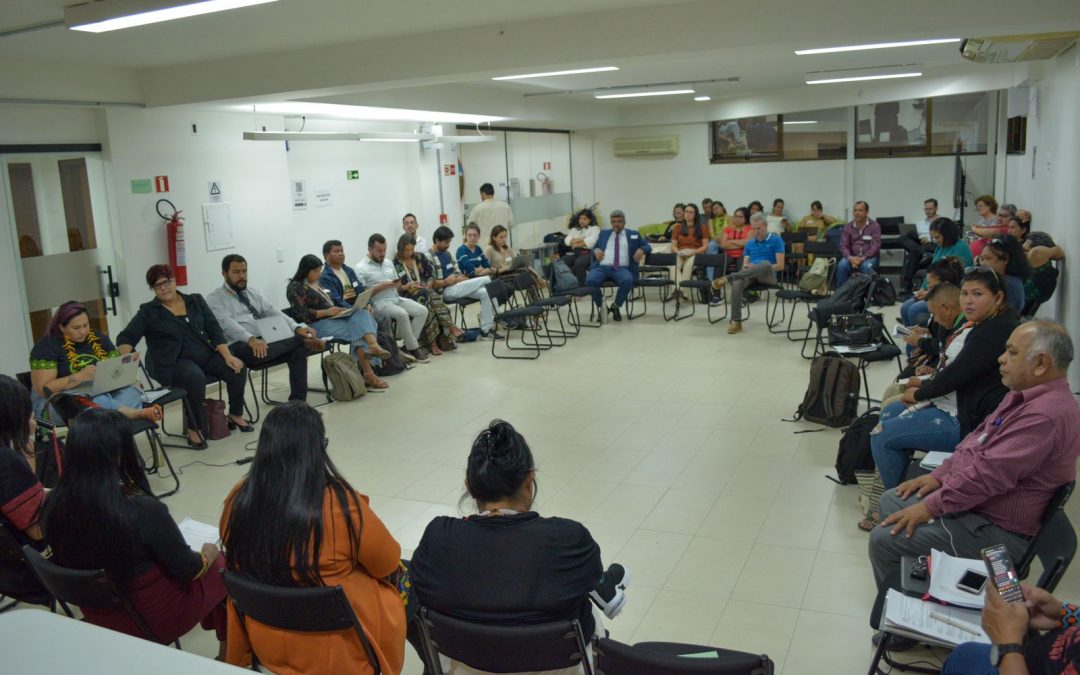
1. We, Indigenous peoples and organizations and allies who met in Brasilia from June 28th to 30th, 2023, with the objective of evaluating and promoting a diagnosis of the construction process and deliberations regarding the holding of the Amazon Summit, which will take place in Belém – PA on the 8 and 9 of August 2023, after the Amazon Dialogues (4, 5 and 6 of August), and which intends to produce a consensus position regarding the forest to be presented in future global debates on climate action and the protection of biodiversity.
2. In view of the aforementioned proposal, we insist that the Indigenous peoples of the Amazon Basin, as true experts, deep connoisseurs and protectors of forests, still do not have the necessary and indispensable conditions to effectively participate in the processes of dialogue, proposition and construction of the aforementioned Summit.
3. We consider that dealing with the Amazon agenda without the effective participation of the Indigenous Peoples who inhabit it, demonstrates the non-recognition of our lives and the roles we play in favor of the maintenance and defense of the forests. Once again, we are faced with debates and construction of proposals about our territories without our guaranteed participation, which reveals the recurrent colonialist practice that seeks to silence our protagonism, while supplanting our voices and autonomy in decision-making spaces.
4. Before this scenario, we reaffirm our self-determination and demand the effective inclusion in the spaces, as well as the articulation and construction, especially for the Amazon Summit, as Indigenous peoples of the entire Amazon Basin, holders of the practices and knowledge essential to the maintenance of the climate balance and biodiversity.
5. We announce the creation of the Working Group that seeks to represent national and regional Indigenous organizations from the 09 countries that make up the Amazon Basin (Brazil, Colombia, Peru, Ecuador, Venezuela, French Guiana, Guyana, Suriname and Bolivia) with the objective of advocating from the perspectives of Indigenous Peoples, the propositions of the Amazon Summit and all subsequent processes until COP 30 in 2025.
6. We, the Indigenous peoples and organizations of the five countries that are part of the Amazon Basin present at this meeting, demand that our own forms of territorial organization and traditional and original occupation, which are independent and prior to State recognition, be considered.
7. Discussing the future of the Amazon without Indigenous peoples is equivalent to violating our original rights and all the work we do for human life on the planet.
INDIGENOUS ORGANIZATIONS THAT SIGN THIS LETTER:
Coordination of Indigenous Organizations of the Brazilian Amazon – COIAB
Articulation of the Indigenous Peoples of Brazil – APIB
Articulation of Indigenous Peoples and Organizations of the Amazon – APIAM
Roraima Indigenous Council – CIR
Coordination of Organizations and Articulations of the Indigenous Peoples of Maranhão – COAPIMA
Organization of the Indigenous Peoples of Rondônia and Northwest Mato Grosso – OPIROMA
Articulation of the Indigenous Peoples of Tocantins – ARPIT
Manxinerune Tsihi Pukte Hajene – MATPHA
Union of Indigenous Women of the Brazilian Amazon – UMIAB
Indigenous Council on Climate Change – CIMC
Confederation of Indigenous Nations and Peoples of the Eastern Cacho and Bolivian Amazon – CIDOB
Confederation of Indigenous Nationalities of the Ecuadorian Amazon – CONFENIAE
Organisatie van Inheemse Volken in Suriname – OIS
Association of Amerindian Peoples – APA
National Articulation of Indigenous Women Warriors of Ancestry (ANMIGA)
ALLY ORGANIZATIONS THAT SIGN THIS LETTER:
Avaaz
The Nature Conservancy Brazil – TNC Brazil
World Wide Fund for Nature Brazil – WWF Brazil
Amazonian Cooperation Network – RCA
Amazon Watch
Voices of Just Climate Action – VAC
16/Nov/2022
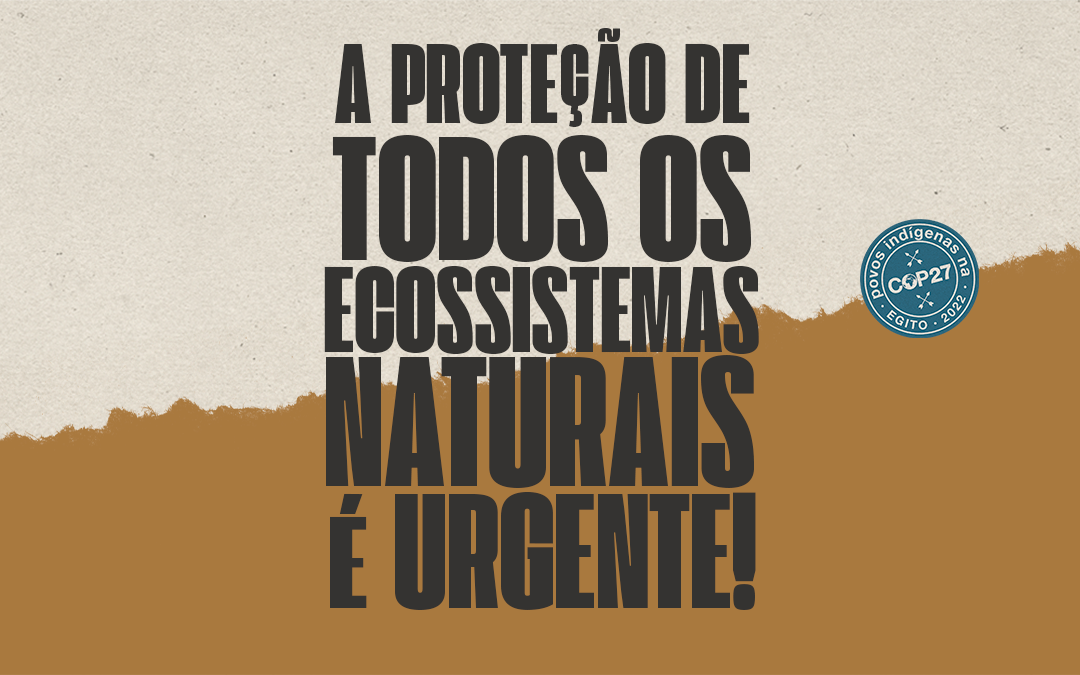
We, from the Brazil’s Indigenous People Articulation (APIB) and the National Coordination of Articulation of Rural Black Quilombola Communities (CONAQ) emphasise our position in defence of all natural ecosystems in Brazil. It is extremely important that climate negotiations take into account not only forests, but also savannas, grasslands, wetlands and all the different expressions of nature around the world. These landscapes also contribute to the fight against climate change and are part of the solutions for a more sustainable, inclusive and socially just world.
We urge the European Union to take the necessary and urgent measures to prevent imported deforestation, as well as the land conversion of other native wooded lands. This is crucial in the Cerrado context, as most of the soy exported to the European Union is produced in this highly threatened biome.
The Cerrado is not a degraded landscape; it is the world’s richest savanna. It is home to hundreds of indigenous people, cultures and territories, as well as to communities of quilombolas, geraizeiros* and other traditional cultures and populations. It is also the largest agricultural frontier in the world, bearing the largest impact on soy imported by Europe. Monitoring tools are available to ensure the protection of the Cerrado – all we need is political will!
The same goes for all other natural ecosystems that are not forests: Pampas, Pantanal, Caatinga, as well as for the Atlantic Forest. If the European regulation against deforestation restricts itself to only protecting forests, it will have very limited impact – as almost 75% of the Cerrado would remain unprotected. The same would happen to 76% of the Pantanal and of the Pampas and almost 90% of the Caatinga. Moreover, the European regulation would have a perverse effect, as it would intensify the pressure of destruction on these ecosystems and on its people.
Ultimately, by being restricted to forests, the European regulation against deforestation would have the opposite effect of its original objective. This is why this law must also include “native other wooded lands” (primary savannas), rather than being restricted to native forests only.
This would increase the Cerrado protection from 26% to 82%, Pantanal protection from 24% to 42% and of the Caatinga from 11% to 93%. The Brazilian Cerrado is losing nearly a million hectares each year, and this destruction is increasing. An eventual revision of the law to be discussed in 2 years will not prevent the loss of millions of hectares of valuable ecosystems, the emission of millions of tons of carbon, nor violent attacks on hundreds of traditional people and territories. Therefore, we reiterate our claim:
THE EUROPEAN LEGISLATION ON DEFORESTATION MUST ENSURE THE RESPECT OF THE HUMAN RIGHTS OF ALL INDIGENOUS, QUILOMBOLA AND TRADITIONAL PEOPLE, AND PROTECT THE ENTIRE CERRADO NOW, BY INCLUDING NATIVE AND PRIMARY “OTHER WOODED LANDS” IN THE SCOPE OF THE LAW TEXT TO BE APPROVED THIS YEAR.
For technical details on this topic, refer to the following documents:
Egypt, Sharm el Sheikh, 15 November 2022
ARTICULATION OF THE INDIGENOUS PEOPLES OF BRAZIL – APIB
14/Nov/2022
Apib note to the new Lula Government and the world
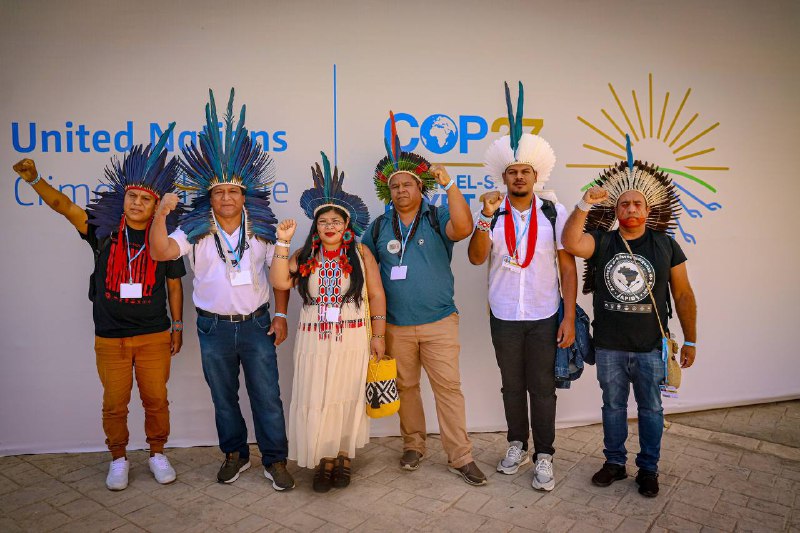
The Articulation of the Indigenous Peoples of Brazil (Apib), together with its grassroots organisations, is present at the 27th UN Conference on Climate Change to reaffirm what needs to be done to tackle the global climate crisis: RECOGNIZE AND GUARANTEE LAND TENURE RIGHTS OF OUR INDIGENOUS LANDS!
We are in Egypt with an Indigenous delegation composed of women, men and young people who live in all 6 ecosystems in Brazil. We occupy this space because we know that for our Lands and Lives to be protected, it is still necessary to demarcate the minds of humanity. Government representatives, activists, leaders of human rights and socio-environmental organisations need to understand and support indigenous peoples in this ancestral mission of protecting our MOTHER EARTH.
For the whole world, this is the COP that marks the return of Brazil to the discussion and agendas on climate change, human and socio-environmental rights, after the last four years of a genocidal and ecocidal misgovernment. President Lula’s election victory, supported by Apib and all its organisations, marks a new moment for Brazil on the national and international scale.
Without our territories, greenhouse gas emission rates would be even more drastic. In 2021 alone, Brazil recorded the highest increase in the dumping of CO2 into the atmosphere in the last 19 years. A total of 2.42 billion tons of these pollutants were dumped.
On the international scenario, the European Parliament is in the process of approving the anti-deforestation law (FERC) and needs to ensure traceability of commodities beyond forests. Demanding that commodities producing companies respect the preservation of our biodiversity and the rights of indigenous peoples is crucial at this time. EU law needs to demand traceability of commodities from all native and primary vegetation. Only then the consumer markets will be taking action for a chain free of deforestation and indigenous blood. The Cerrado, Caatinga, Pampa and Pantanal also need to be framed in the Law’s concept of vegetation, in addition to forests like Amazon and Atlantic Rainforest, regardless of the UN Food and Agriculture Organization’s (FAO) definition of forests.
Of the promise made by countries and philanthropic institutions at the last COP26, in 2021, to guarantee 1.7 billion for indigenous peoples and local communities, only 19% was applied. Of this amount, only 7% was allocated directly to indigenous peoples’ organisations, according to a report by the group of funders of this proposal. In other words, for another year, indigenous peoples continue being directly impacted by the climate crisis, but without direct access to financial mechanisms to strengthen their actions to fight it.
Faced with this scenario, we, the indigenous movement, represented by Apib, reinforce to president Lula and his entire transition team that
- The demarcation of the Indigenous Lands be placed as a central agenda in the fight against climate change by the Lula Government;
- The five Indigenous Lands, which have been fully demarcated and are only awaiting the homologation decree, be signed as an act of commitment with the indigenous peoples in the first days of the government;
- The Lula Government supports the inclusion of the Cerrado, Atlantic Rainforest, Caatinga, Pampa, Pantanal and Amazon biomes in the Anti-Deforestation Law of the Parliament;
- Commitment to ZERO deforestation;
- Response on the request made by Apib to the Transition Government to include the participation of indigenous leaders in the space of construction of the transition process for rediscussion on the indigenous agenda within the Government (Funai, Sesai…) and the recently created Ministry of Indigenous Peoples;
Egypt, Sharm el Sheikh, 14 November 2022
ARTICULATION OF THE INDIGENOUS PEOPLES OF BRAZIL – APIB

04/Nov/2022
Between 6 and 18 November, indigenous leaders of the Articulation of Indigenous Peoples of Brazil (APIB), together with their grassroots organizations, will participate in the 27th Conference of the Parties to the United Nations Framework Convention on Climate Change (COP27). The event will take place in the city of Sharm el-Sheikh, Egypt, where the delegation will discuss the demarcation of Indigenous Territories (ITs) in the country as an essential action to face the global crisis.
The conference takes place after Luiz Inácio Lula da Silva’s victory in the presidential elections, placing the country back on the climate and environmental agenda, especially in the international arena. The elected president accepted the invitations of governors of the Legal Amazon and the Egyptian presidency to attend the event.
The APIB reiterates that the Indigenous Lands are the areas with the greatest biodiversity and with the most preserved vegetation, since they are territories protected and managed by the native peoples. An example of this is the result of data crossing performed by APIB in 2022, in partnership with the Amazonas Environmental Research Institute (Ipam), with data from MapBiomas. It points out that in Brazil 29% of the territory around the Indigenous Lands is deforested, while inside the Indigenous Lands only 2% is deforested.
Dinamam Tuxá, executive coordinator of APIB, recalls that in 2018 one of the campaign promises of the current president, Jair Bolsonaro, was to not demarcate any ancestral territory. The measure is an attack on the rights of indigenous peoples guaranteed in the 1988 Federal Constitution and an incentive to deforestation and illegal mining.
“In Brazil there is no solution to the climate crisis without the demarcation of indigenous lands and, consequently, the protection of indigenous peoples. We have an intimate relationship with Mother Nature and we see up close the effects of the environmental destruction that Bolsonaro has caused, now with Lula we hope to work together so that the situation changes,” explains Tuxá.
The coordinator, who will be at the conference, will participate in the panel “Governmental transition and Brazilian socio-environmental policy” on November 9. Organized by the Climate Observatory, the panel will also include the Secretary of OC – Márcio Astrini, Tasso Azevedo – Coordinator of the Greenhouse Gas Emissions Estimation System of the Climate Observatory (SEEG), Brenda Brito – researcher of the Institute of Man and Environment of the Amazon (IMAZON), Luis Fernando – Knowledge Director of SOS Mata Atlântica and a representative of the new elected government.
Global Collaboration
The COP27 also comes after Norway announced it would resume the Amazon Fund, an international cooperation program that allocated financial aid to Brazil to reduce deforestation. The Fund was created during the Lula government, but in 2019 Bolsonaro imposed new requirements that caused Norway and Germany to terminate transfers of resources that reached up to US$ 1 billion.
The proposed resumption of the Amazon Fund was only possible with the election of Lula, who has among his promises to end deforestation in the Amazon, respect indigenous peoples and recover the country’s protagonism in the fight for climate justice.
Eunice Kerexu, executive coordinator of Apib, says that having a government committed to these agendas brings relief and optimism to activists and indigenous organizations.
“With Lula we have a more optimistic scenario, but the struggle does not stop. We will continue to fight for the demarcation of indigenous lands and the overthrow of the Temporal Milestone thesis. Just like Norway, it is also important that more countries take part in the debate and return to dialogue with Brazil so that together we can solve the climate crisis”, said Eunice Kerexu.
In 2021, Brazil emitted 2.42 billion tons of CO2 into the atmosphere, which represents a 12% increase compared to 2020 and the highest increase in greenhouse gas emissions in 19 years, according to a survey by the Climate Observatory. Experts point out that the main cause of this increase is deforestation. Brazil and Mexico were the only two countries among the signatories of the Paris Agreement that regressed in their targets in the 2020 review, according to the UN.
Articulation of the Indigenous Peoples of Brazil (APIB)
The Articulation of the Indigenous Peoples of Brazil (APIB) was created in 2004 and is the national reference for the indigenous movement. It gathers regional indigenous organizations and was born with the purpose of strengthening the union of the peoples, the articulation between different regions and indigenous organizations of the country, in addition to mobilizing the peoples and indigenous organizations against threats and aggressions to indigenous rights.
SERVICE
What: APIB takes its demands for Indigenous Land recognition to Egypt and reinforces climate change agenda for Lula Government
When: November 6th to 18th, 2022
Where: United Nations Conference of the Parties on Climate Change (COP27) in Sharm el-Sheikh, Egypt.
Contact:
[email protected]
15/Sep/2022
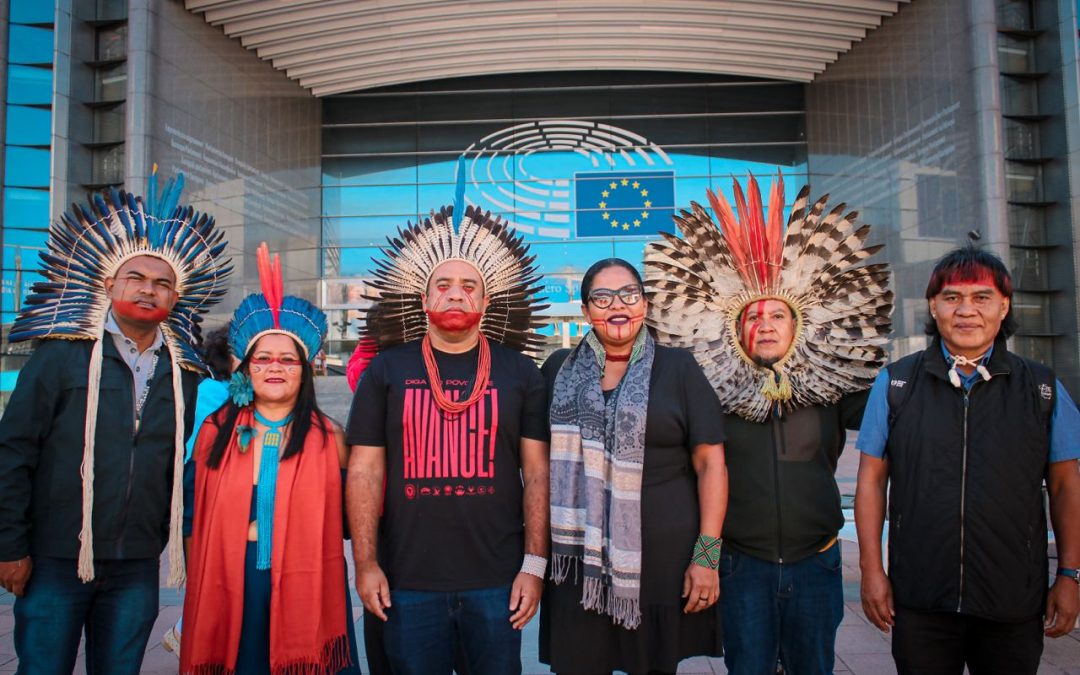
The European Parliament voted yesterday, September 13th, on the draft law for Forest and ecosystem-risk commodities regulation (FERC). Among the results of the debate, the inclusion of respect for international agreements and treaties on the rights of indigenous peoples stands out, as APIB had been defending since the beginning of the proposal of this legislation. However, another of APIB’s main demands, which was the protection of all ecosystems, regardless of the definition of forest cover, was not included.
The FERC law, also known as the deforestation-free products law, will include measures that oblige companies producing commodities to respect international human rights legislation, which includes guaranteeing the rights of Indigenous Peoples. The Members of the European Parliament (MEPs), meeting yesterday (13) in Strasbourg, France, voted on the draft law and reviewed the suggested changes. Among the proposals accepted by the MEPs, there is the prerequisite that Indigenous Peoples have guaranteed access to free, prior and informed consultation on the production of commodities, as advocated by Convention No. 169 of the International Labor Organization (ILO). No product may be imported into the European Union without the responsible company obtaining the consent of the affected Indigenous Peoples to install a commodity production activity close to their lands.
Another of the accepted proposals was the revision of the law annually (every year), instead of every two years as was initially foreseen. MEPs did not give in to pressure from business lobbies and leather was included in the group of commodities regulated by the regulation for deforestation-free products. This implies a major victory, as leather is one of the main products potentially responsible for deforestation imported by the European Union. In addition to all commodities considered by the first law proposal -beef, palm oil, soy, wood, coffee and derivatives (such as chocolate and furniture)- the regulation voted today also considers the traceability of deforestation in the pork, sheep, goat and poultry meat, as well as corn, rubber and paper products.
The important role played by financiers of commodity production chains, was also considered. MEPs included regulation for European banks and investors to not finance deforestation and human rights violations.
The European Parliament is aware that the creation of a law for deforestation-free products in European Union countries will not end deforestation. Commodities with a forestry risk that can be sold in markets other than the European one. Then, the European Parliament proposes a cooperation program between countries to apply measures to stop forest destruction. The MEPs proposed that the European Commission be responsible for drawing up maps that identify countries with high deforestation risks, in order to support international cooperation programs. Likewise, they insisted on the need for good governance within the affected countries by deforestation, as well as the protection of the rights of Indigenous Peoples, traditional populations and other people who depend on nature.
Parliament requested assistance so that small producers can comply with the rules established by the FERC law, among which they highlight, for example, the need for geolocation traceability of products. It is fair and necessary to build partnership and cooperation programs to help small producers make a transition to sustainable agricultural and livestock production.
In addition, the legislation will include access to independent and impartial justice bodies to oversee the impacts of deforestation caused by commodity production, but only on an administrative basis. Companies cannot be directly prosecuted by penal or criminal law through the mechanisms established by FERC. Furthermore, the Euro-parliamentarians rejected the request to include in the anti-deforestation law the need for compensation mechanisms for Indigenous Peoples affected by commodity production chains.
“What this law needs is to be stricter in the traceability of these products. Indigenous Peoples are not looking for compensation, we want measures to avoid the impacts and, in case of illegalities, criminal prosecution for companies and not only administrative penalisations”, explains Dinamam Tuxá, APIB coordinator.
Another of the most important demands that was left out was the protection of all ecosystemes – regardless of the FAO definition of forests applied in the FERC law. “In addition to what this law recognized, we would like a much more ambitious regulation, recognizing and protecting other ecosystems for the guarantee and protection of these territories also under threat from the advance of agribusiness”, says Tuxá. “We understand that the non-recognition of other ecosystems within this law will put even more pressure on deforestation outside the Amazon forests. This brings us concern because these are productive areas that are already in a lot of conflict and that, in many places in Brazil, agribusiness have drastically advanced over indigenous territories”. Protecting only some natural areas opens a gap for commodity production chains to be moved from one region to another without solving the deforestation problem. APIB insists on the need to review this point in the coming months of debate before final approval of the text.
The result of the vote was the last step in the elaboration of the text of the FERC law which was presented to the European Parliament in November 2021. However, the legislation can still undergo changes, as a result of negotiations between the European Parliament, the European Council and the European Commission. This process, known as “trilogs”, aims to conclude a final version of the legislation by the end of the year 2022, approximately. Only after the final approval by all member states of the European Parliament, the law can come into force.
09/Sep/2022
On September 13th, the European Parliament will vote on the Proposal for a regulation on deforestation-free products (FERC law), also called the Deforestation-free products law. APIB has been following the construction of the legislation since 2020 as it has some gaps that prevent from guaranteeing the effective protection of Indigenous Peoples against the pressure of commodity production.
The Articulation of Indigenous Peoples of Brazil (Apib) promotes a campaign to guarantee the rights of indigenous peoples in the FERC regulation, which will be voted on by the European Parliament on September 13th. With the campaign named “We are all ecosystems” (Somos Todos Biomas), the organization also seeks to include all Brazilian ecosystems in the new legislation.
The FERC law provides sanctions to minimize the risk of deforestation and forest degradation associated with products placed on the EU market. However, the definition of forest defined by FAO and considered by the legislation is very reduced and excludes a good part of biomes and natural areas, which would be left out of protection. Increasing the traceability of production chains only in some biomes announces a threat of displacement and intensification of commodity production in the unsupervised natural areas, which historically have already suffered such pressure.
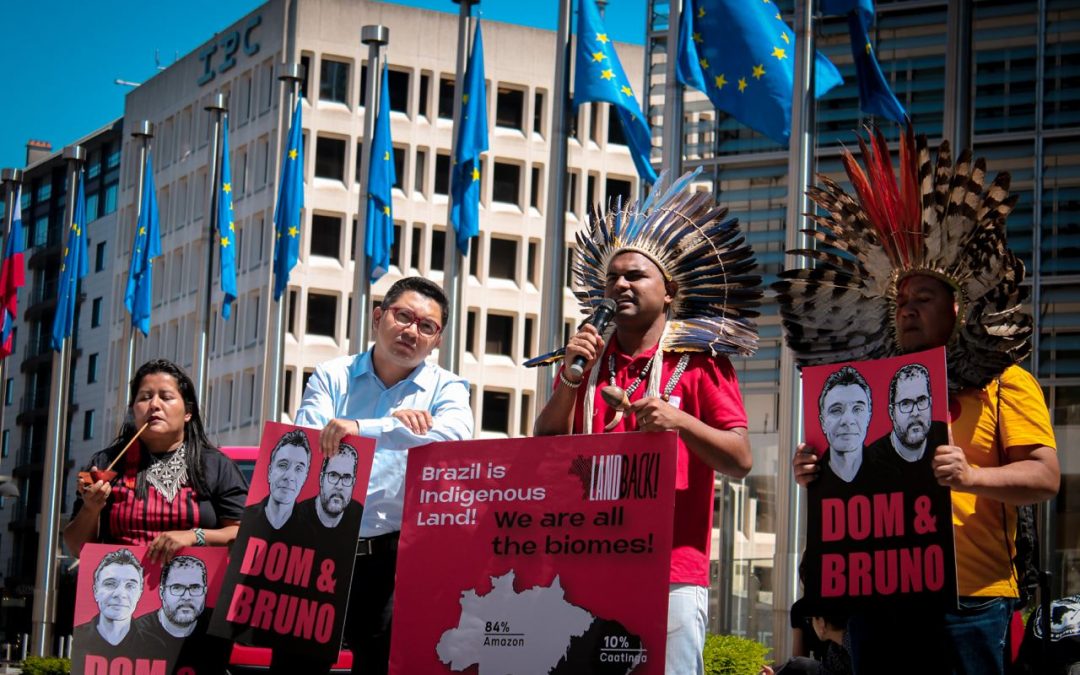
In the case of Brazil, if the law is applied according to the current proposal, the Amazon forest would be the only biome with the largest protected forest area (84%) from the threats of illegal deforestation for the production of commodities, followed by the Atlantic Forest, Mata Atlántica, (71%). By contrast, only a small part of Cerrado (26%), Caatinga (10%), Pantanal (24%) and Pampas (11%) biomes would be considered as forest to be protected by Deforestation-free products law, according to data from MapBiomas.
The Indigenous Peoples of Brazil, which are distributed throughout all the country and located in all biomes, are already suffering today the pressure of commodity production through: 1) illegal invasion and deforestation of their lands; 2) violence, threats and killings of indigenous leaders and activists who struggle for environmental and indigenous rights; 3) socio-environmental pressure through deforestation, fires and the intensification of large-scale agricultural activities around Indigenous Lands with the use of pesticides that pollute lands and rivers.
According to a crossing data study carried out by APIB with the location of Indigenous Lands in Brazil and the IPAM database about the land-use changes in a buffer of 25 km distance around: 29% of the territory around the Indigenous Lands is deforested, while within indigenous borders there is only 2% of deforestation. The data also shows that most of the deforested areas around Indigenous territories are lands under permanent cattle pastures (producing meat and leather) and soybean production, but also sugarcane, rice or cotton stand out among other commodities.
As a result of the growing risk of environmental degradation caused by some productive sectors, the proposal for a regulation on deforestation-free products aims to minimize consumption of products coming from supply chains associated with deforestation or forest degradation, and increase EU demand for and trade in legal and ‘deforestation free’ commodities and products. This, in turn, is expected to reduce GHG emissions and global biodiversity loss.
Nevertheless, all biomes have the same importance in achieving an environmental balance and APIB requests, first of all, that all natural areas should be protected by this legislation. We also demand respect for international treaties and agreements that protect human rights and indigenous rights, in particular, to provide a greater guarantee for the protection of the Indigenous Peoples of Brazil. In this regard, National legislations become insufficient when governments such as the current one of Jair Bolsonaro, with an openly anti-indigenist position, risk the lives of the guardians of the forests and biodiversity. Even with the pressure of globalization and commodities production, Indigenous Peoples struggle to continue living in an interrelationship of respect and sustainability with the forest. For this reason, APIB asks for the European Parliament to consider a more comprehensive deforestation-free products law that claims the protection of all types of vegetation and the world’s biodiversity, the survival of Indigenous Peoples and traditional populations, as well as the global climate balance to guarantee a good life for current and future generations.
27/Jun/2022
The European Parliament’s Environmental Commission is currently debating the text of the Proposal for a regulation on deforestation-free products (FERC), also called the deforestation-free law, which will be voted on in September. The legislation contains some extremely important gaps to guarantee the rights of Indigenous Peoples and the protection of their territories.
European countries, importers of Brazilian commodities such as beef, soy and leather, need to take responsibility for the impacts that these large-scale production chains have on Indigenous Lands in Brazil. Europe is the second largest market for selling soybeans produced in Brazil, as well as a major importer of Brazilian beef and other forest-risk products. Agribusiness, mining and other large-scale exploration put strong pressure on the protection of Brazilian biomes, the guarantee of indigenous rights and climate change. European demand for commodities amplifies these conflicts. Therefore, it is necessary to impose limits and create traceability mechanisms committed to human rights and the environment. Brazil is currently experiencing a delicate moment of dismantling of policies and institutions, in addition to an increase in violence in the countryside, as the murder of indigenist Bruno Araújo and journalist Dom Phillips has shown. According to the 2021 Global Witness report, Brazil is the fourth most violent country for environmental and human rights defenders.
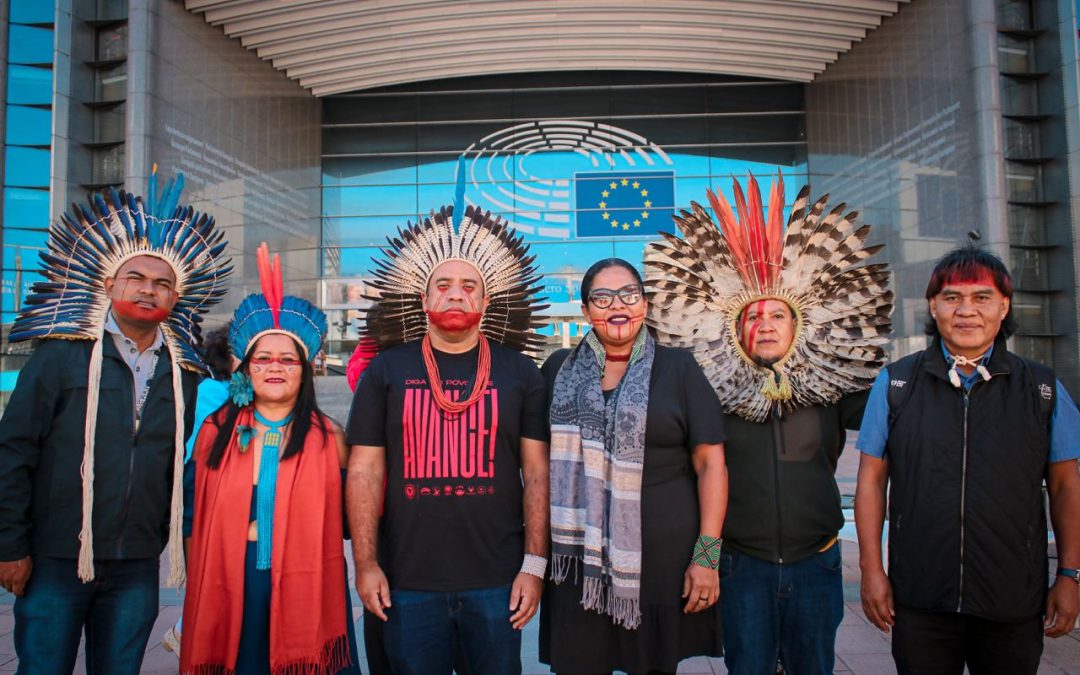
To focus on this debate, APIB toured Europe with a delegation of indigenous leaders between June 8th and 17th. In the first days, the delegation was in Paris, France, following the investigation of the Casino case, an international supermarket retailer accused of selling products linked to deforestation and land grabbing in Brazil and Colombia (you can read more about the case and the APIB tour in Europe here). In the second part of the trip, between the 13th and 17th of June, the entourage of indigenous leaders from APIB was in Brussels, Belgium, and held several meetings with members and committees of the European Parliament to position themselves on the law on deforestation-free (FERC) and to demand that Parliament include the demands of Indigenous Peoples in that legislation.
The ministers representing the member states of the European Union will put their positions in relation to the law at the next European Environment Council, which will take place on June 28th. Subsequently, the Environment, Public Health and Food Safety Committee – which is responsible for drafting the FERC law – will vote in mid-July on the proposed amendments to the draft presented, with the aim of having the final text for voting by the law in the plenary of Parliament in September 2022.
What is currently proposed by the Law on deforestation-free (FERC)?
The European Commission’s Proposal for a regulation on deforestation-free products (FERC) pretends to avoid the importation of products that promote illegal deforestation within their production chains. The proposed law, presented on November 17th 2021, seeks to create sanctions for products that pose a risk to the environment, but would only be implemented on lands considered forests according to the definition of the FAO (Food and Agriculture Organization of the United Nations). This definition disregards a large part of the Brazilian biomes and, as a consequence, also excludes the reality of a good part of the Indigenous Peoples of Brazil.
If the FAO definition of forests is the only criterion taken into account, Brazilian biomes would be at risk due to large-scale commodity production chains: 75% of the Cerrado, 89% of the Caatinga, 76% of the Pantanal and 74% of the Pampa, according to data from MapBiomas.
The proposed law would be applied in only 15% of the Pantanal region, one of the biomes most affected by fires in recent years, and completely disregards the Pampas biome in the south of the country, where historical processes of invasion and occupation of indigenous lands are taking place, caused mainly by the advance of soy and livestock. The Cerrado biome, with only ¼ of its area recognized as forest within the FAO definition, is today one of the regions with a significant advance in agribusiness and livestock, in addition to the expansion of the agricultural frontier in the MATOPIBA (forest region between Maranhão, Tocantins, Piauí and Bahia States), which already brings impacts to the contamination of soils and water due to the excessive use of pesticides. The Atlantic Forest (Mata Atlántica) and Caatinga would also not be fully recognized as a forest despite being intensely consumed and threatened by industrial activities and agribusiness, respectively. The Amazon would be the only biome with the greatest extent recognized as a forest within the considerations of anti-deforestation legislation. However, about 15% of the biome would be unprotected by this law, as in the case of Lavrado (vegetation present in parts of the state of Roraima, in addition to other patches of Cerrado present in the Amazon).
Another loophole in the FERC proposal is that it only requires each country to be responsible for complying with its national laws. However, this implies a great risk in the current context of dismantling of public policies promoted by the current and anti-indigenous Brazilian government that could continue marketing certain products without violating any national law. The proposed law also does not talk about the exclusive right of possession and usufruct of Indigenous Peoples over their lands or the obligation to comply with international laws such as article 169 of the ILO (International Labour Organization).
And the third and final weakness of the legislation pointed out by APIB is what it says in relation to the products that could be traced and the commercialization deadline. The draft text proposes that six commodities, coffee, cocoa, cattle, palm oil, soy, wood, and derived products, will have to go through due diligence before being placed in the EU market. Importers and traders will have to ascertain that the commodities were not produced or grown in a land that suffered deforestation or degradation after December 31st, 2020 and are in accordance with the producing country’s laws. The law excludes the traceability of canned meat, corn and cotton, among other products at forest risk. At the same time, the time frame for commercialization allows, for example, that frozen meat, as well as stored cereals (such as soy) that were produced on deforested pasture in 2019 can be commercialized.
What are APIB’s demands in relation to deforestation-free legislation (FERC)?
APIB appeals to the European Parliament to recognize the reality of the multidimensional impacts and responsibility of European economic and commercial dynamics on indigenous lands in Brazil. To that end, it specifically requests:
- Effective mechanisms for tracking commodity production chains are needed because productive, economic and financial pressures have a major environmental impact and an increase in violence against Indigenous Peoples, especially against their leaders.
- All of Brazil’s biomes need to be included in the European deforestation-free law, as a concrete response to the climate emergency and the cases of violence that have multiplied in our territories, with the encouragement of the Brazilian government. APIB wants the FAO definition of forests not to be used, and thus allow that, in addition to the Amazon, this legislation also includes the protection of the Cerrado, Pantanal, Pampas, Mata Atlántica and Caatinga.
- It is necessary to consider the position of Indigenous Peoples: to go beyond the goals established in international agreements, to consider the vital role that indigenous communities play in climate responsibilities as guardians of the forest and to take into account the opinion of those who directly suffer the impacts of the predatory production chains of commodities in Brazil.
“For us Indigenous Peoples, no biome is different, they are all part of the Brazilian territory, which is an indigenous territory. And we, the indigenous people, live in all these biomes. So it is important that European anti-deforestation legislation considers all of them”, declares Kretã Kaingang, executive coordinator of APIB. “What hurts with soy, what hurts with murders, what hurts with the invasion of territories, what paralyzes the demarcation of indigenous lands happens in all biomes. With the inclusion of all biomes in this legislation, we have more strength to defend these biomes. We already do this without law, but we know that European countries buy products from all these biomes, not just from the Amazon, and their protection influences our daily lives”, adds Kaingang.
More details in the document prepared by APIB: “Message to the European Parliament on the urgency of passing the European Deforestation-Free Law (FERC)”.
How was the APIB advocacy campaign carried out in the European Parliament?
On Thursday, June 16th, the APIB delegation and Extinction Rebellion spoke out in front of the European Commission to demand that parliamentarians include the demands of Indigenous Peoples in the deforestation-free legislation (FERC). (See photos of the act here).
“Our influence in the European Parliament was very necessary for us to spoke out our situation as Indigenous Peoples of Brazil. Thanks to this dialogue with the European Parliament, it may be possible to modify the draft law. We are here with an opportunity to intervene internationally as indigenous organizations, as it is difficult to be heard in the current context of Brazil with this anti-indigenous and fascist government, which only seeks profit at the expense of those who live on that land like us”, explains Crisanto Rudzö Tseremey’wá, leader of the Coordination of Indigenous Organizations of the Brazilian Amazon (COIAB).
During the delegation’s stay in Brussels, other important meetings took place, such as meetings with José Manuel Fernandes, chair of the Brazilian delegation to the European Union; Jérémy Decerle, French Member of the European Parliament ; and Anne-Margreet Sas, representative on agriculture on the UK Netherlands standing committee in the European Parliament. In the three meetings, members of parliament were interested in understanding the current situation in Brazil suffered by Indigenous Peoples, but claimed that at this moment it would not be possible to include other biomes in the anti-deforestation law. Possibly, after the law is passed by Parliament (which should take place in September 2022), the inclusion of other biomes and/or a broader definition of forests/vegetation could be included in the regulatory review, which should take place in 2024. This was the same speech used by technicians from the General Council for the Environment and the European Parliament Research Center on the inclusion of biomes. They also reiterated that Human Rights, including those of Indigenous Peoples, should be established in other due diligence legislation (still being drafted by Parliament) rather than in a deforestation-free law. These meetings frustrated the APIB delegation, seeing that the European Parliament is not that committed to mitigating its trail of destruction to guarantee a real deforestation-free supply of commodities.
On the other hand, there were moments of support, such as the meeting with members of the European Parliament’s Group of the Greens, formed by Michèle Rivasi, Grace O’Sullivan, Francisco Guerreiro, Anna Cavazzini, among others. At lunch with part of the indigenous delegation, they strengthened the support network for the construction of an ambitious deforestation-free law, which meets the demands of indigenous peoples and those who are most impacted by the production of commodities. In addition to meetings with members of the European Parliament, the APIB delegation took the opportunity to meet with its network of partners in Europe, such as FERN, Greenpeace, Global Witness, Friends of Earth to strengthen alliances and discuss strategic actions to promote guarantee the fulfillment of the rights of Indigenous Peoples.
See more photos from the APIB Tour in Europe:
How important is an international mobilization of Indigenous Peoples?
In a scenario of dismantling of public policies in Brazil and the illegal advance of industries (agribusiness, livestock, mining, energy, hotels), the productive and economic demand coming from the European Union and other countries or economic blocks feeds and accelerates the processes of invasion, expropriation and destruction of Indigenous Peoples and their lands. The right to the territory is guaranteed by the Federal Constitution of 1988, through the demarcation process, being the responsibility of the Brazilian Executive Power. However, in a scenario where the president of Brazil is the greatest enemy of Indigenous Peoples and reinforces the advance of agribusiness and the fragility of inspection institutions, it is up to Brazil’s economic and commercial partners to demand and press for the fulfillment of the indigenous rights.
In addition, APIB denounces that the murders of indigenist Bruno Araújo and journalist Dom Phillips are not isolated cases, but a consequence of systematic violence promoted by the militarist and anti-indigenous state commanded by the genocidal Jair Bolsonaro. “They found the bodies of Bruno Araújo and Dom Phillips. This is the real situation in our country and that is why we are here in Belgium, to make these complaints and to dialogue with the deputies about the laws that are being created here in Europe and that directly affect our lives in our territories”, says Eunice Kerexu, executive coordinator of APIB. “We are not here to say stop this export, but to reinforce the need to create a legislation that helps us protect our lives and our territories”, adds Kerexu.
About the Articulation of Indigenous Peoples of Brazil (APIB)
APIB is the largest instance of representation of the Brazilian indigenous movement and has, since its creation, fulfilled its commitment to fight for the guarantee of the constitutional rights of Indigenous Peoples. Whether nationally or internationally, APIB and its seven grassroots organizations are mobilized to protect territories, communities and people.
The Indigenous Peoples, articulated through their regional organizations and APIB, seek in all instances the accountability of those responsible for this destruction. Internationally, APIB, in addition to participating in climate events and debates, seeks to make the agents responsible for the dynamics of invasion, illegal exploitation and destruction of indigenous territories accountable, as well as influencing the debate on the formulation of the new Regulation on deforestation-free products (FERC). In Brazil, APIB has historically mobilized the indigenous movement and faced the anti-indigenous policies that are being processed in the Federal Supreme Court and in the Chamber of Deputies, forming the front line of protection of Indigenous Peoples and Lands, and consequently, of the environment and the environment’s future. To protect indigenous territories and ensure respect for constitutional rights, APIB resists and advances on different scales.
24/Jun/2022
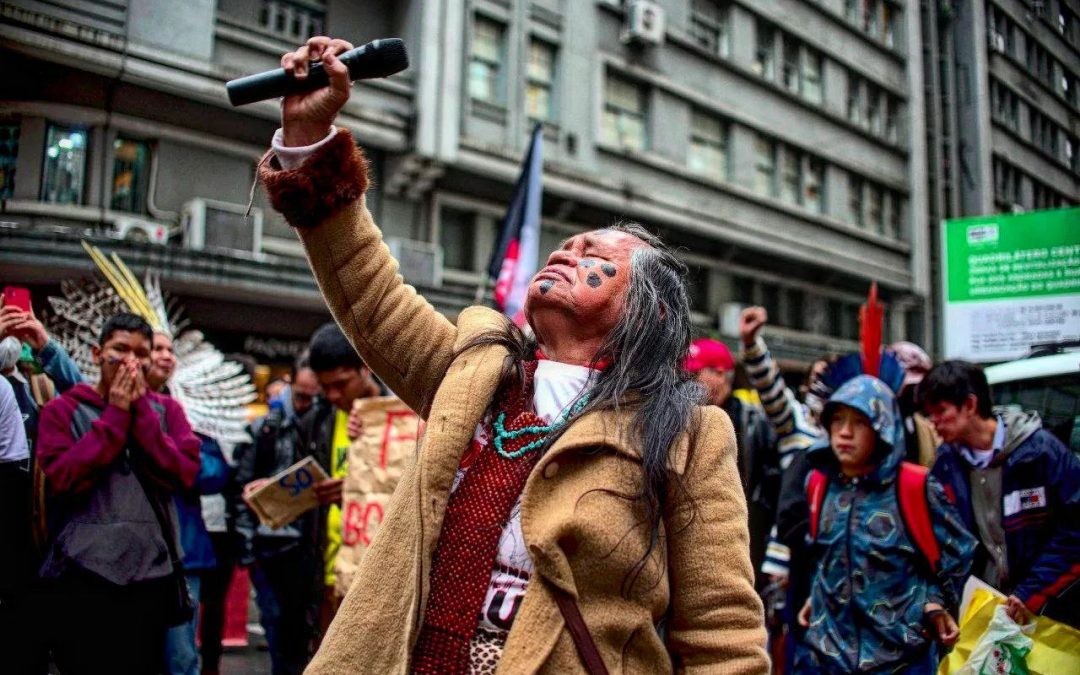
The voices of Brazil’s indigenous peoples echoed through the deepest corners of the country and in social networks on Thursday (23). The mobilizations called by Apib (Articulation of Indigenous Peoples of Brazil) marked the day when the Federal Supreme Court (STF) was supposed to vote on the thesis of the Milestone Thesis or Xokleng Case, a decision that will affect all indigenous territories in Brazil, however, the matter was postponed for the third time. “When we are faced with an authoritarian government, we expect courage from the Supreme Court to safeguard the fundamental rights of indigenous peoples,” demanded Eloy Terena, legal representative of Apib.
Also among the demands were justice for the murders of journalist Dom Philips and indigenist Bruno Pereira, and the exoneration of the president of the National Indigenous Foundation (FUNAI), Delegate Marcelo Xavier, for conducting an anti-indigenous policy at the head of the agency. In all, there were 39 actions, in all regions of Brazil, involving dozens of territories, including political acts and closures of roads, in addition to acts in 40 FUNAI headquarters carried out by the workers on strike. For Eloy, today’s actions “demonstrate categorically how much the indigenous peoples are victims of this genocide policy implemented through an anti-indigenous FUNAI. And how the delay in judging the Milestone Thesis is causing violence against indigenous peoples to increase”.
In São Paulo, hundreds of people showed solidarity with the cause by gathering with the indigenous people in front of the Art Museum of São Paulo (Masp) in the late afternoon. In Brasília, the mobilization took place in the Três Poderes square, in front of the STF, where sacred rituals were performed. Afterwards the documentary “Luta pela Terra”, made by young indigenous people, was released. The work brings together images and feelings in one of the most important moments of the struggle of indigenous peoples against the Milestone Thesis and the judgment of the Extraordinary Appeal 1.017.365, which deals with the demarcation of indigenous lands in the country.
In Brasilia, indigenous people from the Terena, Kaingang, Tuxá, Xokleng, Tupinambá, Karapó, Guarani Nhandeva, Guarani Kaiowá, Takaywrá, Cinta Larga, Karipuna, Tukano, Macuxi, Wapichana, Taurepang, Mura and Marubo peoples participated: with parliamentarians at the National Congress; at the National Human Rights Commission (CNDH); at the National Justice Council (CNJ); at the Supreme Court; at the National Indigenous Foundation (Funai); in addition to the “Seminar on the Constitutional Regime of Indigenous Lands in Brazil,” at the University of Brasília (UnB), which brought together indigenous people, partners, academics and jurists.
Militarized Funai
Under the command of a Bolsonarist delegate, Marcelo Xavier, Funai has completely stopped the land demarcation processes. Recently, during the searches for Bruno and Dom, the role of the foundation was restricted to defaming the indigenous organizations and accusing the indigenists of entering the territory of the Vale do Javari without authorization, which was not true.
In response to this, the foundation’s employees went on strike and joined the demonstrations today. Along with the Funai workers, Dinamam Tuxá, of the Apib coordination, condemned the practices of the institution. “Today FUNAI is under the power of large corporations, people linked to the armed forces who do not have the technical and scientific knowledge to conduct any kind of process related to indigenous policy. And the reflection of this is the criminalization of the indigenous movement, the persecution of the FUNAI staff, of those who have notorious knowledge about the subject, and the violence”.
About the Milestone Thesis
The milestone thesis intends to restrict the demarcation of indigenous lands only to those areas that were under the proven possession of the original peoples on October 5, 1988, date of the promulgation of the Federal Constitution. The thesis of indigenato, on the other hand, recognizes indigenous possession of the land as original, that is, prior to the creation of the Brazilian State itself. For the indigenous movement, it is fundamental that the Milestone Thesis be denied by the STF as soon as possible, because the proposal is an incentive for traffickers, gold miners, loggers and invaders of the territories.