24/Sep/2020
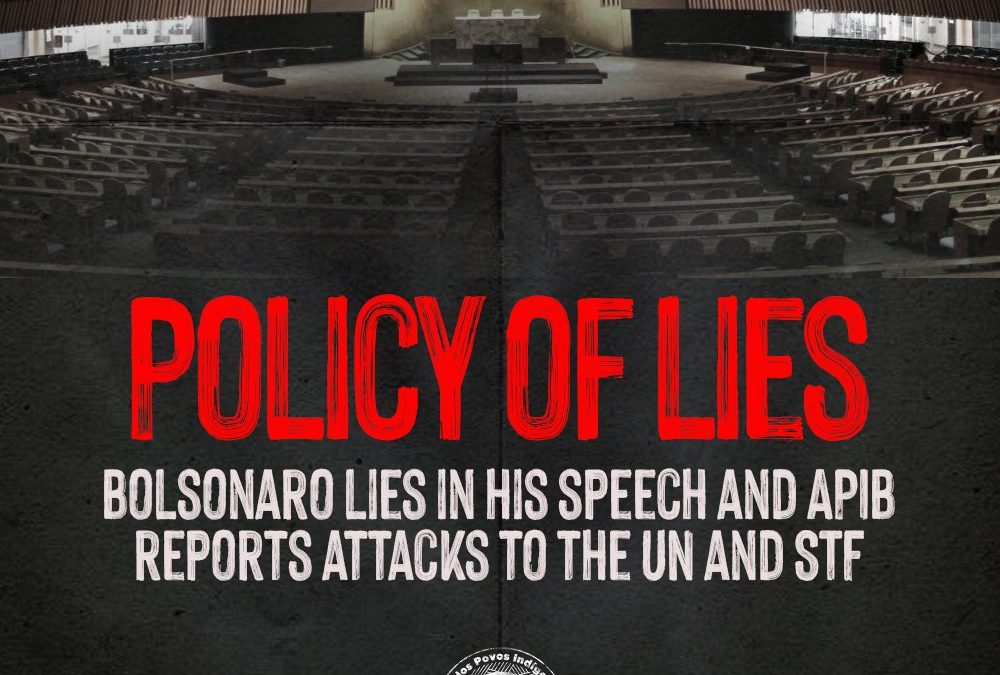
By blaming Indigenous Peoples and traditional communities again for the Amazon fire, Jair Bolsonaro consolidates lying as a political move during the General Assembly of the UN. Also, on Tuesday (22nd September) APIB filed a complaint with the Federal Supreme Court (STF) requesting the government to explain in court the lies it spreads and informed the UN about the attacks on Indigenous Peoples.
In his speech as Head of State at the 75th edition of the General Assembly of the United Nations, Jair Bolsonaro distorts reality to sell the image of a Brazil that does not exist. Thus, relieving his administration of any responsibility for actions to combat the pandemic and protect the environment. Bolsonaro’s main tool is lying.
Bolsonaro’s allegations aim to give credit to his administration for actions that were not theirs. For example, the initial amount proposed by the federal government for Auxílio Emergencial (Emergency Aid), one of the main economic policies created during the pandemic, was only R$200.00. But social mobilization with the National Congress ensured an increase to R$ 600.00. The Emergency Aid was also extended to a total of 9 installments (5 installments of R$600 and 4 t of R$300), which altogether amounts R$4,200, equivalent to about US$771,49. Thus, in his speech, Bolsonaro lied both about the government’s position in approving the Emergency Aid and the amount – which he claimed was about US$1,000 dollars.
In regard to the environment, since the beginning of his administration Bolsonaro has made 127 false or distorted announcements (data from the fact checking agency Aos Fatos). And, once more, the president chose to lie and attack.
He lied when he related the Amazon’s and the Pantanal’s fires to the fact that our forests are humid and blamed Indigenous Peoples for the fire outbreaks, shifting responsibility for criminal deforestation caused by landowners. Data from NASA monitoring system shows that 54% of Amazon’s fire outbreaks are related to deforestation. In Pantanal, the Brazilian Federal Police is investigating farms that were criminally burned in order to open pastures for livestock.
Misinformation as a strategy
Bolsonaro also claims that his administration is suffering disinformation campaigns.
It is increasingly evident that the president’s criterion for defining disinformation is based on what is convenient for his government. Criticism, data, formal questioning are part of the democratic rule of law. However, Bolsonaro’s administration has used official structures to promote and encourage attacks on any people, organization or media outlets that point out flaws or demand responsibility from his government.
For example, last Friday (18th September), General Augusto Heleno, State Minister Head of the Institutional Security Office, published declarations on social media criminalizing the Coalition of Indigenous Peoples of Brazil (APIB) and its leadership, and directly attacking Sonia Guajajara, APIB’s executive-coordinator, whose trajectory in defense of Indigenous and socio-environmental rights is internationally recognized. The Minister alleged that APIB has committed a crime against the State for denouncing the flagrant environmental crimes for which President Jair Bolsonaro must be held responsible.
Fearing for the safety of our leaderships, APIB filed today (22nd September) a complaint with the Federal Supreme Court (STF) requesting Minister Heleno to explain in court the lies and attacks he made to APIB and Sonia Guajajara.
“The Government and its representatives cannot place targets on the backs of leaders, activists or people who cause them inconvenience due to their political position, under penalty of, then, committing crimes that must be punished ”, emphasizes one of the excerpts from document that can be accessed in full here.
Today (22nd September) we have also sent a statement to the UN about Bolsonaro’s government attack on APIB, highlighting that Minister Heleno and Bolsonaro’s administration have made several intimidating accusations against our actions in defense of Indigenous Peoples
and that this is an indecorous attempt at criminalization, a completely inadequate posture for a Minister of State that underlines its anti-democratic character when it pursues those who fight for the environmental protection of ecosystems and the Indigenous peoples of Brazil.
The attack by Minister General Heleno, in addition to showing total ignorance about the history and construction of the APIB, confirms the use of disinformation as a political strategy by the Bolsonaro government, since it directs frivolous accusations on social media that encourage, above all, the criminalization of organized Indigenous movements. “The biggest crime that harms our country is the government’s failure to destroy our biomes, protected areas, illegal fires, land grabbing, deforestation and invasion of our lands and the theft of our wealth”, highlights an excerpt from APIB’s note published in response to the minister’s lying accusations.
It is important to note that, while the government abuses its power and uses smear campaigns to pursue an organization that acts to reduce the impact of Covid-19 on native peoples, more than 800 Indigenous persons have died so far, and about 32 thousand have been infected by the new coronavirus, according to data from the National Committee for Life and Indigenous Memory of APIB.
The Federal Government had to be judicially forced by the STF to present a specific combat plan to be applied in context of Indigenous peoples, contradicting Bolsonaro’s claim at the UN that he provided due assistance to them. On the other hand, when Congress Members presented a bill that provided an emergency plan to contain the damage of the pandemic, Bolsonaro vetoed parts of the bill such as the guarantee of access to drinking water, ease of access to emergency aid, among other fundamental rights.

18/Sep/2020
While the Brazilian Federal Government is passively watching the devastation of our biomes by criminal fires, the Head of the Institutional Security Office, General Heleno, has published a serious accusation on his social networks. The General claims that the Articulation of the Indigenous Peoples of Brazil (APIB) and the indigenous leadership, Sonia Guajajara, committed a crime against the country.
APIB rejects the declaration. We understand that the biggest crime against our country is the omission displayed by this government in face of the destruction of our biomes, of our protected areas, of the illegal fires and land grabbing, of the deforestation and of the invasion of our lands and the theft of our wealth.
On the eve of the United Nations General Assembly, the whole world is witnessing these crimes, which are too big to be concealed. Instead of attacking individuals who work to protect the environment and guarantee the rights of Brazilian indigenous peoples, the authorities should use this moment to fulfill their constitutional oaths and present the nation with a plan to fight the fires that afflict the country and, in doing so, protect the economy and Brazil’s international reputation.
The accusations, in addition to being frivolous and false, are irresponsible, as they endanger the personal security of those mentioned.
APIB is evaluating appropriate response measures.
01/Feb/2020
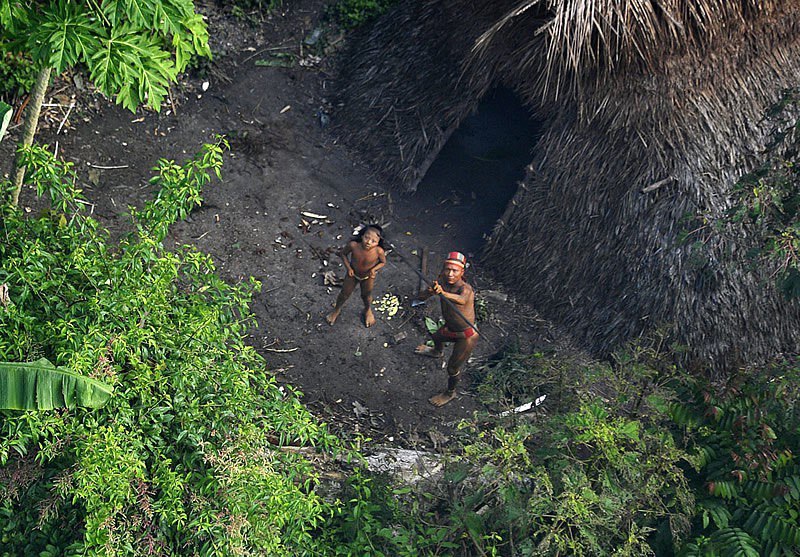
APIB – Coalition of the Indigenous Peoples of Brazil (APIB) , along with several indigenous, indigenists and human rights organizations of Brazil, vehemently rejects the notification that the Chairmanship of Funai (National Indinegous Foundation) intends to designate an evangelical pastor connected to proselytizing activities of the New Tribes Mission of Brasil (MNTB), a North American missionary organization, to take Funai’s General Coordination for Isolated and Recent Contact peoples. The harmful effects of proselytizing activities on isolated indigenous peoples in Brazilian territory are known throughout history. There are countless occasions in which the coercive contact by missionary groups, including those connected to MNTB, resulted in a high number of deaths from illnesses, socio-cultural disruption and deterritorialization.
FUNAI, headed by a Federal Police chief appointed by members of the Ruralist lobby, is once more undermining the indigenous peoples rights, as well as dismantling the federal indigenous agency and the policy of non-contact with isolated indigenous peoples that began in 1987, and has international recognition. Instead of searching for competent technical staff within the Foundation, those with experience on working with isolated peoples, with technical capacity and aligned with the constitutional principals of honouring the autonomy of indigenous peoples, FUNAI yields to evangelical and proselytizing interests, undermining the secular policy of respect for indigenous peoples, that goes against what the 1988 Constitution determines.
We denounce, once again, the rapid dismantling of the public policies for indigenous peoples done by the Bolsonaro government, through the indigenous policies subjugation to the interests of religious groups that support their government and, in many cases, to the ruralist group that eagers the lands traditionally occupied by these peoples. It is another situation prone to violate the human rights intentionally triggered by the current government, and that could lead to the physical, sociocultural and spiritual death of isolated and recently contacted indigenous peoples living in Brazil. Indigenous peoples in Brazil and their representative organizations will continue fighting against the anti-indigenous measures of the Bolsonaro government and enduring for the sake of a republican and secular indigenous policy, which abides the indigenous rights, secured by the 1988 Constitution.
20/Jan/2020
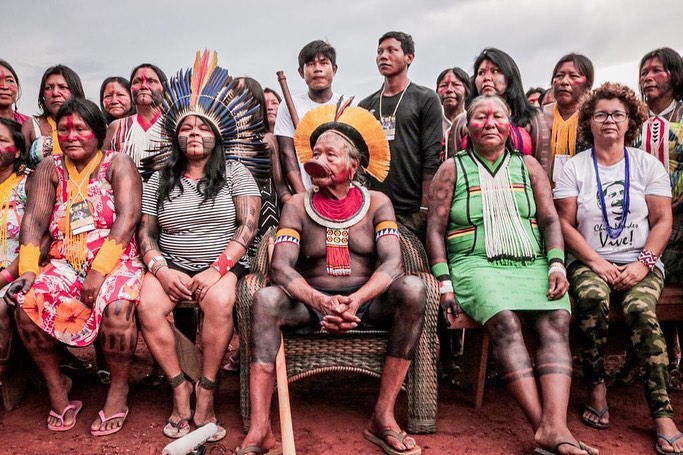
We, representatives of 45 indigenous peoples in Brazil, more than 600 participants, were summoned by chief Raoni to meet between January 14 and 18, 2020 in the village Piaraçu (Terra Indígena Capoto Jarina), with the objective of bringing together our forces and denounce that a political project of the Brazilian government of genocide, ethnocide and ecocide is underway.
The Brazilian State has to understand that it has a historic debt to indigenous peoples. We are the first inhabitants of our country. We not only defend the environment: we are Nature itself. If they kill the environment, they are killing us. We want the forest forever standing, not because the forest is beautiful, but because all these beings that inhabit the forest are part of us and run in our blood.
The Brazilian State recognizes indigenous rights by the Federal Constitution of 1988 in Articles 231 and 232, in which’s creation we were involved, in addition to other national and international legal standards, such as the 169 convention of OIT. So we demand, that whenever projects and decisions that may impact and threaten our territories and ways of life are projected, our right to free, prior and informed consultation be respected.
We don’t need to destroy to produce. They cannot sell our wealth; money does not pay for it. Our territory is very rich, not in money, we are rich in diversity and this whole forest depends on our culture to stand. What counts for us is our land. This is worth more than life. And we are the ones who can sustain nature are, us who never destroyed or polluted our river. We take care of our land; we know it’s value. We must protect that which our ancestors left us.
The current government’s threats and hate speech are promoting violence against indigenous peoples and the murder of our leaders. Today we must prepare ourselves to face not only the government, but also to react to the violence of some sectors of society, who very clearly express racism just because we are indigenous.
The indigenous women present at the gathering, leaders and warriors, generators and protectors of life, reaffirm their fight against the abuses that their bodies, spirits and territories are facing. It is women who guarantee our ways of life and our language. They guarantee our existence in our collective home. We indigenous women and men fight side by side for the right to the land that feeds and heals us.
The indigenous youth present at this gathering reaffirms the commitment to continue the struggle of the leaders in defense of our lives, our territories and our right to exist. The knowledge and traditions that our grandparents taught us are the great solution to the threats against our people and our territories, and to the climate crisis that is coming. This new generation is ready to take the solutions they have been taught.
Only we can talk about ourselves and for ourselves. We do not admit chiefs being disrespected, just as Bolsonaro did in 2019 in his speech during the UN meeting against chief Raoni. We affirm that Chief Raoni is YES our leader and he represents us! He will be our reference, for his firm and peaceful struggle, for his leadership: today and always. That is why we support his candidacy as a Nobel Peace Prize. We demand that Congress legally recognize indigenous authorities as the first rulers of this country. Our lands are governed by our chiefs, indigenous authorities who decide in favor of communities, based on collective claims and not individuals.
The current president of the republic is threatening our rights, our health, our territory. The current government has a plan to permit extraction of ore, and livestock, in our territories. We join our forces, reunited together and show our strength in this document to continue our struggles that are being followed by our grandchildren. The current government is attacking us, wanting to take the land out of our hands. We do not accept gold digging, mining, agribusiness and leasing on our lands, we do not accept loggers, illegal fishermen, hydroelectric plants and other projects, such as Ferrogrão, that will impact us in a direct and irreversible way.
We are against everything that destroys our forests and our rivers. We don’t admit that Brasil be put on sale for other countries who have the intention of exploiting our territory. We want above everything respect for our lives, our traditions, our costums and the Federal Constitution which protects our rights.
We write this document as a clamor, so that we indigenous peoples can be listened to by the three powers of the republic, by society and by the international community.
Consultation processes must guarantee our right to say NO to government and Congress initiatives. Consultations must respect our traditional forms of political representation and organization, as well as our autonomous protocols for consultation and consent.
We make clear that the indigenous people that now hold positions in the federal government, without our participation in their appointment, and who support in some manner Bolsonaro’s government, do not represent us
We demand the compliance of our original right over our territories through the demarcation and homologation of the claimed indigenous lands. We repudiate the thesis of the timeframe and demand that stopped demarcation processes be resumed immediately, as Kapot Nhinore, the former claim of chief Raoni.
We are against the municipalization of indigenous health and against the political nomination for positions at SESAI. We demand the political, administrative and financial autonomy of the Special Indigenous Health Sanitary Districts – DSEI’s and the strengthening of social control through the recreation of the District Indigenous Health Councils Presidents Forum – CONDISI, extinguished by Decree 9.759 / 2019. We demand the guarantee of a qualified and adequate workforce for our service.
We demand compliance with the Conduct Adjustment Term – TAC signed between the Ministry of Health, FUNAI, SESAI, the Federal Public Defender’s Office and the Federal Public Ministry, which guarantees the continuity of services related to indigenous health policy. And we demand the holding of the 6th National Conference on Indigenous Health.
We demand compliance with the indigenous policy under the responsibility of FUNAI and SESAI for all indigenous peoples and indigenous territories in Brazil, and not only for the approved indigenous territories.
We reject the persecution and attempt to criminalize our leaders, indigenous and indigenous organizations, collaborators and partners.
We demand guarantee of the physical and moral integrity of our communities and leaders and the punishment of those who are killing our relatives.
We demand that the Brazilian State fulfill its constitutional responsibility to protect indigenous territories and the environment, restraining illegal activities and punishing criminals. We also demand that the government take responsibility for the poisoning of the air, soil and rivers caused by the irresponsible and uncontrolled use of pesticides around our lands.
We demand compliance with public policies for the protection of isolated and recently contacted peoples.
We demand a differentiated and quality education for our young people, which allows them to complete their training, from basic education to high school, in our territories. We do not accept the scrapping of public universities and we ask for the guarantee of continuity of scholarships for indigenous youths who are going to study in the city at universities. The university education of young people is important for the continuity of our struggle. It is a space that ensures that we are prepared for the changes that threaten us. For this reason, the youth holds the pen in their hands next to what has been taught by their grandparents to launch the arrow that was given to them, to continue fighting. Being at university only makes sense if we exercise our spirituality. In this sense, we ask Brazilian society to join us in the struggle for access to plural and democratic universities, for university education that values and recognizes the science of the territory.
We want policies to strengthen sustainable economic alternatives for our territories, without the use of pesticides, and that promote the economy of the Standing Forest, with an emphasis on culture, traditional knowledge, no extractivisim and clean technologies.
We are human beings, we are the originary people from Brazil. We are part of Brazil and Brazil is part of us. We do not accept them saying that our territories are too big, because that does not compare to the size and strength of our culture and to what we have contributed to maintain, not only our lives and ways of life, but the lives of everyone on the planet. Brazil was not born first, it was us indigenous peoples, and we were massacred, but we continue to resist in order to exist.
We are not alone. At this great meeting, we declare the resumption of the Forest People’s Alliance, which includes the Caatinga, Pantanal, Cerrado, Atlantic Forest and the Amazon. We will be together defending the protection of our territories. This struggle is not only for indigenous peoples, but for all of us, it is a struggle for the life of the planet.
We conclude certain that 2020 will be a year of a lot of struggle, and we call on all relatives and partners of Indigenous Peoples, in Brazil and abroad, for a year of many mobilizations, where we must be present with the strength and energy of our ancestors in Brasilia and on the streets around the world. The fight will continue until the last Indigenous person is standing!
Piaraçu Village, January 18, 2020
26/Aug/2019
on occasion of the G-7 Summit in Biarritz, France (August 2019)
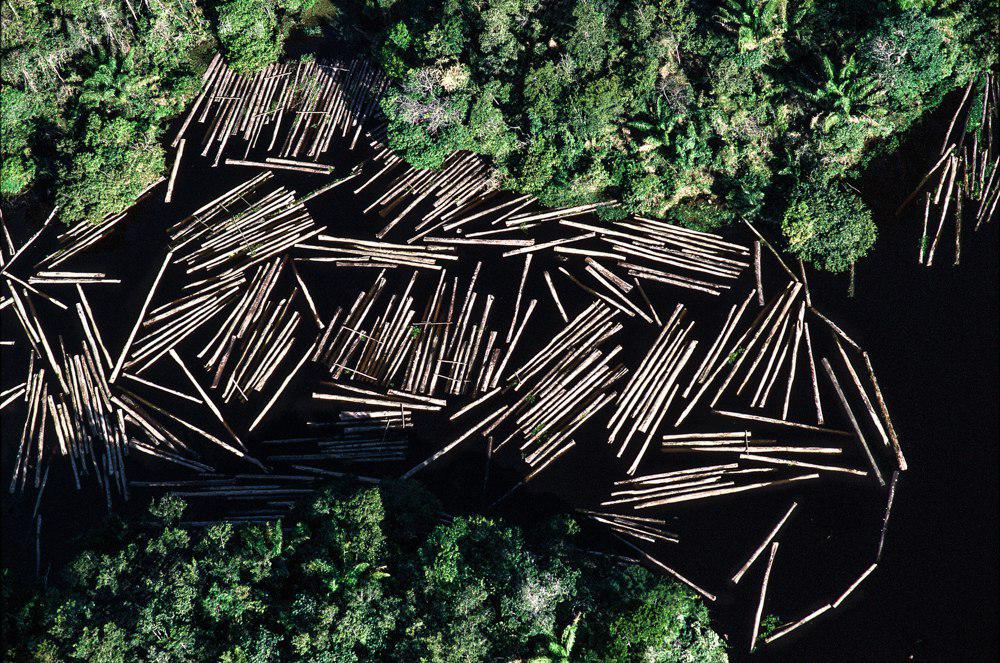
The dramatic increase in the number of fires in the Brazilian Amazon during 2019, with 32,748 ocurrences registered between January 1st and August 14th (60% above the average of the previous three years) following an alarming increase in the rate of deforestation over the past year, has provoked outrage and protests in Brazil and around the world, to the point where this issue has been urgently included in the agenda of the G-7 summit to be held in Biarritz, France.
Problems of deforestation and burning in the Amazon have a long history; however, the worsening of this situation in 2019 is a direct result of the behavior of the government of President Jair Bolsonaro. Factors intensifying the environmental crisis in the Amazon, associated with the federal government, include:
- The refusal to demarcate indigenous lands, along with attempts to open up territories for exploitation by mining, hydroelectric dams and agribusiness interests, disrespecting the Federal Constitution;
The deliberate and systematic dismantling of the operational capacity of IBAMA, the federal environmental agency, and other institutions responsible for enforcement against illegal acts of public land grabbing, forest clearing and burning, logging and mining;
- Public statements by President Bolsonaro concerning his commitment to loosening enforcement and suspending fines for illegal activities, sending a clear signal of impunity that encourages environmental crimes;
- Budget cuts, persecution of employees and dismantling of the structure of ICMBio, the federal agency responsible for the management of protected areas;
Backsliding in the legal framework for environmental licensing of infraestructure, mining and agribusiness projects, characterized by high social and environmental impacts and risks;
- Abandonment of the Action Plan for Prevention and Control of Deforestation in the Amazon (PPCDAm) launched in 2004 and largely responsible for a major decrease in deforestation rates between 2005 and 2012;
- Manipulation of agencies responsible for environmental protection, through nomination to high-level government posts of individuals linked to the immediate interests of agribusiness and other sectors that should be subjected to public regulation;
- Attempts to discredit technical institutions of the federal government responsible for monitoring deforestation and other environmental problems, as in the case of the National Space Research Institute (INPE).
The increase in deforestation and burning in the Amazon, associated with land grabbing and illegal exploitation of timber and other natural resources, is directly connected to rising acts of violence against indigenous peoples, traditional communities and social movements; violence that has remained in impunity, in the great majority of cases. Meanwhile, President Bolsonaro has encouraged the criminalization of social movements and NGOs, reaching the absurdity of blaming them for increased burning in the Amazon.
Such actions, omissions and discourse have made Brazil a global outcast in an area where the country was previously a protagonist. This threatens the Amazon, the largest heritage of Brazilians, the well being of the population and the global climate, which cannot withstand emissions from the destruction of the Amazon. Ironically, this situation now threatens the future of the Brazilian agribusiness sector that the president claims to defend.
The Brazilian government urgently needs to take responsibility for leading a series of efforts, involving public, private and civil society actors, to address this grave problem, including among other concrete actions:
August 26, 2019
Co-signing organizations:
Articulação dos Povos Indígenas do Brasil – APIB Associação Terra Indígena do Xingu – ATIX Associação Floresta Protegida
Associação Alternativa Terrazul
Associação das Comunidades Montanha e Mangabal Associação Indígena Aldeia Maracanã- AIAM Associação de Pesquisa Xaraiés MT
Articulação pela Convivência com a Amazônia – ARCA Articulação Internacional de Atingido(a)s pela Vale Amazon Watch
Coordenação das Organizações Indígenas da Amazônia Brasileira – COIAB
Coordenação Nacional de Articulação das Comunidades Negras Rurais Quilombolas – CONAQ
Cáritas Brasileira Regional Minas Gerais
Centro de Formação do Negro e Negra da Transamazônica e Xingu
Clínica de Direitos Humanos – Universidade Federal de Minas Gerais
Coletivo de Mulheres do Xingu
Comitê Nacional em Defesa dos Territórios Frente a Mineração
Coletivo Mura de Porto Velho
Comitê em Defesa da Vida Amazônia na Bacia do Rio
Articulation of Brazilian Indigenous Peoples – APIB Association of the Xingu Indigenous Territory – ATIX Protected Forest Association
Alternative Association Blue Planet
Association of Communities Montanha & Mangabal Maracanã Village Indigenous Association – AIAM Xaraiés Research Association – MT
Articulation for Coexistence with the Amazon – ARCA International Articulation of People Affected by Vale Amazon Watch
Coordination of Indigenous Organizations of the Brazilian Amazon – COIAB
National Coordination of Rural Afro Brazilian Quilombola Communities – CONAQ
Caritas Brazilian Regional Minas Gerais
AfroBrazilians Training Center of the Transamazon and Xingu
Human Rights Clinic, Federal University of Minas Gerais
Xingu Women’s Collective
National Committee in Defense of Territories Against Mining
Mura Collective of Porto Velho (Rondônia) Committee in Defense of Amazonian Life in the
Madeira
Conectas Direitos Humanos
Conselho Indigenista Missionário – CIMI Fórum Mudanças Climáticas e Justiça Social Fórum da Amazônia Oriental – FAOR
Fórum em Defesa de Altamira Fórum Bem Viver
Fundação Darcy Ribeiro GT Infraestrutura Greenpeace Brasil Instituto Raoni Instituto Makarapy Instituto Kabu
Instituto Socioambiental – ISA Instituto Madeira Vivo – IMV Instituto Fronteiras International Rivers – Brasil
Movimento dos Trabalhadores Rurais Sem Terra – MST Movimento de Mulheres Campesinas – MMC Movimento pela Soberania Popular na Mineração-MAM Movimento Fechos Eu Cuido
Movimento Tapajós Vivo Movimento Xingu Vivo para Sempre Mutirão Pela Cidadania
Operação Amazônia Nativa – OPAN Pacto das Águas
Planète Amazone Proteja Amazônia
Rede de ONGs da Mata Atlântica – RMA Rede GTA
Rede Brasileira de Arteducadores – ABRA Rios de Encontro – Marabá
Sindiquímica – PR Uma Gota no Oceano WWF-Brasil
Madeira River Basin Conectas Human Rights
Indigenist Missionary Council – CIMI
Forum on Climate Change and Social Justice Forum of Eastern Amazônia – FAOR
Forum in Defense of Altamira Forum for Well-Being
Darcy Ribeiro Foundation Infrastructure Working Group Greenpeace Brasil
Raoni Institute Marakapy Institute Kabu Institute
Socioenvironmental Institute – ISA Madeira Alive Institute
Frontiers Institute International Rivers – Brazil
Movement of Landless Rural Workers – MST Movement of Peasant Women – MMC
Movement for Popular Sovereignty in Mining-MAM Movement Caring for Fechos
Tapajós Alive Movement
Xingu Forever Alive Movement Coalition for Citizenship
Operation Native Amazonia – OPAN Pact for Waters
Amazon Planet Amazon Protection
NGO Network for the Atlantic Rainforest – RMA GTA Network (Amazon Working Group) Brazilian Network on Art-Educators – ABRA Rivers of Encounters – Marabá
Sindiquimica – PR
A Drop in the Ocean WWF-Brazil
15/Aug/2019
Brasilia – Federal District, August 9 to August 14, 2019
Respect our existence or expect resistance
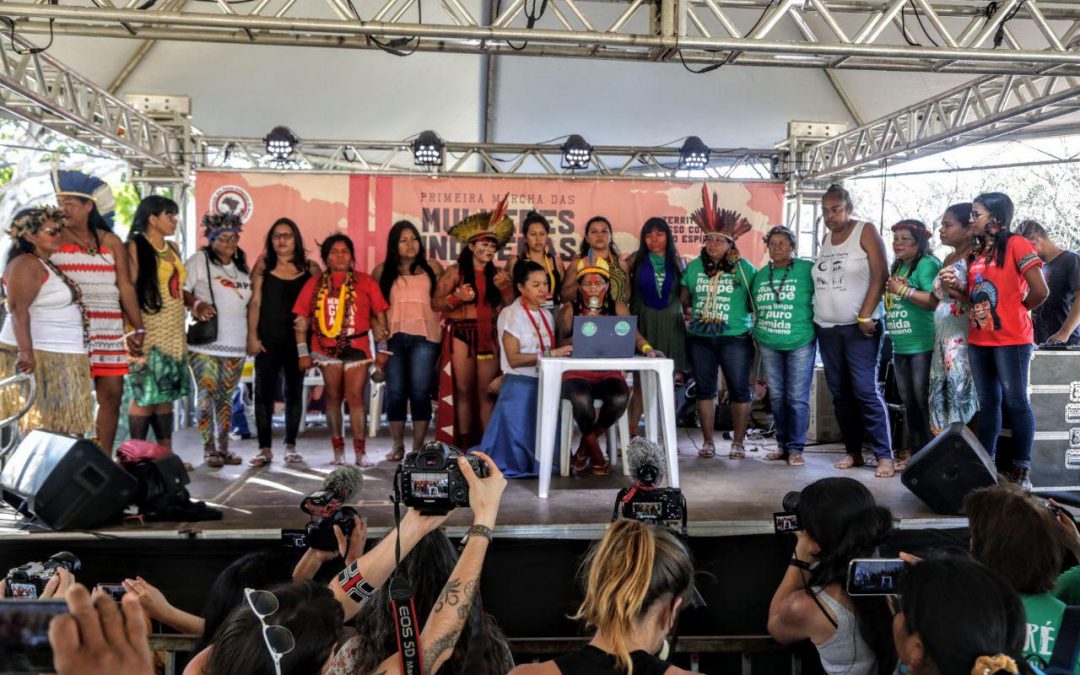
We, 2,500 women representing 130 different indigenous peoples from every region of Brazil gathered in Brasilia (Federal District), from August 9 to 14, 2019. We conceived this mass meeting collectively to be punctuated by the First Indigenous Women’s Forum and March. As Indigenous Women, our message to the world is that we are waging a constant struggle in defense of “Territory: our body, our spirit”. So that our voices may echo around the world, we reaffirm the commitments we made over the past days.
As women, leaders and warriors, bearers and protectors of life, we will stand and struggle against the issues and violations that afflict our bodies, our spirits, our territories. By spreading our seeds, our rituals, our language, we seek to guarantee our existence.
The Indigenous Women’s March was conceived as part of a conversation that began in 2015 to support the development and empowerment of indigenous women. Throughout these years we engaged in dialogue with women across movements and realized that our movement stands out in ways we would like to be better understood. The gestures of our combat dance contemplate the need for a return to mutual support between the feminine and the masculine, without, however, essentializing men or women. Machismo is yet another epidemic brought to us by European settlers. Thus, what non-indigenous women consider to be violence may not be what we consider to be violence. This does not mean that we will close our eyes to the violence that we recognize in our villages, but rather, that we need to consider how it developed in our communities in order to counteract, problematize and bring critical reflections about our everyday practices and contemporary forms of political organization. We need to engage in dialog and strengthen the power of indigenous women, reclaiming our matriarchal values and our historical memory so that we can advance social rights in our territories.
We are totally opposed to the narratives, proposals, and actions of the current government, which has made its intention to exterminate indigenous peoples explicit. This government has made the genocidal exploitation of our territories by capital its aim. This manner of governing is akin to pulling a tree from the ground and exposing its roots until everything dries out. We are grounded in the earth, because that is where we seek our ancestors, and the earth provides our nutrition and life. That is why for us, territory is not a good that can be sold, traded or exploited. Our territory is our life, our body and our spirit.
The fight for our territorial rights is the fight of our lives. Life and territory are one, for the earth gives us our food, our traditional medicine, our health and our dignity. To lose our territory is to lose our mother. Whoever has territory, has a mother, has a lap to rest their head on. And those who can rest their head on their mother’s lap have a cure for what ills them.
When we care for our lands, which is a natural part of our culture, we are guaranteeing the good of the whole planet, because we care for the forests, the air, the waters and soils. Most of the world’s biodiversity finds shelter on indigenous lands. That is our contribution to sustaining life on earth.
Freedom of expression in our own languages is also fundamental to us. Many of our languages are still living. They resisted the colonial violence that forced us to use a foreign language and to erase our own ways of expressing our existence. We women play a significant role in passing on the power of our ancestral knowledge by passing on our language.
We want our unique way of seeing, perceiving, being and living on our lands to be respected. Know that for us the loss of territory brings a loss of feeling, a deep sadness that harms our spirit. The feeling of our territory being violated is like that of a mother losing her child. It shows disrespect for life itself. It shows disrespect for our culture and is a disgrace to our ancestors who were responsible for creating it all. It shows disrespect to those who have died for the land. It brings the loss of the sacred and the meaning of life.
Everything that this current government stands for and has accomplished is a direct assault on our protection and care for Mother Earth, annihilating the rights that we won over centuries of struggle. The government’s non-recognition of indigenous lands, its encouragement of mining and leasing on our territories, its attempts to make environmental regulation more flexible, its moves to finance the purchase of weapons in the countryside, its dismantling of indigenous and environmental policies all demonstrate this.
Our duty as indigenous women and leaders is to strengthen and give value to our traditional knowledge, to ensure our wisdom, ancestry and culture survive, to know and defend our rights and to honor the memory of those who came before us. Our duty is to know how to wage our struggle, to give potency to our spiritual practices and to banish all that threatens our existence.
To fulfill our duty, and with the strength of the web of life and the connections that we have weaved at this meeting, we tell the world that we will fight tirelessly:
- To ensure the recognition and demarcation of indigenous lands, for the attacks on our mother earth are attacks on our own body and our life;
- To ensure our right to the full possession of our territories. We will defend our land and demand that the Brazilian state prohibit mining on our territory, which is poisoning us with mercury and other toxic substances. The Brazilian state must stop attempting to lease our lands to agribusiness and it must punish illegal invasions of our territory driven by greed. These interests want to rob us of our natural resources and use them only for profit. They have no concern for maintaining life on the planet;
- To guarantee the unrestricted right to differentiated, culturally-sensitive health care for our peoples. These services must be maintained as part of the Subsystem for Indigenous Health Care of the federal Unified Health System under the qualification of the Special Secretariat for Indigenous Health (SESAI). We fight and we will continue fighting for the public services offered by the federal United Health System (SUS) and for the maintenance and continuous qualification of the National Health Care Policy for our peoples, whether in our territories or in urban contexts.
We do not accept the privatization of our peoples’ health care services or their devolution to municipal or state governments.
We fight and we will continue to fight for the management of SESAI to be performed by professionals who have the technical and policy qualifications to understand the specificities involved in providing health care to indigenous peoples. It is not enough to have an indigenous person at the head of the agency. We need to ensure the sensitive management of all the issues that are important to us under this topic, including respect for our traditional health care practices, our traditional medicines, our midwives and ways of performing natural birth, and the knowledge of our spiritual leaders. According to our indigenous sciences, health comes not only from prescribing active ingredients, healing is the result of subjective, emotional, cultural and fundamentally spiritual interactions.
- To demand the Supreme Federal Court (STF) not to allow or legitimize any retrograde or restrictive reinterpretation of our original right to our traditional lands. We hope that, in its decision on Final Appeal 1.017.365, related to the case of the Ibirama Laklanõ Indigenous Territory of the Xokleng people, which is considered to be a precedent-setting case, the STF will reaffirm the interpretation of the Brazilian Constitution in accordance with the “Indigenato” thesis, affirming our original right to our lands. The STF must definitively exclude any possibile of acceptance of the “Indigenous Occupation” thesis that only recognizes our right to the lands occupied by indigenous peoples when Brazil’s most recent constitution was approved;
- To demand that the judiciary, which, in keeping with the principle of equality before the law, asserts our specific rights laid out in the Constitution and, accordingly, defends our right to access the justice system. Ensuring a fair and democratic society means guaranteeing the rights of all peoples, as is also provided for in the Constitution. We demand that the international treaties signed by Brazil be respected, which include among others: Convention 169 of the International Labor Organization (ILO), the UN Conventions on Cultural Diversity, Biological Diversity and on Climate Change, the UN Declaration on the Rights of Indigenous Peoples and the American Declaration of the Rights of Indigenous Peoples;
- To promote the increased representation of indigenous women in political spaces, inside and outside our villages and in all environments that are important for securing and implementing our rights. Recognizing our narratives is not enough, we must recognize our narrators. Our bodies and our spirits must be present in decision-making spaces;
- To combat discrimination against indigenous people in decision-making spaces, especially women, who are victims not only of racism but also of machismo;
- To defend the right of all human beings to a healthy, pesticide-free diet nourished by the spirit of mother earth;
- To ensure the right to a differentiated, culturally-relevant education of quality for our children and young people that respects our languages and values our traditions. We demand that the 25 proposals of the Second National Conference on Indigenous School Education, including proposed Ethnoeducational Territories be implemented. We demand that institutions such as the General Committee on Indigenous Education within the Ministry of Education be reformed to ensure our participation in forming education policy. These institutions must meet our other demands, which include improving the infrastructure of indigenous schools, training and hiring indigenous teachers, and developing culturally-relevant instructional materials;
- To guarantee public policy on indigenous matters that effectively contributes to the promotion, inspiration and guarantee of our rights. These policies must design plans, implementation and monitoring in a participatory manner, in dialogue with our organizations, and take actions that reflect the diversity and the priorities of the Indigenous Movement;
- To reaffirm the need for specific legislation to combat violence against indigenous women, culturally oriented to the reality of our peoples. Public policies need to be based on the specifics, diversity and the social context of each of our peoples, respecting our conception of family, education, age, work, and poverty.
- To continue empowering indigenous women by informing, training and raising awareness about our rights, ensuring full access for indigenous women to formal education (at the primary, secondary and university levels) in order to promote and give value to the indigenous knowledge of our women;
- Strengthen the indigenous movement by bringing together our wisdom across genders and generations;
- To combat, without compromise, racist and anti-indigenous sentiment. We demand an end to violence, criminalization and discrimination against our peoples and our leaders, including by public agents, ensuring the punishment of those responsible and reparation for damages caused. The government must commit to protecting our lives.
Finally, we reaffirm our commitment to strengthen alliances with women from all sectors of society in Brazil and around the world, from the countryside to the city, from the forest to the sea. All of our rights and all of our livelihoods are under attack.
We have a responsibility to sow, transmit, transcend and share our knowledge just as our ancestors and all those who preceded us did. They helped to strengthen us together and on an equal footing with men, who we bore as sons. They gave us the strength to fight, make decisions and care for our land.
We are responsible for fertilizing and maintaining our sacred soil. We will always be warriors in defense of our peoples’ existence and of Mother Earth.
Brasilia (Federal District), August 14, 2019.
31/Jul/2019
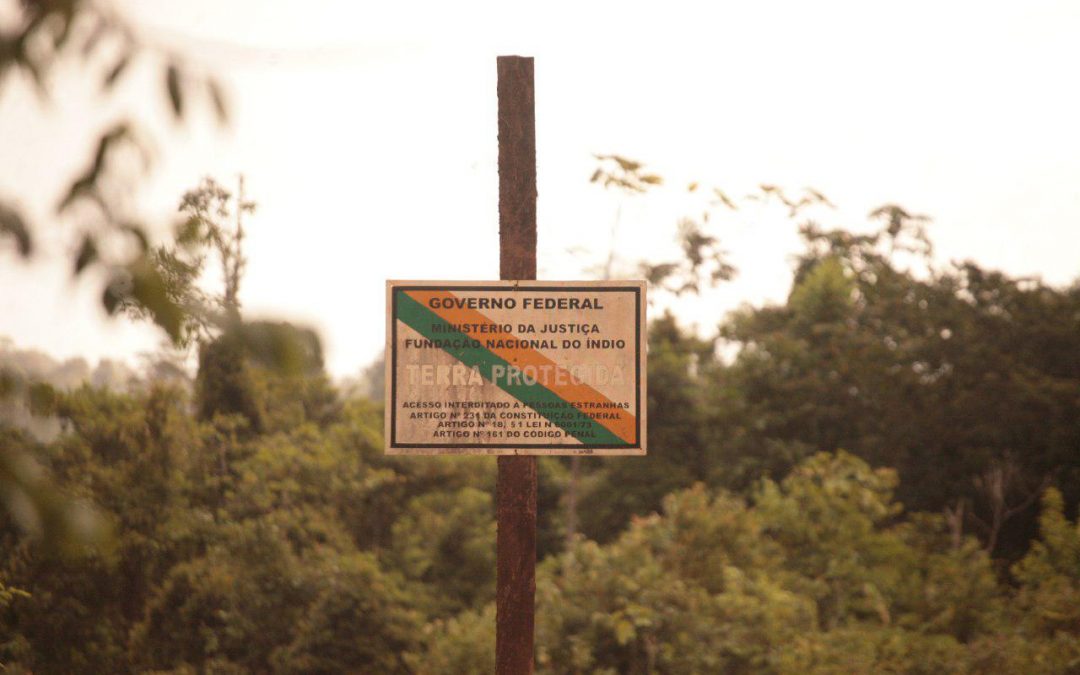
We, the Council of Wajãpi Villages-APINA, want to disclose new information about what is happening in Wajãpi Indigenous Land. And we want to request the support of the federal police or the army again to ensure the safety of Wajãpi Indigenous People.
Yesterday, July 30, 2019, in the morning, we received the Senator Randolfe Rodrigues’ visit. He came to listen to us about what is happening in our Indigenous Land and to seek clarification of some information he had received. The Senator said that he would continue to support us for the police keeping going on investigating the invasion until arresting the invaders. And to remain in Wajãpi Indigenous Land, protecting our communities until we can ensure that the invaders are not in our land anymore. Also, he invited some Wajãpi to go to the Public Federal Ministry to relate what they saw and know about the invaders.
Yesterday, by the end of the afternoon, we received information from the residents of the CTA Village located beside the 210-Highway. About 6 p.m., a young person from that village went to take a bath in the igarapé near the village when he heard someone yelling, “Hey!” behind him. When he turned, he saw a tall and strong man who has big curly hair and beard and was pointing a gun at him. The weapon seemed to be a 12-gauge automatic rifle. Then, the young person became very afraid and went running to the village to call someone to help. Soon later, he came back to the igarapé with five more men. They did not find the invader, but they saw tracks of two people without shoes, each of them walking in different directions. They took photos and made videos of the tracks they saw to show to the police. However, they decided not to follow the tracks because it was growing dark. According to the young person, the man he saw was wearing a black long-sleeved shirt. After receiving that information from the residents of CTA Village, residents of other villages next to the highway organized themselves to watch the section of the highway located inside the Wajãpi Indigenous Land, during the whole night.
Today, in the morning, the residents of CTA found new tracks of two people near the village and let the other Wajãpi communities know. Then, the residents of the villages near the highway organized groups to search for the invaders. They are still searching for them until now.
We, the Wajãpi, want to thank the great support that we are receiving of organizations related to our Indigenous social movement, as APOIANP, COIAB, APIB, AMIM, Hutukara, CIR, FOIRN. As well as the support of the Senator Randolfe Rodrigues, the former Senator João Capiberibe, the federal deputy Joênia Wapixana. Also, the support of partner organizations as Iepé, CIMI, and the support of other civil society organizations as OAB, Associação dos Juízes pela Democracia, Associação Brasileira de Antropologia, Sociedade de Arqueologia Brasileira, Greenpeace, WWF, Rede Eclesiástica Pan Amazônica, and many others. In addition to the UN, the Organization of American States, and people from the whole world.
29/Jul/2019
We, the members of the Wajãpi – Apina Village Council wish to disclose the information we have today, July 29, 2019, regarding the invasion occurred in the Wajãpi Indigenous Land.
Last Sunday, July 28, 2019, police teams arrived at Mariry Village in the early afternoon and headed to the Yvytotõ village, accompanied by our warriors. When they arrived, there was no one there, just the footprints of the invaders. The police marked the points on their GPS and took pictures.
Our warriors brought the police team to a place where the invaders had hidden themselves on July 26, but they found no one there either. After that, the police claimed that they could not look for the invaders inside the forest by following the vestiges we showed them, then they returned to the Mariry village and from there to the Aramirã post, where they arrived around 9:30 p.m.
At the Aramirã Indigenous Post, the police met with representatives of Funai, of the Apina, of the villages in the Aramirã region and of the Pedra Branca City Hall, in Amapá. They said that the region of the Yvytotõ village is difficult to reach and that they had no means to remain and continue the search there due to the difficulties one has of moving and feeding oneself in the forest.
During the meeting, the superintendent of the police promised he would study the region around the Yvytotõ village using satellite images to check for evidence of irregular gold mining within the Wajãpi Indigenous Land. If the images show any vestiges, they will fly over to check. After this meeting, the police teams returned to Macapá, Amapá’s capital.
We, the Wajãpi Indigenous People, remain very concerned about the irregular prospectors who have invaded the northern region of our Indigenous Land. In our villages of this region, our families are very afraid of going out to their fields or hunting in the woods. Some communities have left their villages to join families from other villages so as to feel a bit safer.
That’s why our warriors from all over the Wajãpi Indigenous Land are organizing themselves to help the Mariry village warriors who continue to search for the hidden invaders, and we are asking Funai’s support to locate them.
As soon as we have any new information, we will post more of these Notes.
Aramirã Post – Wajãpi Indigenous Land, July 29, 2019.
28/Jul/2019
We, the Council of Wajãpi Villages – APINA, want to release the information so far available about the invasion of Wajãpi Indigenous Land.
On Monday, July 22nd, by the end of the evening, the Indigenous chief called Emyra Wajãpi was violently killed in the region of his village called Waseity, near the Mariry village. No one from Wajãpi Indigenous People testified his death. His death was noticed and disseminated to all Wajãpi communities just in the following morning, on Tuesday, July 23rd. In the next few days, kinfolk looked into the local. They found tracks and clues which indicate that the death was caused by non-Indigenous people, outsiders from the Wajãpi Indigenous Land.
On Friday, July 26th, the Wajãpi from Yvytotõ village, located at the same region where the death happened, met a group of armed non-Indigenous people near their village. Then, they warned the other Wajãpi communities by radio. During that same night, the invaders came to Yvytotõ village and got into the house, threatening the residents. The afraid Yvytotõ villagers ran away to the Mariry village located nearby the very next day.
On Friday night, we reported it to the federal government, through the National Indian Foundation (FUNAI), and to the Public Federal Ministry of Brazil about the invasion. At that occasion, we requested the presence of the Federal Police on the site. Early on the morning of Saturday, July 27th, residents of Karapijuty village sighted another invader near their village.
Saturday, we spread the news to our allies, in an attempt to hurry up the coming of the Federal Police. Also, a group of Wajãpi warriors from other regions of the Indigenous Land went to the area of Mariry village to support its residents until the Federal Police arrives. In the evening of Saturday, representatives of FUNAI arrived in the Wajãpi Indigenous Land. They went to the Jakare village to interview relatives of the deceased chief who moved there. Soon after, the representatives of FUNAI came back to Macapá (capital of Amapá, Brazil) to contact the Federal Police. Meanwhile, the Wajãpi warriors stayed guarding nearby the place where the invaders were, and the villages located on the exit route from the Wajãpi Land. In that same night, some people heard gunshots in the region of the Jakare village, near the 210-Highway, where there were no Wajãpi.
On July 28th, in the morning, a group of federal policemen and the BOPE Special Police Forces arrived at the Wajãpi Indigenous Land (TIW) and went to the place to arrest the invaders. And this is all that we know so far. Once we have more information, we will release a new document.
Posto Aramirã – Wajãpi Indigenous Land, July 28, 2019.
30/Apr/2017
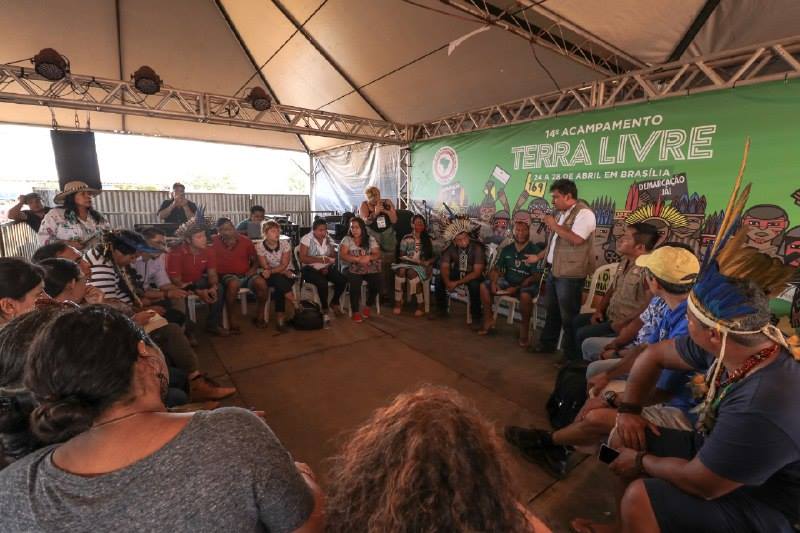
Terra Livre Camp, that happened this week in Brasília, not only received brazilian indigenous leaderships, but also from other coutries, such as the Alianza de Pueblos Indígenas del Archipiélago (AMAN), the Alianza Mesoamericana de Pueblos y Bosques (AMPB) and the Coordinación de Organizaciones Indígenas de la Cuenca Amazónica (COICA), which sent a thanking and invitation letter to APIB, strenghtening even more the unity among Americas indigenous peoples, and also the fights and agendas inherent to all the originary peoples. Read the letter! Letter international Delegation