
APIB at COP30!
The Answer is Us!
Land Back is climate policy!
Check out the indigenous schedule at COP30 ↓
APIB at COP30: Our territories at the heart of the climate agenda
COP30 will feature the largest indigenous participation in the history of all Climate Change Conferences: featuring over 4,000 Indigenous people, including 3,500+ from every biome in Brazil (the Amazon, Caatinga, Cerrado, Atlantic Forest, Pampa, Pantanal, and the Coastal and Marine Zone) and 500+ representatives from every region of the planet.
We will unite in Belém to echo the global call for the recognition of our leadership and historical contributions to the protection of all biomes, the protection of life, and the fight against the climate crisis. The answer to the climate crisis is us.
APIB calls for COP30 to be a turning point: a moment to place Indigenous peoples and our territories at the heart of climate negotiations. Hosting COP30 in Brazil, in the Amazon, is a historic opportunity to show the world the diversity of the 390+ Indigenous peoples inhabiting all regions and biomes of Brazil and speaking 295 native languages.
Recognising, demarcating and protecting indigenous territories is not just a matter of implementing constituted rights and historical reparations. It is also a matter of climate policy and action.
For Brazil to achieve its climate goals set out in the Paris Agreement, the country needs to tackle its main sources of greenhouse gas emissions head-on. Today, approximately 75% of Brazil’s CO2 emissions result from deforestation and agricultural expansion. Our territories represent 13.8% of the national territory. In the last 40 years, Brazil has lost 14.8% of its native vegetation. In indigenous territories, the deforestation rate was only 1.2% in the same period.
The logic is clear: for Brazil to meet its climate commitments, it must halt deforestation in all its ecosystems. And the path to achieving this is to protect the peoples who, due to their traditional ways of life, protect our biomes from deforestation on a daily basis. In this way, not only are our territories protected, but also the national territory and the very possibility of a future for the next generations in all regions of the planet.

Land Back!
is a constitutional right.
Land Back!
is an international commitment.
Land Back!
is climate action.

APIB’s Schedule at COP30
The Brazilian indigenous movement will be involved in over 300 events during COP30, in all the main areas of influence (Blue Zone, Green Zone, COP Village (Aldeia COP), People’s Summit and civil society houses in Belém).
Check out below the Brazilian Indigenous movement’s schedule before and during COP30. Share the events on your social media and join us in supporting the demands of Indigenous peoples at COP30!
Tuesday - November 4th
| Time | Area | Location | Event |
|---|---|---|---|
| 2 PM – 6 PM | Belém City | Margarida Schivasappa Theater | Meeting of the UNFCCC Facilitative Working Group on the Local Communities and Indigenous Peoples Platform |
Wednesday - November 5th
| Time | Area | Location | Event |
|---|---|---|---|
| 9 AM – 6 PM | Belém City | Margarida Schivasappa Theater | Meeting of the UNFCCC Facilitative Working Group on the Local Communities and Indigenous Peoples Platform |
| 3 PM | To be determined | Rainbow Warrior Boat | Press Conference – Greenpeace Ship |
Thursday - November 6th
| Time | Area | Location | Event |
|---|---|---|---|
| 9 AM – 6 PM | Belém City | Margarida Schivasappa Theater | Meeting of the UNFCCC Facilitative Working Group on the Local Communities and Indigenous Peoples Platform |
Friday - November 7th
| Time | Area | Location | Event |
|---|---|---|---|
| 9 AM – 3:30 PM | Belém City | Margarida Schivasappa Theater | Meeting of the UNFCCC Facilitative Working Group on the Local Communities and Indigenous Peoples Platform |
| 10:00 AM | Belém City | Pará Emílio Goeldi Museum | Dialogue between Indigenous Leaders and Prince William of the United Kingdom |
| 3 PM – 4 PM | People’s Summit (UFPA) | Benedito Nunes Event Center (CEBN) – UFPA | IV International Meeting of Communities Affected by Dams and Climate Crisis |
Saturday - November 8th
| Time | Area | Location | Event |
|---|---|---|---|
| 9 AM – 6 PM | Belém City | Margarida Schivasappa Theater | Preparatory Meeting of the International Indigenous Peoples Forum on Climate Change (Indigenous Caucus) |
Sunday - November 9th
| Time | Area | Location | Event |
|---|---|---|---|
| 9 AM – 6 PM | Belém City | Margarida Schivasappa Theater | Preparatory Meeting of the International Indigenous Peoples Forum on Climate Change (Indigenous Caucus) |
| 5 PM – 9 PM | Belém City | Embassy of the Peoples | Exclusion Zones – The Beginning of the End of the Fossil Fuel Era at COP 30 |
| 7:30 PM | Belém City | BNDES Stand | Screening of the Film Piripkura |
| 9:30 AM – 12 PM | Belém City | Federation of Industrial Workers of the State of Pará | Presentation of Peoples Against Extractivism |
Monday - November 10th
| Time | Area | Location | Event |
|---|---|---|---|
| 8 AM – 7 PM | Belém City | Quilombo do Abacatal, Ananindeua | V Meeting of the Autonomous Protocols Observatory and X Research Seminar: “Autonomous Protocols and Legal Diversity” |
| 9 AM – 10 AM | Blue Zone | Area C (Blue) – Event Room 3 | Meeting of the International Indigenous Peoples Forum on Climate Change (Indigenous Caucus) |
| 9 AM – 11 AM | Belém City | CESUPA Law School Campus | Capital that drives impact: how to ensure real results? |
| 10 AM – 10:30 AM | Belém City | Folha House Av. Dr. Freitas 1.628 – Pedreira | Live interview for Folha de São Paulo Topic: APIB’s expectations for COP 30 |
| 10 AM – 10:30 AM | Blue Zone | Press Conference Space | Press conference – Impacts of climate change on communities |
| 11 AM | Belém City | CICC – Integrated Command and Control Center, Av. Alm. Barroso, 735 – São Brás, Belém | Meeting with CESIR – Integrated Security for COP30 |
| 2 PM – 3:30 PM | Belém City | Goeldi Research Field (Chico Mendes Space and Banco do Brasil Foundation) | Conversation between Podáali and Puxirum Funds with Banco do Brasil Foundation |
| 4:30 PM – 6:30 PM | Blue Zone | Ford Foundation Climate Justice Pavilion | Opening reception of the Climate Justice Pavilion |
| 5 PM | Belém City | Maraká House | Official Opening of Maraká House of Indigenous Media |
| 5 PM | Belém City | Goeldi Research Field (Chico Mendes Space and Banco do Brasil Foundation) | Bilateral Meeting with the President of Banco do Brasil Foundation |
| 5 PM | Belém City | Waldemar Henrique Theater | Opening of Central COP Space (networking event) |
| 5 PM | Blue Zone | Panda Hub | Biomes in Resistance: Amazon and Cerrado united for climate and rights |
| 5 PM – 7 PM | Belém City | Pará Emílio Goeldi Museum – AMAZÔNIA SEMPRE Station Chalet | Official Inauguration of the AMAZÔNIA SEMPRE Station at Goeldi Museum – COP30 |
| 6 PM | Green Zone | Ministry of Health Pavilion – Evandro Chagas Institute | Living Connections: Indigenous Peoples, Science and Ancestral Technologies of Biodiversity |
| 7 PM – 9 PM | Belém City | Socio-Environmental Journalism House at COP30 | Alliance of Peoples around the Campaign “The Answer Is Us” and the legacy of indigenous peoples and traditional communities in the response to the climate fight |
| 7 PM – 9 PM | Belém City | Atrium Hotel | Strengthening climate-resilient livelihoods: lessons and evidence from the Amazon |
Tuesday - November 11th
| Time | Area | Location | Event |
|---|---|---|---|
| 8 AM – 7 PM | Belém City | Quilombo do Abacatal, Ananindeua | V Meeting of the Autonomous Protocols Observatory and X Research Seminar: “Autonomous Protocols and Legal Diversity” |
| 9 AM – 10 AM | Blue Zone | Area C (Blue) – Event Room 3 | Meeting of the International Indigenous Peoples Forum on Climate Change (Indigenous Caucus) |
| 9 AM – 10:30 AM | Belém City | Pará Emílio Goeldi Museum – Chico Mendes Space | Financing for Indigenous Peoples and Traditional Communities |
| 10:30 AM – 11:30 AM | Blue Zone | Health Pavilion | Infectious Diseases in a Changing Climate: Innovation, Equity, Country and Community Engagement |
| 10:30 AM – 12 PM | Belém City | Climate Hub – Travessa Capitão Pedro Albuquerque, nº 395 | What perspectives do Latin American experiences offer on how transnational litigation can protect ecosystems, rights and lives? |
| 11 AM – 12 PM | COP Village | Geodesic Dome – COP Village | Panel: Technology and Tradition: Innovation and Effectiveness in Ethno-environmental Monitoring of the Javari Valley |
| 11:10 AM | Blue Zone | Indigenous Peoples Pavilion | Direct Financing for Indigenous Peoples as a Tool for a Just Transition |
| 12 PM – 1 PM | Blue Zone | Action on Food Hub, E156 | Feeding the Future with Sustainable Forest Foods: How Can We Mobilize Financing? |
| 12:30 PM | Belém City | Warehouse 05, Porto Futuro II | Bioeconomy Connections Forum: Unlocking Pathways for Low-Carbon Development in the Amazon |
| 1 PM – 2:30 PM | COP Village | Geodesic Dome – COP Village | Consultations with Indigenous Peoples on Free, Prior and Informed Consent (FPIC), Indigenous Peoples and Businesses, and Human Rights |
| 2 PM – 3 PM | COP Village | Geodesic Dome – COP Village | Climate Crisis in the Xingu Basin: Fire, Water and Food Security in Indigenous and Riverside Territories |
| 2 PM – 3 PM | Belém City | R. Cônego Jerônimo Pimentel, 315 | The COP Passes, and the Territories Remain: Guidelines for Climate Philanthropy |
| 2:30 PM – 3:30 PM | Blue Zone | Nature Hub Pavilion | From Territory to Climate Action: TFFF Funding for Indigenous-Led Solutions |
| 3 PM – 4 PM | COP Village | Geodesic Dome – COP Village | Governance System as Territory Protection |
| 3:00 PM – 4:30 PM | Blue Zone | Side Events (SE Room 4) | Black Coalition for Rights: Partnership with Afro-descendants and Indigenous Peoples for Climate Justice |
| 3:15 PM – 4:00 PM | Blue Zone | E+C Pavilion | Colonial Practices of Exploitation and Resistance Strategies in Territories |
| 3:20 PM – 4:10 PM | Green Zone | Peoples’ Circle Pavilion | Dialogue between Indigenous Funds on the 2.0 Commitment and Beyond |
| 4 PM – 6 PM | Belém City | Amazon Climate Hub – R. Boaventura da Silva, 64 – Reduto | Panel – Climate Justice and Indigenous Autonomy: Integrating Territorial Defense, Protection and Resilience Strategies into Global and National Policies |
| 4:15 PM – 5:15 PM | Blue Zone | Culture Pavilion (Climate Live Entertainment & Culture Pavilion) | Discussion Circle on Decolonizing Climate Policies and Advances in Climate Justice |
| 5 PM | Belém City | Teia da Gente – IEB Space at COP 30 | Opening Celebration of the IEB Space |
| 6:05 PM – 6:55 PM | Green Zone | Peoples’ Circle Pavilion | Climate Health: Environmental and Spiritual Damage Impact of Mining/Rare Earth Exploitation |
| 6:30 PM – 8 PM | Blue Zone | Side Event – Room 2 | Strengthening Community Management of Key Biodiversity Areas (KBA) and Climate Change |
| 7 PM | Belém City | Climate Justice Across Borders Opening Cocktail | |
| 7 PM – 8 PM | People’s Summit (UFPA) | National Radio of the Peoples Studio | Indigenous and Quilombola National News |
| 7:30 PM | COP Village | Application School of the Federal University of Pará (UFPA) | Official Opening Ceremony of COP Village |
| To be determined | Blue Zone | Food Roots and Routes Pavilion | Guarani Knowledge as Ancestral Technologies: Guardians of Seeds, Living Culture, Spirituality and Climate |
Wednesday - November 12th
| Time | Area | Location | Event |
|---|---|---|---|
| 8 AM – 1 PM | COP Village | Geodesic Dome – COP Village | Official Opening of the Indigenous COP |
| 8 AM – 5 PM | People’s Summit (UFPA) | Professional Campus – People’s Summit (UFPA) | Children’s Summit – People’s Summit Towards COP30 |
| 8:30 AM – 10 AM | Belém City | COP of the People House | COP30 in the Amazon: Pathways for territory protection and addressing climate change |
| 9 AM – 10 AM | Blue Zone | Area C (Blue) – Event Room 3 | Meeting of the International Indigenous Peoples Forum on Climate Change (Indigenous Caucus) |
| 9 AM – 12 PM | People’s Summit (UFPA) | Vila da Barca, UFPA | Boat Parade – People’s Summit Towards COP30 |
| 9 AM – 2 PM | Belém City | Prof. Nazareno Moreira School of Arts | Guidelines for Climate Philanthropy |
| 9 AM – 1 PM | Belém City | Niaré House R. Bernal de Couto, 791, Umarizal | Roots of Resistance: women’s leadership in Sociobioeconomy and Climate Action |
| 10 AM – 11:30 AM | Belém City | Benedito Nunes Event Center (CEBN) – UFPA | Political Act with Allies at the Closing Seminar of the IV International Meeting (MAB and MAR) |
| 10:00 AM – 11:00 AM | Blue Zone | UK Government Pavilion | Tenonderã: Self-Portrait in Virtual Reality – Empowering Indigenous Voices through Immersive Technology |
| 10:15 AM – 12:45 PM | Belém City | COP of the People | Socio-environmental Observatory: Human Rights, Commodities and Deforestation in Brazil |
| 11:15 AM – 12:15 PM | Green Zone | To be determined | The impacts of climate change on isolated and recently contacted indigenous peoples (PIIRC) |
| 1 PM – 2:30 PM | Blue Zone | Ford Foundation Pavilion | Responsible value chains for critical minerals: People-centered justice and South-South collaborations |
| 1:00 PM – 1:30 PM | Green Zone | Peoples’ Circle Pavilion | Indigenous COP Opening Ritual |
| 1:30 PM – 3:00 PM | Green Zone | Peoples’ Circle Pavilion | Shandia Forum: Round Table and Launch of Financial Commitments |
| 2 PM – 3 PM | COP Village | Geodesic Dome – COP Village | PNGATI in Pará: Strengthening Indigenous Land Management as an Instrument of State Policies for Indigenous Peoples |
| 2:30 PM – 4 PM | Belém City | Global South House – Av. Serzedelo Corrêa, 15, Nazaré, Belém/PA | Community Funds Network: Theme: Political-financial initiatives of territories, facing socio-environmental and climate challenges |
| 2:30 PM – 4:00 PM | Belém City | G9 House | Workshop on exchange of experiences about forest monitoring for indigenous climate financing |
| 3 PM | Belém City | Santa Catarina de Sena School | CNBB High-Level Symposium |
| 3:30 PM – 6:00 PM | Blue Zone | Action Agenda Area – Action Room 4 | The time is now: human rights and State obligations regarding climate actions |
| 4 PM – 5:30 PM | Belém City | City House – Tv. Rui Barbosa, 257 – Ground Floor and Room 05 – Reduto, Belém | Panel – Climate Financing: Where Does It Come From and Where Does It (Not) Go? |
| 4:30 PM – 6 PM | Belém City | Maraká House | Digital Narratives for Climate Justice |
| 4:45 PM – 6:15 PM | Blue Zone | SE Room 6 (Side Events – Room 6) | Amazon Free of Fossil Fuels: indigenous peoples present the solution |
| 5 PM – 9 PM | People’s Summit (UFPA) | People’s Summit (UFPA) | Opening of the People’s Summit Towards COP30 |
| 5:30 PM | Green Zone | MDHC Stand | LGBTI+ Health, Environmental Injustice and Climate Change |
| 5:30 PM – 10 PM | Belém City | Maraká House, Avenida Nazaré, 630, Belém | Women for Land and Climate |
| 6 PM – 10 PM | Belém City | Maraká House | Celebration: Women for Land and Climate |
| 6:30 PM – 8:00 PM | Blue Zone | Side Room 6, COP30 – Belém, Brazil | NDCs and territorial rights: strengthening national climate ambition through community action |
| 6:30 PM – 8:00 PM | Blue Zone | Side Events Room 5 | Resilient Transitions: Indigenous Knowledge and Inclusive Governance for Adaptation and Climate Justice |
| 7 PM – 8 PM | People’s Summit (UFPA) | National Radio of the Peoples Studio | Indigenous and Quilombola National News |
Thursday - November 13th
| Time | Area | Location | Event |
|---|---|---|---|
| 8 AM – 5 PM | People’s Summit (UFPA) | Professional Campus – People’s Summit (UFPA) | Children’s Summit – People’s Summit Towards COP30 |
| 8 AM – 12 PM | Belém City | Social Innovation House Campus Alcindo Cacela II at CESUPA University (Av. Alcindo Cacela, 980 – Umarizal) | Gathering Around the Fire Event |
| 8:30 AM – 12 PM | People’s Summit (UFPA) | “Esperança” Auditorium – UFPA | Axis 3 Plenary (Just, Popular and Inclusive Transition) – People’s Summit Towards COP30 |
| 8:30 AM – 12 PM | People’s Summit (UFPA) | “Unidade” Gymnasium – UFPA | Axis 2 Plenary (Historical reparation, combat against environmental racism, false solutions and corporate power) – People’s Summit Towards COP30 |
| 8:30 AM – 12 PM | People’s Summit (UFPA) | “Solidariedade” Tent – UFPA | Axis 1 Plenary (Living Territories and Marine Territories, Popular and Food Sovereignty) – People’s Summit Towards COP30 |
| 9 AM – 10 AM | Blue Zone | Area C (Blue) – Event Room 3 | Meeting of the International Indigenous Peoples Forum on Climate Change (Indigenous Caucus) |
| 9 AM – 11:00 AM | Blue Zone | Ford Foundation Pavilion | Protecting Indigenous Rights and Territories to Safeguard Life and Climate |
| 9 AM – 12:30 PM | Belém City | Maracá House | Shandia Learning Community |
| 9 AM – 4 PM | Belém City | Federal Public Ministry | People’s COP Popular Tribunal (Peoples’ Tribunal Against Ecogenocide) |
| 9:30 AM – 11 AM | Green Zone | Green Zone – Creative Economy Building | Indigenous-Led Funds from the Brazilian Amazon: Concrete Results in the Face of Crisis |
| 10 AM – 12 PM | Belém City | Embassy of the Peoples Auditorium (add address) Capacity: 30 people | Gender and Indigenous Youth in the Amazon: Challenges and Experiences in Territory Protection |
| 10:30 AM – 12 PM | Blue Zone | Rainforest Pavilion | Transboundary Territorial Corridors: Expanding Protection for Isolated Indigenous Peoples |
| 10:50 AM – 11:40 AM | Green Zone | Peoples’ Circle Pavilion in Green Zone | Feminist Climate Financing for Just Transitions and Living Territories |
| 11 AM – 12:20 PM | Belém City | Balaio House | Emerging Territories – Undesignated Public Forests COP30 |
| 11:30 AM – 12:30 PM | Blue Zone | UK Government Pavilion | From Forest Roots to Global Action: Popular and Youth Alliances for a Deforestation-Free Future |
| 11:45 AM – 12:35 PM | Green Zone | Peoples’ Circle Pavilion | Territory is Climate Solution: Peoples’ Climate Contributions (NDCs) and the Brazilian State’s Commitment to Land Justice |
| 12:30 PM – 1:30 PM | Green Zone | Belém +10 Pavilion | Indigenous Peoples and Climate Adaptation Initiatives in Brazil – Transforming Adaptation Policy into Action |
| 1:15 PM – 2:45 PM | Blue Zone | Room 5 | What are the proposals of indigenous peoples from the Amazon and Atlantic Forest at COP30? |
| 1:30 PM – 2:20 PM | Green Zone | Peoples’ Circle Pavilion | The COP Passes, and the Territories Remain: Guidelines for Climate Philanthropy |
| 1:30 PM – 3:00 PM | Green Zone | Peoples’ Circle Pavilion | Direct Financing for Indigenous Peoples, Shandia Report 2024/25, Joint Launch of Pledges: FCLP, FTFG and GATC |
| 1:30 PM – 2:15 PM | Blue Zone | Colombia Pavilion | PIACI – For the Right to Exist – Piacii and Climate Change: Protecting Their Territories as a Strategy Against Climate Change |
| 2 PM | Belém City | Líbero Luxardo Cinema – Avenida Gentil Bittencourt, nº 650 Nazaré – Belém | Film Screening and Debate with Major Indigenous Leaders |
| 2 PM – 3 PM | Belém City | Goeldi Museum Auditorium – IDB Amazonia Sempre Station | The Economic and Social Value of Bioeconomy Chains in the Amazon: Cases from Brazil (Pará) and Colombia (Guaviare and Caquetá) |
| 2 PM – 3 PM | Belém City | Folha House Av. Dr. Freitas 1.628 – Pedreira | Event on Energy Transition |
| 2:25 PM – 3:15 PM | Green Zone | Peoples’ Circle Pavilion | Transnational Networks for Conservation and Climate Action in Mebengokre-Kayapó Indigenous Lands |
| 3 PM – 4:30 PM | Belém City | Regional Labor Court | Voices of the Amazon: Yesterday, Today and Tomorrow |
| 4 PM – 5 PM | COP Village | Geodesic Dome – COP Village | CAFI Parentinho Training Experience to Improve Education Quality in Indigenous Villages of the Brazilian Amazon |
| 4 PM – 10 PM | Belém City | Maracá House | Food Systems |
| 4 PM – 5 PM | Blue Zone | Panda Hub | Mining in Indigenous Territories: Impacts Around the World |
| 4:45 PM – 6:15 PM | Blue Zone | Side Event – Room 4 | Just Transition to Avoid Climate Hell: Fossil Fuel Projects to Cancel and Strategies to Do So |
| 7 PM – 8 PM | People’s Summit (UFPA) | National Radio of the Peoples Studio | Indigenous and Quilombola National News |
| 7 PM – 10 PM | People’s Summit (UFPA) | UFPA | Cultural Activities, Information Sessions on Negotiations and Mobilizations – People’s Summit Towards COP30 |
| 7:00 PM – 7:50 PM | Green Zone | Peoples’ Circle Pavilion | Agroecology in the Caatinga Forest: An Ancestral Experience, Trees that Heal and Feed |
| Morning | COP Village | Conversation with Ms. Ilze Brands Kehris – Assistant Secretary-General for Human Rights | UN Human Rights Office in New York | |
| Check time (Morning) | Blue Zone | Check Blue Zone Pavilion | Transboundary Corridors Event |
Friday - November 14th
| Time | Area | Location | Event |
|---|---|---|---|
| 8 AM – 5 PM | Belém City | Federal Public Ministry | People’s COP Popular Tribunal (Peoples’ Tribunal Against Ecogenocide) |
| 8 AM – 5 PM | People’s Summit (UFPA) | Professional Campus – People’s Summit (UFPA) | Children’s Summit – People’s Summit Towards COP30 |
| 8:00 AM – 8:45 AM | Blue Zone | OF-G54 (Global South Office, Blue Zone) | STI at COP: Dialogue with Brazilian Negotiator |
| 8:30 AM – 12 PM | People’s Summit (UFPA) | “Unidade” Gymnasium – UFPA | Axis 6 Plenary (Popular Feminism and Women’s Resistance in Territories) – People’s Summit Towards COP30 |
| 8:30 AM – 12 PM | People’s Summit (UFPA) | ICJ – UFPA | Axis 5 Plenary (Just Cities and Living Urban Peripheries) – People’s Summit Towards COP30 |
| 8:30 AM – 12 PM | People’s Summit (UFPA) | “Solidariedade” Tent – UFPA | Axis 4 Plenary (Against Oppressions, for Democracy and Peoples’ Internationalism) – People’s Summit Towards COP30 |
| 9 AM – 10 AM | Blue Zone | Area C (Blue) – Event Room 3 | Meeting of the International Indigenous Peoples Forum on Climate Change (Indigenous Caucus) |
| 9 AM – 10:30 AM | Belém City | IEB Office – Belém | Territorial and Climate Governance: Indigenous Experiences in Implementing PNGATI in the Indigenous Amazon |
| 9 AM – 12 PM | Belém City | Embassy of the Peoples | Overview of Extreme Drought: Territorial Monitoring, Mitigation and Adaptation in the Amazon |
| 9 AM – 12 PM (to be confirmed) | Blue Zone | To be determined | Peaceful Demonstration: The Answer Is Us! |
| 9 AM – 6 PM | Belém City | Apoena House | We’re in the Climate: Human Rights at the Center of the Climate Fight |
| 9 AM – 12 PM | Belém City | Anglican Episcopal Church of Brazil – Diocese of the Amazon Av. Serzedelo Corrêa, 514 – Batista Campos, Belém – PA, 66035-400 | Ecumenical and Inter-religious Tapiri: Youth, Women and LGBTQIAP+ in the Fight for Climate Justice and Social Reparation: How Climate Change Deepens Inequalities and Demands Urgent Responses in Brazil |
| 9 AM – 12 PM | Belém City | Bioeconomy Park | The Role of Leaders in Decision-Making Forums and the Importance of Youth Participation: The Sociobioeconomy We Want: Young Leaders from Indigenous Peoples, Afro-descendants and Traditional and Local Communities Shaping Sociobioeconomy in the Amazon |
| 9:30 AM – 11 AM | Blue Zone | Ford Foundation Pavilion | Launch of the Land and Forest Tenure Commitment of Indigenous Peoples, Local Communities and Afro-descendant Communities |
| 10 AM – 11 AM (Time confirmation) | Green Zone | Ministry of Health Pavilion – Evandro Chagas Institute | CAFI Parentinho: Indigenous Children of the Amazon – The Voice of the Earth and the Root that Holds the Future |
| 10:55 AM – 11:30 AM | Green Zone | Peoples’ Circle Pavilion | Panel: Indigenous Peoples and Article 6: Perspectives from the Kuntari Katu Program |
| 11:30 AM | People’s Summit (UFPA) | People’s Summit | Launch of the Podáali and Umiab Women’s Call |
| 1 PM – 2:30 PM | Blue Zone | Land Task Force: Indigenous Peoples’ Leadership in Global Climate Governance | |
| 2 PM – 3 PM | COP Village | Geodesic Dome – COP Village | Ancestral Jury |
| 2 PM – 4 PM | People’s Summit (UFPA) | People’s Summit | Sustainable Amazon Territories in Climate Education Agendas |
| 2 PM – 4 PM | People’s Summit (UFPA) | UFPA | Activities – Convergence Axes Linkages – People’s Summit Towards COP30 |
| 2 PM – 4 PM | People’s Summit | Activity “Intersections between Indigenous Legal Advocacy and Movement Legal Advocacy in the Fight for Territorial and Climate Justice Around the World” | |
| 2 PM – 10 PM | Belém City | Belém Art Museum (MABE) | M-Day: Mining Myth Day (open studio for artistic production: posters, banners and standards; debate and film screening) |
| 2 PM – 4 PM | People’s Summit (UFPA) | People’s Summit | Panel: Guardians of the Amazon and Pacific: Indigenous Peoples for Just Transition |
| 2:00 PM – 3:00 PM | COP Village | Geodesic Dome – COP Village | Guarani Territories, Climate and Life: Demarcation as Climate Action |
| 2:30 PM – 4 PM | Belém City | Embassy of the Peoples | “Health and Climate” Act |
| 2:30 PM – 4 PM | People’s Summit (UFPA) | UFPA | Social Movements Assembly – People’s Summit Towards COP30 |
| 3:30 PM | Green Zone | Green Zone – Rede Andrade Hangar Hotel, Belém/PA | Launch of the New Global Initiative ‘From Land Tenure to Community Prosperity: Promoting Livelihoods and Collective Economies for People and Planet’ |
| 3:30 PM – 5 PM | Blue Zone | ISA Pavilion | Side Event: High Integrity and Social Safeguards in Jurisdictional REDD+ Programs: The Role of Carbon Market Standards |
| 3:30 PM – 5:00 PM | Blue Zone | Ford Foundation Pavilion | Dialogue on the FTFG Pledge |
| 4 PM – 6 PM | People’s Summit (UFPA) | UFPA | Final Plenary – People’s Summit Towards COP30 |
| 4:15 PM – 5:05 PM | Green Zone | Peoples’ Circle Pavilion | The Word that Sustains the Forest: Guarani Territory, Spirituality and Climate |
| 4:15 PM – 5:15 PM | Green Zone | Belém+10 Pavilion | Rapid Connections Round: Territorial Funds Meet Donors |
| 4:30 PM – 6 PM | Belém City | People’s House | Panel – Traditional Peoples and Communities in Climate Emergency: Without Territory There is No Climate Justice |
| 5 PM – 6:45 PM | Belém City | Rainbow Warrior – Federal University of Pará (UFPA) Port | Direct Access Financing: Action for Forest Protection Led by Indigenous Peoples and Local Communities |
| 5 PM – 6 PM | COP Village | Geodesic Dome – COP Village | Climate Rights Charter of Indigenous Adolescents and Youth from Rio Negro |
| 6 PM | Belém City | Goeldi Museum | Solemn Invitation – 40 Years of the National Council of Extractive Populations (CNS) |
| 7 PM | Belém City | Armazém do Tempo | Jaguar Parade (event about the importance of jaguar monitoring and conservation in the context of biodiversity and community protection) |
| 7 PM – 8 PM | People’s Summit (UFPA) | National Radio of the Peoples Studio | Indigenous and Quilombola National News |
| 7 PM – 10 PM | People’s Summit (UFPA) | UFPA | Cultural Activities, Information Sessions on Negotiations and Mobilizations – People’s Summit Towards COP30 |
| 8 PM | Belém City | Parque dos Igarapés | Celebration and Gathering for the 40th Anniversary of the National Council of Extractive Populations (CNS) |
| To be determined | Green Zone | Peoples’ Circle Pavilion | The Word that Sustains the Forest: Guarani Territory, Spirituality and Climate |
Saturday - November 15th
| Time | Area | Location | Event |
|---|---|---|---|
| 8 AM – 5 PM | People’s Summit (UFPA) | Professional Campus – People’s Summit (UFPA) | Children’s Summit – People’s Summit Towards COP30 |
| 8:30 AM – 11 AM | People’s Summit (UFPA) | São Braz Market – Cabana Village | Global Peoples’ March |
| 9 AM – 10 AM | Blue Zone | Area C (Blue) – Event Room 3 | Meeting of the International Indigenous Peoples Forum on Climate Change (Indigenous Caucus) |
| 9 AM – 12 PM | Belém City | State University of Pará (UEPA) Social Sciences and Education Center – Travessa Djalma Dutra, s/n – Telégrafo Neighborhood, Between Rua do Una and Municipalidade – Belém/PA | Thematic Table “Mura Resistance and Territory Defense Against Potassium Mining” |
| 9 AM – 9:50 AM | Green Zone | Peoples’ Circle | Self-demarcation and free, prior and informed consultation protocol as a territorial protection mechanism |
| 9 AM – 1 PM | Blue Zone | The role of leadership in decision-making forums and the importance of youth participation | |
| 10 AM – 11 AM | Green Zone | Evandro Chagas Institute Space Green Zone | Contributions of the Amazon Scientific and Technological Community to Brazil’s Action Agenda |
| 11:15 AM – 12:15 PM | Green Zone | Peoples’ Circle Pavilion | Launch of the Booklets “Indigenous Lands Impacted by Hydroelectric Plants” and “Indigenous Lands Impacted by Oil and Gas Projects” |
| 1 PM – 2 PM | People’s Summit (UFPA) | UFPA | Press Conference – People’s Summit Towards COP30 |
| 2 PM – 4 PM | Belém City | UEPA, Travessa Djalma Dutra, s/n, Telégrafo Neighborhood – Belém/PA | Funders Table (FNEEI) Theme: Financing the Indigenous School Education Movement to Postpone the End of the World |
| 2 PM – 4 PM | People’s Summit (UFPA) | UFPA | Convergence Axes Linkages Activities – People’s Summit Towards COP30 |
| 2 PM – 3 PM | COP Village | Geodesic Dome – COP Village | RRI Youth Side Event: Launch of the Global Youth Roadmap, Youth Climate Justice Declaration and Global Youth Network |
| 2:25 PM – 3:15 PM | Green Zone | Peoples’ Circle Pavilion | From Forest to Plate: Indigenous Voices on Soy Expansion and European Responsibility |
| 3 PM – 4 PM | COP Village | Geodesic Dome – COP Village | Oil Exploration in the Amazon River Mouth: Impacts and Resistance |
| 4 PM – 5 PM | COP Village | Geodesic Dome – COP Village | Farmland Pandemic |
| 5 PM – 6 PM | COP Village | Geodesic Dome – COP Village | Experiences with PNGATI and PGTAs in Mato Grosso: Thinking About Climate Adaptation in Indigenous Territories |
| 6 PM – 8:30 PM | Belém City | Location: Boat – Belém/PA | Dialogue on financial resource flows for the transition and climate justice agenda |
| 7 PM – 8 PM | People’s Summit (UFPA) | National Radio of the Peoples Studio | Indigenous and Quilombola National News |
| 7 PM – 10 PM | People’s Summit (UFPA) | UFPA | Cultural Activities, Information Sessions on Negotiations and Mobilizations – People’s Summit Towards COP30 |
| 7:00 PM – 7:50 PM | Green Zone | Peoples’ Circle Pavilion | Community and for-community funds: in defense of climate, biodiversity and buen vivir |
Sunday - November 16th
| Time | Area | Location | Event |
|---|---|---|---|
| 9 AM – 10 AM | Blue Zone | Area C (Blue) – Event Room 3 | Meeting of the International Indigenous Peoples Forum on Climate Change (Indigenous Caucus) |
| 9 AM – 11 AM | People’s Summit (UFPA) | UFPA | Public Hearing with the COP Presidency for Presentation of the Political Agenda – People’s Summit Towards COP30 |
| 9 AM – 10 AM | People’s Summit (UFPA) | People’s Summit | Panel composed of 8 children who will present the “The Answer Is Us” Manifesto |
| 10 AM – 11 AM | COP Village | Geodesic Dome – COP Village | Panel: Diagnosis of the Administrative and Legal Situation of Indigenous Lands |
| 10:30 AM – 12 PM | Green Zone | Federal Public Ministry Pavilion in Green Zone | Panel “Climate Justice and the Role of Women in Defending Territories” |
| 11 AM – 12:30 PM | People’s Summit (UFPA) | “Solidariedade” Tent – UFPA | People’s Summit Closing Ceremony – People’s Summit Towards COP30 |
| 11 AM – 12 PM | Belém City | Amazônia Sempre Station – Goeldi Museum (Auditorium) | Panel: Community Funds and Access to Direct Financing: How They Contribute to Implementing Territorial Management Plans. Invited participants: CONAQ, Quilombola Fund (Mizizi Dudu), COIAB, Indigenous Fund (Poodali), COICA / Amazon for Life Fund |
| 2 PM – 3:30 PM | Belém City | NGOs House – Nova Acrópole Headquarters – Belém Rua Cônego Jerônimo Pimentel, 315 | Indigenous Peoples for Memory and Climate Justice |
| 2 PM – 3:30 PM | Belém City | Amazon Climate Hub, Arayara House, R. Boaventura da Silva, 64 – Belém | Guardians of Climate and Nature: Defending Territories and Advancing Solutions |
| 2 PM – 3:30 PM | Green Zone | NGOs House | Climate Justice and Transitional Justice |
| 2 PM – 4 PM | People’s Summit (UFPA) | Republic Square | Big Banquet at Republic Square – People’s Summit Towards COP30 |
| 3 PM – 5 PM | COP Village | Geodesic Dome – COP Village | Activity: What is happening with indigenous rights in Brazil? The Indigenous Genocide Law as a driver of the paralysis of demarcations and the institutionalization of the timeframe framework |
| 3 PM – 5 PM | COP Village | Geodesic Dome – COP Village | Listening to Indigenous Peoples: territories, timeframe framework and climate emergency |
| 5:00 PM – 6:00 PM | Belém City | Rainbow Warrior – Greenpeace Ship | Women Land Defenders Event |
| 7:00 PM – 7:50 PM | Green Zone | Peoples’ Circle Pavilion | Community and for-community funds: in defense of climate, biodiversity and buen vivir |
| 7:00 PM – 8:00 PM | People’s Summit (UFPA) | National Radio of the Peoples Studio | Indigenous and Quilombola National News |
| To be determined | Defenders of Sociobiodiversity |
Monday - November 17th
| Time | Area | Location | Event |
|---|---|---|---|
| 8 AM – Gathering | Belém City | COP Village | Global Indigenous March – The Answer Is Us |
| 9 AM – 10 AM | Blue Zone | Area C (Blue) – Event Room 3 | Meeting of the International Indigenous Peoples Forum on Climate Change (Indigenous Caucus) |
| 9 AM – 11 AM | Belém City | Emilio Goeldi Museum Campus Auditorium | Event: The Importance of Recognizing Isolated and Recently Contacted Indigenous Peoples as a Strategy Against Climate Change – For Their Right to Exist |
| 10:55 AM – 11:55 AM | Blue Zone | Indigenous Pavilion | Brazilian Indigenous Adaptation Projects |
| 10 AM – 10:30 AM | Blue Zone | Children and Youth Pavilion | CAFI Parentinho in Blue Zone – Children’s Breakfast |
| 10:50 AM – 11:40 AM | Green Zone | Peoples’ Circle Pavilion | Advances, Challenges and Perspectives of Guaranteeing Indigenous Territories in the Brazilian Amazon and Venezuelan Amazon: Experiences from COIAB, its Network and ORPIA |
| 10:50 AM – 11:40 AM | Green Zone | Peoples’ Circle Pavilion | Panel: Advances, Challenges and Perspectives of Guaranteeing Indigenous Territories in the Brazilian Amazon and Venezuelan Amazon: Experiences from COIAB, its Network and ORPIA |
| 11:15 AM – 12:15 PM | Green Zone | Jandaíra Auditorium, Brazil Pavilion | Brazil in Action: Blue Solutions for Climate |
| 11 AM – 11:50 AM | Green Zone | Peoples’ Circle Pavilion | Indigenous COP Closing Ceremony – The Answer Is Us |
| 12:30 PM – 2:00 PM | Blue Zone | SE ROOM 2 | CAFI Parentinho in Blue Zone – High-Level Intergenerational Dialogue on Climate Change. Guests: Mary Robinson (Former President of Ireland), Ana Toni (National Secretary for Climate Change of MMA), Hindou Oumarou Ibrahim (Co-chair of the International Indigenous Peoples Forum on Climate Change) and Ana Lucia Vilela (President of Alana Institute). Activity: Children reading the Manifesto |
| 1:30 PM – 3 PM | Belém City | Teia da Gente – IEB Space at COP 30 | Launch of the EntreCiências Call for Proposals |
| 1:30 PM – 3 PM | Belém City | Teia da Gente – IEB Space at COP 30 (Cristal Corporate Building, Av. Paulo Frota, 1500) | Launch of the Indigenous Research Call for Proposals of the EntreCiências Project |
| 2 PM – 3:30 PM | Belém City | Global South House | Invitation from Casa Socioambiental Fund and Human Rights Fund for the panel “Climate Justice and Defenders: Financing for the Protection of Life and Territories” |
| 2 PM – 3 PM | COP Village | Geodesic Dome – COP Village | Panel: Indigenous Knowledge for Sustainable Forest Management in Suriname |
| 2:00 PM – 3:00 PM | Blue Zone | Axis 2 Thematic Room | Advancing Land Tenure for Indigenous Peoples and Local Communities |
| 2:25 PM – 3:15 PM | Green Zone | Peoples’ Circle Pavilion | Voices from the South: Indigenous Connections and Contrasts in the Fight for Territory and Climate |
| 2 PM | Blue Zone (Hangar, Av. Duque de Caxias) | Forests Pavilion | Building Trust, Creating Shared Value in the Forest: Principles for Community Engagement and Development |
| 5 PM – 7 PM | Blue Zone | UN Pavilion | Side Event on the National Indigenous Sanitation Program (PNSI) and Climate Resilience in Territories |
| 5:10 PM – 6 PM | Green Zone | Peoples’ Circle Pavilion | Panel: Protecting Isolated Peoples is Protecting the Climate: Indigenous Perspectives for COP 30 |
| 5:30 PM – 6:30 PM | Blue Zone | WWF Pavilion | Navigating Human Rights in Commodity Supply Chains: A Call to Action |
| 6:05 PM – 6:55 PM | Green Zone | Peoples’ Circle Pavilion | The Answer Is Us: Global Solidarity in Defense of Peoples, Territories and Life |
| 6:30 PM – 8 PM | Blue Zone (Hangar, Av. Duque de Caxias) | Side Events (SE Room 3) | Deforestation, Trade and Climate Justice: Putting Rights at the Center of Global Sustainability Efforts at COP30 |
| 7 PM – 8 PM | People’s Summit (UFPA) | National Radio of the Peoples Studio | Indigenous and Quilombola National News |
| 7 PM – 11 PM | COP Village | COP Village | Official Closing of the Indigenous COP at COP Village |
Tuesday - November 18th
| Time | Area | Location | Event |
|---|---|---|---|
| 9 AM – 10 AM | Blue Zone | Area C (Blue) – Event Room 3 | Meeting of the International Indigenous Peoples Forum on Climate Change (Indigenous Caucus) |
| 9 AM – 10 AM | COP Village | Geodesic Dome – COP Village | Panel: Launch of the Tirecatinga Indigenous Land Calendar – Mato Grosso |
| 10 AM – 11 AM | Green Zone | Brazil Pavilion | Living Territories, Possible Futures: Indigenous Strategies for Adaptation to Climate Change |
| 10 AM – 12 PM | Blue Zone | Ford Foundation Pavilion | Brazil and Indonesia: Exchange of Experiences on Demarcation and Territorial Protection |
| 10 AM – 11 AM | COP Village | Geodesic Dome – COP Village | Panel: Presentation of the Recognition of the Gurupi Mosaic Council |
| 11 AM | Blue Zone | Panda Hub / Blue Zone | Event: Social Leadership in the Restoration Chain |
| 11 AM – 11:30 AM | Blue Zone | Press Conference Room 2, Area D, Press 2 | OFFICIAL PRESS CONFERENCE: Threats from Fossil Fuels and Industry to Indigenous Peoples’ Territories in the Tropics — New Study |
| 12:30 PM – 1:30 PM | Blue Zone | Brazil Pavilion | PNGATI and Climate Justice: The Importance of Environmental Management and Demarcation of Indigenous Lands in Brazil as Climate Mitigation and Adaptation Strategies |
| 12:30 PM – 1:30 PM | Blue Zone | Brazil Pavilion | PNGATI and Climate Justice: The Importance of Environmental Management and Demarcation of Indigenous Lands in Brazil as Climate Mitigation and Adaptation Strategies |
| 12:30 PM – 1:30 PM | Blue Zone | Brazil Pavilion Cumaru Room | Socio-environmental Activism in Brazil: The Historical Importance of Youth Activism in the Fight for Human and Nature Rights |
| 1:30 PM – 2:30 PM | Blue Zone | Planetary Science Pavilion | Panel – Restoring Balance: Indigenous Peoples and Science |
| 2 PM – 3:30 PM | Blue Zone | Forest Pavilion | Land of Solutions: Redefining Just Transition in the Democratic Republic of Congo |
| 2 PM – 4 PM | Blue Zone | Ford Pavilion Blue Zone | Exclusion Zones Event |
| 2:30 PM – 3:30 PM | Blue Zone | Blue Zone, COP30, Press Conference Room 2 (Area D) | Press Conference: Amazon Free of Extractivism: Indigenous Peoples’ Response to COP30 Negotiations |
| 4 PM – 5 PM | Green Zone | Ministry of Health Pavilion – Evandro Chagas Institute Green Zone | Protecting Isolated Peoples is Protecting the Climate: Indigenous Perspectives for COP30 |
| 4 PM – 8 PM | Belém City | Hangar Hotel | Prevention of Tropical Forest Fires: Local Leadership, National Ambition and Financing |
| 4:30 PM – 6 PM | Green Zone | Coworking Room 03, Creative Economy School Building | Autonomous Community Protocols as a Mechanism for Strengthening Climate Justice in Traditional Territories |
| 4:35 PM – 5:35 PM | Blue Zone | Indigenous Peoples Pavilion | Climate Justice Financing: The Role of Indigenous-Led Funds in Promoting Equitable Climate Solutions |
| 5 PM – 6 PM | COP Village | Geodesic Dome – COP Village | Indigenous Women Towards Climate Action: Proposals for the New Gender Action Plan 2025-2035 |
| 5 PM – 7 PM | Belém City | BNDES House – Mini Auditorium – Complexo dos Mercedários, Rua Boulevard Castilhos França, s/n | Global Dialogue: Businesses and Indigenous Rights |
| 5:30 PM – 7 PM | Green Zone | Belém +10 Pavilion | National Committees of Territorial Communities for Inclusive Climate Governance within the Tropical Forests Forever Fund (TFFF) |
| 5:30 PM – 6:30 PM | Blue Zone | Brazil Pavilion Cumaru Blue Zone | Panel: The Urgency to Act for Forests: How to End Deforestation and Forest Degradation Globally by 2030? |
| 6 PM – 7:30 PM | Socio-environmental Platform | Theme: Climate Justice, Financing and Human Rights; Challenges and Possible Articulations | |
| 7 PM – 8 PM | People’s Summit (UFPA) | National Radio of the Peoples Studio | Indigenous and Quilombola National News |
| 7 PM – 7:50 PM | Green Zone | Peoples’ Circle | Panel: Indigenous Sovereignty and the Bioeconomy in the Climate Era |
Wednesday - November 19th
| Time | Area | Location | Event |
|---|---|---|---|
| 9 AM – 10 AM | Blue Zone | Area C (Blue) – Event Room 3 | Meeting of the International Indigenous Peoples Forum on Climate Change (Indigenous Caucus) |
| 9:30 AM – 10:30 AM | Blue Zone | Action Agenda Axis 2 Thematic Room | Without Blue There Is No Green: Connecting Amazon and Ocean for Climate Action |
| 9:30 AM – 12 PM | Belém City | Amazon Climate Hub – Rua Boaventura da Silva, 64 | Amazon Indigenous Voices: Knowledge, Solutions and Climate Action from the Territory |
| 10 AM | Blue Zone | Press Conference Location | Press Conference: The Answer Is Us |
| 10 AM – 11 AM | Belém City | COP Village | Indigenizing Politics: Indigenous Peoples’ Strategies for Climate Mitigation in the 2026 Elections |
| 10 AM – 11 AM | Blue Zone | Indigenous Peoples Pavilion | Side Session “What is happening with indigenous rights in Brazil? The Indigenous Genocide Law as a driver of the paralysis of demarcations and the institutionalization of the timeframe framework” |
| 10 AM – 12 PM | Blue Zone | Ford Foundation Pavilion | Illegal Activities and Violence in the Amazon Region |
| 10 AM – 11 AM | COP Village | Geodesic Dome – COP Village | Panel: Indigenizing Politics: Indigenous Peoples’ Strategies for Climate Mitigation in the 2026 Elections |
| 10 AM – 12 PM | Blue Zone | Ford Foundation Climate Justice Pavilion Blue Zone | Panel: Illegal Activities and Violence in the Amazon Region |
| 12:20 PM – 1:20 PM | Blue Zone | Indigenous Peoples Pavilion | Identification and Demarcation of Indigenous Territories: An Integrated Strategy for Protecting Life and the Planet |
| 12:30 PM – 2:30 PM | Belém City | TBD | Lunch with IKEA Foundation with discussion on emissions and land use, and local knowledge and solutions |
| 1:45 PM – 3 PM | Green Zone | Belém +10 Pavilion | The Future of Zero Deforestation and Conversion Policies in Climate Ambition |
| 3 PM – 4 PM | Blue Zone | Brazil Pavilion – Cumaru Auditorium | Official Announcement of the Indigenous Land Protection Program (PPTI) |
| 5:00 PM – 6:00 PM | Belém City | Balaio House | Advisory Opinions and the Climate Emergency in Brazil: Understanding Obligations Related to Extractive Industries, Deforestation and Environmental Defenders |
| 7 PM – 8 PM | People’s Summit (UFPA) | National Radio of the Peoples Studio | Indigenous and Quilombola National News |
| 7 PM – 8 PM | Belém City | Rua Boaventura da Silva, 64 – Reduto | Panel: When Lobbying and Undue Influence Promote Climate Injustice |
Thursday - November 20th
| Time | Area | Location | Event |
|---|---|---|---|
| 9 AM – 10 AM | Blue Zone | Area C (Blue) – Event Room 3 | Meeting of the International Indigenous Peoples Forum on Climate Change (Indigenous Caucus) |
| 9:00 AM – 9:50 AM | Green Zone | Green Zone | Official Announcement of the Indigenous Land Protection Program (PPTI) |
| 9:30 AM – 10:30 AM | Belém City | Science House – Goeldi Museum | Multisectoral Discussion “Sustainable Regional Integration in the Amazon: Strengthening Social and Environmental Safeguards in Connectivity Investments” |
| 10 AM – 11:30 AM | Belém City | Global South House | Panel: Indigenous Funds of the Brazilian Amazon: Results and Impacts on the Lives of Indigenous Peoples and Territories |
| 11:00 AM – 12:00 PM | Belém City | Goeldi Museum (Av. Gov. Magalhães Barata 376, Belém) | Emerging Territories – Undesignated Public Forests COP30 |
| 11 AM – 12 PM | Blue Zone | COP30 Blue Zone – IDB Pavilion | Panel: Wao Yasuní: Financial Platform for Indigenous Autonomy |
| 11 AM – 12 PM | Belém City | Goeldi Museum | Panel: Emerging Territories – Undesignated Public Forests COP30 |
| 2:00 PM – 4:00 PM | Blue Zone | Ford Foundation Pavilion | Territorial Conflicts and Environmental Defenders |
| 3 PM – 4 PM | Green Zone | Brazil Pavilion | Brazil’s Mother is Indigenous: Adaptation and Mitigation Solutions Allied with Indigenous Perspectives |
| 3 PM – 5 PM | Blue Zone | German Pavilion | TFFF in Motion: Navigating the Future of TFFF |
Friday - November 21st
| Time | Area | Location | Event |
|---|---|---|---|
| 9 AM – 10 AM | Blue Zone | Area C (Blue) – Event Room 3 | Meeting of the International Indigenous Peoples Forum on Climate Change (Indigenous Caucus) |
| 11:10 AM – 12:00 PM | Green Zone | Peoples’ Circle Pavilion | Indigenous Movement Assessment of COP30 Results: What Can We Expect for Our Future? |
| 12 PM – 1 PM | Blue Zone | SDG Pavilion | Preserving Forests Through Plant-Based Actions: How Plant-Based Policies Can Contribute to Multiple SDGs (Sustainable Development Goals) |
| 5 PM – 5:50 PM | Green Zone | Peoples’ Circle Pavilion | Indigenous Movement Assessment of COP30 Results: What Can We Expect for Our Future? |
APIB’s strategy for COP30
The key demand of Brazil’s indigenous peoples for COP30 is that the Conference leaves a tangible legacy of protection and of territorial demarcation (Land Back!), which also means placing, at the centre of the climate debate, the rights of the peoples who have historically been at the forefront of the protection of biomes and of all life on the planet.
Furthermore, the indigenous movement brings to COP30 several other demands and contributions, all of them structured on 7 complementary axes: 1) Political Articulation; 2) Governance and Indigenous Participation; 3) Negotiation Agenda: Indigenous NDC; 4) Action Agenda; 5) National Advocacy; 6) Confronting setbacks and threats to indigenous rights; and 7) Communication and Campaign: The Answer Is Us!
1. Political Articulation: the Global Alliance of Territorial Communities (GATC) and the People's Summit Towards COP30.
A) The Global Alliance of Territorial Communities (GATC)
APIB is one of the five founding members of the Global Alliance of Territorial Communities (GATC), a political platform of Indigenous Peoples and Local Communities that has been united since 2015 in the defence of Mother Earth for the present and future benefit of all humanity. We guarantee our legitimacy and political representation thanks to democratic processes, from the community to the plurinational level.
Our Alliance represents 35 million people living in forest territories in 24 countries in Asia, Africa and Latin America. Together, we defend more than 958 million hectares of land.
The five organisations that constitute the Global Alliance of Territorial Communities are: the Indonesian Alliance of Indigenous Peoples of the Archipelago (AMAN); the Mesoamerican Alliance of Peoples and Forests (AMPB); the Articulation of Indigenous Peoples of Brazil (APIB); the Coordinator of Indigenous Organisations of the Amazon Basin (COICA); and the Network of Indigenous and Local Populations for the Sustainable Management of Central African Forest Ecosystems (REPALEAC).
The Global Alliance is politically structured around five areas of focus:
1) Territorial Rights
2) Free, Prior and Informed Consent
3) Direct Financing
4) Protection of Life
5) Traditional Knowledge
To promote direct access to climate finance for indigenous and local community organizations, the GATC created the Shandia Platform in 2022, designed to strengthen and coordinate direct financing mechanisms for the member organizations of the Global Alliance.
Learn more about the Global Alliance of Territorial Communities here, and about the Shandia Platform here.
B) People’s Summit Towards COP30
APIB is part of the People’s Summit Towards COP30, a political articulation that brings together more than 1,000 social movement and civil society organisations globally. The People’s Summit was created in March 2023 to build a unified representation that expresses the diversity of biomes and the voices of social and popular movements, presenting a set of axes and causes that seek to transform reality and build a popular future. The six central axes of articulation of the People’s Summit are:
-
Axis I – Living territories and ‘maritories’, Popular and Food Sovereignty
-
Axis II – Historical Reparations, Combatting Environmental Racism, False Solutions and Corporate Power
-
Axis III – Just, Popular, and Inclusive Transition
-
Axis IV – Against Oppressions, for Democracy, and People’s Internationalism
-
Axis V – Just Cities and Living Urban Peripheries
-
Axis VI – Popular Feminism and Women’s Resistance in Territories
2. Governance and Indigenous Participation
Historically, we, indigenous peoples, have always defended our territories, which are inseparable from our ways of life. As such, we are protagonists in the fight against climate change. We demand that all States and actors recognise our role at the forefront of this struggle and include us at the centre of decision-making regarding our territories, bodies, and all life.
We have therefore intensified our efforts in recent years to increase indigenous participation and governance in various areas of influence and decision-making on climate issues. Currently, APIB and our regional organisations have direct representation in the following governance bodies related to the climate agenda and advocacy for COP30:
- Global Alliance of Territorial Communities (GATC)
- People’s Summit Towards COP30
- International Indigenous Peoples’ Forum on Climate Change (IIPFCC; Indigenous Caucus)
- Facilitative Working Group of the Local Communities and Indigenous Peoples Platform for the Subsidiary Body for Scientific and Technological Advice under the United Nations Framework Convention on Climate Change (FWG/LCIPP/SBSTA/UNFCCC)
- COP30 Special Envoy for Indigenous Peoples
- COP30 Circle of Peoples’ International Indigenous Commission
- Indigenous Peoples and Local Communities Platform for the Forest & Climate Leaders’ Partnership
- Advisory Council of Indigenous Peoples and Local Communities for the Tropical Forests Forever Fund (TFFF)
Through our direct advocacy and the participation of our representatives in these different bodies, we have been able to directly and actively put forward our demands, expectations and contributions to COP30 and to our peoples and territories.
3. Negotiation Agenda: Indigenous NDC
Conscious of our leading role and leadership in the climate agenda, we have collectively developed the demands of the Indigenous Peoples of Brazil for the Brazilian climate goals, the Indigenous NDC, in reference to the Nationally Determined Contributions (NDC), which are the climate commitments made by the signatory countries to the Paris Agreement. This document is the main reference guiding the demands of the indigenous movement for the debates that will take place within the official agenda that UNFCCC member countries will hold during COP30, that is, the Negotiation Agenda.
The Indigenous NDC was collectively developed throughout 2025, as a result of various debates between political representatives of Indigenous Peoples (including leaders from all over Brazil, other countries in the Amazon Basin, countries in the Congo Basin, Indonesia and Central America) and also through exchanges with peoples from other segments that are equally fundamental in the fight against the climate crisis, such as Traditional Peoples and Communities and Local Communities.
The Indigenous NDC outlines the reasons why the demarcation of Indigenous territories should be recognised by the Brazilian State as part of its climate mitigation policy, while the protection of Indigenous territories, specifically the implementation of the National Policy for Territorial and Environmental Management of Indigenous Lands (PNGATI), should be recognised as a climate adaptation policy. Our NDC calls for such recognition to be incorporated into the National Climate Plan, with specific and measurable targets.
The document also presents the demands and contributions of indigenous peoples on other issues related to the negotiation agenda under the United Nations Framework Convention on Climate Change (UNFCCC), such as direct access by indigenous peoples to climate finance, as a recognition of our protagonism in the fight against the climate crisis. APIB demands that the Indigenous NDC be officially recognised by the Brazilian State and incorporated into the country’s official NDC.
The Indigenous NDC presents 37 proposals structured around seven thematic areas:
- Mitigation: the demarcation and protection of indigenous territories as a climate mitigation policy;
- Adaptation: climate plans that stem from our traditional ways of life and governance;
- Just Transition: an end to fossil fuels and to mining and energy exploration in our territories;
- Climate Financing: equitable and direct access to financing by indigenous organizations;
- Climate Justice: respecting indigenous rights and ensuring indigenous participation;
- Traditional Knowledge & Culturally Adapted Climate Education;
- Connection between Climate, Biodiversity, Desertification, and Oceans.
4. Action Agenda
During Climate Conferences (COPs), there are two main types of agendas. The first is the Negotiation Agenda, which is part of the official activities of the UNFCCC and brings together formal agreements between countries. As these decisions require consensus among all member countries, they tend to be less ambitious.
In parallel, there is the Action Agenda, consisting of voluntary initiatives — most of which are non-binding — that seek to go beyond official commitments. As a result, these actions tend to be bolder and more ambitious than those defined in the Negotiation Agenda.
Throughout 2025, APIB focused on different initiatives within the Action Agenda, for which we called for announcements of concrete commitments during COP30.
- Intergovernmental Commitment on Territorial Recognition of the Forest & Climate Leaders’ Partnership (FCLP): the Forest & Climate Leaders’ Partnership (FCLP) is a government coalition launched in 2021 during COP26 in Glasgow, bringing together more than 30 countries and the European Union. The FCLP was established with the aim of fostering high-level commitments from these countries on forests, land use and climate, and on the rights of Indigenous Peoples and Local Communities. APIB, through GATC, is part of the FCLP Indigenous Peoples and Local Communities Platform (launched at COP28 in Dubai) and, through the Platform, has been working since 2024 for the FCLP to announce at COP30 the Intergovernmental Land Tenure Commitment, aimed at securing an unprecedented commitment to a global target for the recognition of indigenous and local community territories, including demarcation targets, for the next five years.
- Forest Tenure Funders Group (FTFG): in 2021, during COP26 in Glasgow, a group of donors organised themselves around the Forest Tenure Funders Group (FTFG) to establish the first Commitment with the aim of strengthening the land tenure rights of Indigenous Peoples and Local Communities (IP&LCs). The commitment came in response to a widely recognised fact: that less than 1% of global Official Development Assistance (ODA) has been directed towards IP&LC-related initiatives, despite their essential role in forest conservation, climate mitigation and biodiversity protection (Rainforest Norway, 2021).
The launch of the Commitment represented a significant milestone. For the first time, a substantial group of bilateral and philanthropic donors publicly agreed on a concrete financial target: to invest at least US$ 1.7 billion over five years in actions related to the rights of IP&LCs in tropical forest regions. The main goal was to support secure land tenure and strengthen organisations that represent forest peoples and communities.
With the conclusion of the first FTFG Commitment in 2025, APIB, through the Global Alliance of Territorial Communities and the Shandia Platform, has begun advocating for the announcement of a second commitment to be launched at COP30. This new proposal calls for a more ambitious financial allocation than that announced in Glasgow, with resources specifically directed toward direct financing for Indigenous Peoples and Local Communities. It also calls for the commitment to extend beyond tropical forest ecosystems, encompassing all biomes, acknowledging both the presence and the rights of Indigenous Peoples across all regions, as well as the equally essential and interconnected importance of all ecosystems.
- Tropical Forest Forever Fund (TFFF): launched by the Government of Brazil in collaboration with the World Bank and international partners, the Tropical Forest Forever Fund (TFFF) is a global initiative with the aim of mobilising long-term resources for the conservation of tropical forests in recognition of their eco-systemic services. The objective of the TFFF is to create a permanent financial mechanism capable of guaranteeing recurring payments to countries and communities that maintain their forests standing, and thus contribute to climate change mitigation, biodiversity preservation, and the strengthening of sustainable local economies.
APIB, through the Global Alliance of Territorial Communities (GATC) and its Shandia Platform, decided to actively engage in the TFFF co-design process, as we consider the initiative to be a tangible opportunity to transform the architecture of climate financing. Such a transformation requires an explicit inclusion of and commitment to direct financing for organisations and mechanisms led by Indigenous Peoples and Local Communities, ensuring that new global financing initiatives are built on the principles of self-determination and the right to meaningful participation. In addition, we seek to ensure that all resources mobilised through the TFFF are guided by a vision that fully respects and integrates the knowledge, practices and rights of Indigenous Peoples, which are fundamental to the protection of tropical ecosystems.
Throughout the conception process, APIB, together with GATC, contributed to the inclusion of two specific mechanisms for direct financing, ensuring that at least 20% of TFFF resources are allocated to territorial funds and mechanisms led by Indigenous Peoples and Local Communities. Our next step is to ensure that this commitment is effectively implemented through clear eligibility criteria, adequate social and environmental safeguards, and governance arrangements that respect the self-determination and leadership of Indigenous Peoples. Only then can the TFFF fulfil its transformative potential and consolidate a new paradigm for global climate finance.
Learn more about the TFFF here, and about the position of APIB and the Global Alliance of Territorial Communities (GATC) on the TFFF here.
5. National Advocacy
- National Climate Plan: the National Climate Plan, formally known as the National Plan on Climate Change, is the Brazilian government’s main planning tool for guiding its actions and programmes to mitigate and adapt to climate change in the country. Created in 2008 and updated periodically, the plan establishes targets and guidelines for reducing greenhouse gas emissions, conserving forests and biomes, promoting energy transition, and strengthening the resilience of communities and economic sectors in the face of climate impacts. It integrates sectoral policies and seeks to align Brazil with the international commitments made under the UNFCCC and the Paris Agreement.
Since 2024, the Brazilian Government has promoted a series of debates to update the new version of the National Climate Plan, which will be launched in 2025 with objectives and targets until 2035. APIB demanded the organisation of workshops with the participation of indigenous leaders from all biomes, so that indigenous contributions and demands could be incorporated into both the Climate Adaptation Plan (Indigenous Sector workshop held in September 2024) and the Climate Mitigation Plan (workshop with the participation of Indigenous Peoples held in July 2025). These demands are presented in the Indigenous NDC, the main objective being that the Climate Mitigation Plan incorporates specific targets for the demarcation of indigenous territories as a climate mitigation policy, and that the Climate Adaptation Plan incorporates the full implementation of the National Policy for Territorial and Environmental Management of Indigenous Lands (PNGATI) as a climate adaptation policy. - Creation of the Indigenous Land Protection Programme (PPTI): throughout 2025, APIB and its regional grassroots organisations, in partnership with the Ministry of Indigenous Peoples (MPI) and the National Indigenous Peoples Foundation (Funai), promoted the creation of a new national programme aimed at demarcating and protecting indigenous lands, as well as strengthening the political organisations and financial mechanisms of indigenous peoples — the Indigenous Lands Protection Programme (PPTI).
The creation of the PPTI was inspired by the successful experience of the PPG7 (Pilot Programme for the Protection of Brazilian Rainforests), launched in the 1990s under the influence of the international agenda generated by ECO-92 in Rio de Janeiro. PPG7 was the largest international environmental cooperation programme of its time, bringing together Brazil and the G7 countries (Germany, Canada, the United States, France, Italy, Japan and the United Kingdom). Among its most relevant subprogrammes were the PDPI (Indigenous Peoples Demonstration Project) and the PPTAL (Project for the Protection of Indigenous Lands in the Legal Amazon), which operated between 1995 and 2009.
The PPTAL was responsible for the demarcation of around 90 Indigenous Lands, amounting to more than 60 million hectares in the Legal Amazon. It was also innovative in adopting a tripartite governance model, with direct participation from the indigenous movement: the Coordination of Indigenous Organisations of the Brazilian Amazon (COIAB) represented the Amazonian indigenous movement; FUNAI represented the Brazilian Government; and the German cooperation agency GTZ (now GIZ) represented the G7 International Cooperation.
Inspired, in this sense, by the influence of the international agenda – which in the 1990s led to the creation of PPG7, PDPI and PPTAL – APIB seeks to make COP30 a milestone capable of generating a concrete and lasting legacy for the protection of indigenous territories and the strengthening of the indigenous movement through the creation of PPTI.
The PPTI was developed throughout 2025, through three workshops and a national seminar, as well as several meetings and interviews. The process was conducted collectively by APIB, its regional grassroots organisations, the MPI and Funai. At these meetings, it was decided that the PPTI will have national coverage, tripartite management — between the indigenous movement, the Brazilian Government (through the MPI, Funai and related agencies) and international cooperation — and will be structured around three main programmatic axes:
- Demarcation of Indigenous Territories
- Territorial and Environmental Management of Indigenous Territories
- Strengthening of Indigenous Political Organisations and Financial Mechanisms
The official announcement of the PPTI will be made at COP30. Follow our programme and social media to stay up to date with the next steps related to the launch and implementation of the PPTI.
6. Confronting setbacks and threats to indigenous rights
In addition to the climate crisis, we face a coordinated dismantling of our rights. The Conciliation Chamber of the Supreme Court, conducted without the participation of APIB, set a precedent for rewriting the chapter on indigenous rights in the 1988 Constitution without a new Constituent Assembly. Instead of recognising the unconstitutionality of Law 14.701/2023 (known as the Indigenous Genocide Law), a bill was proposed allowing predatory activities in our territories, weakens the right to free, prior and informed consultation, criminalises our repossessions and modifies the demarcation process, and favours agribusiness, mining and private interests over our lands and our lives.
In Injunction 7490, the Supreme Court also set a 24-month deadline for the National Congress to regulate mining on Indigenous Lands. By diverting the debate to negotiations without our presence, the government attempts to transform our living territories into economic assets, erasing the collective, spiritual and ancestral dimensions that sustain our existence as indigenous peoples.
In this scenario, a Working Group led by Senator Tereza Cristina was created in the Senate to present a bill allowing for mineral prospecting and mining on Indigenous Lands, building on bills that proposed legalising small-scale mining, such as Bills 1331/2022 and 6050/2023. Under the rhetoric of neo-developmentalism, attempts are being made to normalise the violation of our rights, increasing conflicts, invasions and violence against our peoples and territories.
In the National Congress, this offensive also takes the form of proposals to amend the Constitution and bills on the Marco Temporal (PEC 48/2023), compensation for trespassers on indigenous lands (PEC 132/2015), as well as attempts to expand congressional power in the recognition of indigenous territories and the regulation of demarcation procedures (PL 6093/2023). In addition to the dismantling of environmental licensing (Law 15.190/2025), the criminalisation of repossessions (PL 4039/2024), we also saw the suspending of indigenous land demarcations already approved by President Lula (PDL 717/2023).
All of this is part of the same power project: dismantling constitutional protection for Indigenous Lands in order to open up our lands to mineral, agro-export and financial capital. But these setbacks do not only concern Indigenous peoples — they threaten the future of the planet. Without demarcated and protected Indigenous territories, environmental collapse will accelerate, and its effects will affect not only our communities, but all of humanity. Future generations will inherit a world that is warmer, more unequal, and more hostile to life.
Therefore, defending indigenous territories means defending the climate, our ecosystems and the future of the Earth. To protect our peoples, our territories and all life on the planet, we demand:
- Immediate demarcation
Demarcating of all indigenous territories pending certification, with immediate priority given to the 107 Indigenous Lands awaiting a declaratory decree or homologation.
- Continuous and comprehensive protection
Establishing a permanent protection policy for our territories, with continuous monitoring and removal of intruders — and not one-off actions alone.
- Consultation and rights
Complying with ILO Convention 169, guaranteeing Free, Prior and Informed Consultation before any decision that may affect indigenous territories and rights, including the recognition and respect for the right of veto by indigenous peoples.
- Revoke now
Repealing Law 14.701/23, which attempts to legitimise the Marco Temporal and violates constitutional rights (learn more about the Marco Temporal here).
COP30 represents an opportunity to transform promises into concrete policies with real benefits for the entire population and future generations of the planet. We demand full respect of indigenous rights and immediate action.
7. Communication and Campaign: The Answer Is Us!
The “The Answer Is Us” campaign is a global call for climate justice and the defence of life, born out of a proposal from indigenous movements and numerous social movements ahead of COP30. Created by COIAB in June 2024, the campaign has gradually become global, uniting indigenous peoples, traditional communities, social movements and global allies around common agendas against the climate crisis. The campaign presents six common and collective demands and responses from social movements at the global level, which are based on the demands of the territories:
- TERRITORIAL RIGHTS = CLIMATE ACTION: territory is life, climate and future. Without agrarian reform, demarcation, titling, land regularisation, immediate removal of intruders and comprehensive protection, there will be no forests or ecosystems, which are essential to halting climate collapse. Protecting territories means protecting all life on the planet.
- ZERO DEFORESTATION: deforestation is one of the world’s largest sources of carbon emissions. It destroys the ecosystems that regulate the global climate and threatens the peoples who live off and for the land. Halting this destruction is an urgent priority for all those who fight for climate justice – wherever they may be.
- NO TO FOSSIL FUELS! NO TO MINING IN OUR TERRITORIES!: fossil fuels – oil, gas and coal – are the main cause of the global climate crisis. This billion-dollar industry must be dismantled. We reject mining and energy transition projects that violate territories and lives. We demand a just, sovereign transition that puts life above profit.
- PROTECT DEFENDERS! PROTECT OUR WAYS OF LIFE!: enough with the violence, silencing and impunity. Those who protect the land, water, forests and climate need full protection – and now. No climate policy will be fair as long as there is violence against those who protect biomes. We need justice and accountability now!
- DIRECT ACCESS TO CLIMATE FUNDING: resources to tackle the climate crisis must go directly to those on the front line: forest, water, rural and urban communities. No to colonial bureaucracy or intermediaries who are unfamiliar with the territories. Climate transfers must go directly to the territorial funds of the Peoples.
- PARTICIPATION WITH REAL POWER: COP30 will be held in the Amazon. We demand a dignified, permanent presence with real power in decision-making. We will not accept being extras in a play that decides the fate of the climate — and of our lives — far away from us. Climate justice is built with real participation, not behind closed doors.
APIB’s official statements and documents for COP30
The battle of indigenous peoples is collective and global, guided from our territories, from the bottom up. Likewise, we have built our advocacy for COP30. This advocacy also incorporates the historical accumulation of collective debates within the indigenous movement, notably through our annual national assembly, the Acampamento Terra Livre (ATL).
Throughout 2025, we met on several occasions to discuss and jointly develop our demands and expectations for COP30. Find below the main documents and official statements from APIB for COP30:
INDIGENOUS NDC
Published on August 04th, 2025, by:
the Articulation of Indigenous Peoples of Brazil (APIB); the Articulation of Indigenous Peoples and Organizations of the Northeast, Minas Gerais and Espírito Santo (APOINME); the Articulation of indigenous peoples of the Southeast region (ARPINSUDESTE); the Articulation of Indigenous Peoples of the Southern Region (ARPINSUL); the General Assembly of the Kaiowá and Guarani people (ATY GUASU); Guarani Yvyrupa Commission (CGY); the Terena People’s Council; and the Coordination of the Indigenous Organizations of the Brazilian Amazon (COIAB).
BRAZZAVILLE DECLARATION – OUR COMMITMENT TO PEOPLES, OUR TERRITORIES, PLANET, AND PARTNERSHIP: A UNIFIED PATH TO COP30 AND BEYOND
Signed on June 10th, 2025, by:
the Global Alliance of Territorial Communities (GATC); the Indonesian Alliance of Indigenous Peoples of the Archipielago (AMAN); the Mesoamerican Alliance of Peoples and Forests (AMPB); the Articulation of Indigenous Peoples of Brazil (APIB); the G9 of the Indigenous Amazon Basin; and the Network of Indigenous and Local Populations for the Sustainable Management of Central African Forest Ecosystems (REPALEAC).
POLITICAL DECLARATION OF THE INDIGENOUS PEOPLES OF THE AMAZON BASIN AND ALL BIOMES OF BRAZIL FOR COP30
Signed on June 5th, 2025, by:
the Coordination of the Indigenous Organizations of the Brazilian Amazon (COIAB); Confederation of Indigenous Nationalities of the Ecuadorian Amazon (CONFENIAE); Interethnic Association for the Development of the Peruvian Jungle (AIDESEP); National Organization of Indigenous Peoples of the Colombian Amazon (OPIAC); Organization of the Indigenous Peoples of Suriname (OIS); Association of Amerindian Peoples (APA); Regional Organization of Indigenous Peoples of Amazonas, Venezuela (ORPIA); Confederation of Indigenous Peoples of Bolivia (CIDOB); Federation of Aboriginal Organizations of French Guiana (FOAG); Waorani Nationality from Ecuador (NAWE); Coordination of Indigenous Organizations of the Amazon Basin (COICA); the Articulation of Indigenous Peoples of Brazil (APIB); Articulation of Indigenous Peoples and Organizations of the Northeast, Minas Gerais and Espírito Santo (APOINME); General Assembly of the Kaiowá and Guarani people (ATY GUASU); Guarani Yvyrupa Commission (CGY); Articulation of indigenous peoples of the Southeast region (ARPINSUDESTE); Articulation of Indigenous Peoples of the Southern Region (ARPINSUL); Indigenous Council of Roraima; Articulation of Indigenous Peoples and Organizations in Amapá and Northern Pará (APOIANP); State Federation of Indigenous Peoples of Pará (FEPIPA); Coordination of Organizations and Articulations of Indigenous Peoples in Maranhão (COAPIMA); Articulation of Indigenous Peoples of Tocantins (ARPIT); Federation of Indigenous Peoples and Organizations of Mato Grosso (FEPOIMT); Organization of Indigenous Peoples of Rondônia, Northwest of Mato Grosso (OPIROMA); Indigenous Movement of Acre; Articulation of Indigenous Peoples and Organizations of the Amazon (APIAM); Union of Indigenous Women of the Brazilian Amazon (UMIAB); Indigenous Fund of the Brazilian Amazon (Podáali).
DECLARATION OF THE REGIONAL MEETING OF INDIGENOUS PEOPLES AND TRADITIONAL PEOPLES AND COMMUNITIES OF BRAZIL AND THE AMAZON BASIN FOR COP30
Signed on April 25, 2025, by:
the Articulation of Indigenous Peoples of Brazil (APIB); the G9 of the Amazon Basin; and the National Council of Traditional Peoples and Communities (CNPCT).
INDIGENOUS NDC
Published on August 04th, 2025, by:
the Articulation of Indigenous Peoples of Brazil (APIB); the Articulation of Indigenous Peoples and Organizations of the Northeast, Minas Gerais and Espírito Santo (APOINME); the Articulation of indigenous peoples of the Southeast region (ARPINSUDESTE); the Articulation of Indigenous Peoples of the Southern Region (ARPINSUL); the General Assembly of the Kaiowá and Guarani people (ATY GUASU); Guarani Yvyrupa Commission (CGY); the Terena People’s Council; and the Coordination of the Indigenous Organizations of the Brazilian Amazon (COIAB).
BRAZZAVILLE DECLARATION – OUR COMMITMENT TO PEOPLES, OUR TERRITORIES, PLANET, AND PARTNERSHIP: A UNIFIED PATH TO COP30 AND BEYOND
Signed on June 10th, 2025, by:
the Global Alliance of Territorial Communities (GATC); the Indonesian Alliance of Indigenous Peoples of the Archipielago (AMAN); the Mesoamerican Alliance of Peoples and Forests (AMPB); the Articulation of Indigenous Peoples of Brazil (APIB); the G9 of the Indigenous Amazon Basin; and the Network of Indigenous and Local Populations for the Sustainable Management of Central African Forest Ecosystems (REPALEAC).
POLITICAL DECLARATION OF THE INDIGENOUS PEOPLES OF THE AMAZON BASIN AND ALL BIOMES OF BRAZIL FOR COP30
Signed on June 5th, 2025, by:
the Coordination of the Indigenous Organizations of the Brazilian Amazon (COIAB); Confederation of Indigenous Nationalities of the Ecuadorian Amazon (CONFENIAE); Interethnic Association for the Development of the Peruvian Jungle (AIDESEP); National Organization of Indigenous Peoples of the Colombian Amazon (OPIAC); Organization of the Indigenous Peoples of Suriname (OIS); Association of Amerindian Peoples (APA); Regional Organization of Indigenous Peoples of Amazonas, Venezuela (ORPIA); Confederation of Indigenous Peoples of Bolivia (CIDOB); Federation of Aboriginal Organizations of French Guiana (FOAG); Waorani Nationality from Ecuador (NAWE); Coordination of Indigenous Organizations of the Amazon Basin (COICA); the Articulation of Indigenous Peoples of Brazil (APIB); Articulation of Indigenous Peoples and Organizations of the Northeast, Minas Gerais and Espírito Santo (APOINME); General Assembly of the Kaiowá and Guarani people (ATY GUASU); Guarani Yvyrupa Commission (CGY); Articulation of indigenous peoples of the Southeast region (ARPINSUDESTE); Articulation of Indigenous Peoples of the Southern Region (ARPINSUL); Indigenous Council of Roraima; Articulation of Indigenous Peoples and Organizations in Amapá and Northern Pará (APOIANP); State Federation of Indigenous Peoples of Pará (FEPIPA); Coordination of Organizations and Articulations of Indigenous Peoples in Maranhão (COAPIMA); Articulation of Indigenous Peoples of Tocantins (ARPIT); Federation of Indigenous Peoples and Organizations of Mato Grosso (FEPOIMT); Organization of Indigenous Peoples of Rondônia, Northwest of Mato Grosso (OPIROMA); Indigenous Movement of Acre; Articulation of Indigenous Peoples and Organizations of the Amazon (APIAM); Union of Indigenous Women of the Brazilian Amazon (UMIAB); Indigenous Fund of the Brazilian Amazon (Podáali).
DECLARATION OF THE REGIONAL MEETING OF INDIGENOUS PEOPLES AND TRADITIONAL PEOPLES AND COMMUNITIES OF BRAZIL AND THE AMAZON BASIN FOR COP30
Signed on April 25, 2025, by:
the Articulation of Indigenous Peoples of Brazil (APIB); the G9 of the Amazon Basin; and the National Council of Traditional Peoples and Communities (CNPCT).
INDIGENOUS NDC
Published on August 04th, 2025, by:
the Articulation of Indigenous Peoples of Brazil (APIB); the Articulation of Indigenous Peoples and Organizations of the Northeast, Minas Gerais and Espírito Santo (APOINME); the Articulation of indigenous peoples of the Southeast region (ARPINSUDESTE); the Articulation of Indigenous Peoples of the Southern Region (ARPINSUL); the General Assembly of the Kaiowá and Guarani people (ATY GUASU); Guarani Yvyrupa Commission (CGY); the Terena People’s Council; and the Coordination of the Indigenous Organizations of the Brazilian Amazon (COIAB).
BRAZZAVILLE DECLARATION – OUR COMMITMENT TO PEOPLES, OUR TERRITORIES, PLANET, AND PARTNERSHIP: A UNIFIED PATH TO COP30 AND BEYOND
Signed on June 10th, 2025, by:
the Global Alliance of Territorial Communities (GATC); the Indonesian Alliance of Indigenous Peoples of the Archipielago (AMAN); the Mesoamerican Alliance of Peoples and Forests (AMPB); the Articulation of Indigenous Peoples of Brazil (APIB); the G9 of the Indigenous Amazon Basin; and the Network of Indigenous and Local Populations for the Sustainable Management of Central African Forest Ecosystems (REPALEAC).
POLITICAL DECLARATION OF THE INDIGENOUS PEOPLES OF THE AMAZON BASIN AND ALL BIOMES OF BRAZIL FOR COP30
Signed on June 5th, 2025, by:
the Coordination of the Indigenous Organizations of the Brazilian Amazon (COIAB); Confederation of Indigenous Nationalities of the Ecuadorian Amazon (CONFENIAE); Interethnic Association for the Development of the Peruvian Jungle (AIDESEP); National Organization of Indigenous Peoples of the Colombian Amazon (OPIAC); Organization of the Indigenous Peoples of Suriname (OIS); Association of Amerindian Peoples (APA); Regional Organization of Indigenous Peoples of Amazonas, Venezuela (ORPIA); Confederation of Indigenous Peoples of Bolivia (CIDOB); Federation of Aboriginal Organizations of French Guiana (FOAG); Waorani Nationality from Ecuador (NAWE); Coordination of Indigenous Organizations of the Amazon Basin (COICA); the Articulation of Indigenous Peoples of Brazil (APIB); Articulation of Indigenous Peoples and Organizations of the Northeast, Minas Gerais and Espírito Santo (APOINME); General Assembly of the Kaiowá and Guarani people (ATY GUASU); Guarani Yvyrupa Commission (CGY); Articulation of indigenous peoples of the Southeast region (ARPINSUDESTE); Articulation of Indigenous Peoples of the Southern Region (ARPINSUL); Indigenous Council of Roraima; Articulation of Indigenous Peoples and Organizations in Amapá and Northern Pará (APOIANP); State Federation of Indigenous Peoples of Pará (FEPIPA); Coordination of Organizations and Articulations of Indigenous Peoples in Maranhão (COAPIMA); Articulation of Indigenous Peoples of Tocantins (ARPIT); Federation of Indigenous Peoples and Organizations of Mato Grosso (FEPOIMT); Organization of Indigenous Peoples of Rondônia, Northwest of Mato Grosso (OPIROMA); Indigenous Movement of Acre; Articulation of Indigenous Peoples and Organizations of the Amazon (APIAM); Union of Indigenous Women of the Brazilian Amazon (UMIAB); Indigenous Fund of the Brazilian Amazon (Podáali).
DECLARATION OF THE REGIONAL MEETING OF INDIGENOUS PEOPLES AND TRADITIONAL PEOPLES AND COMMUNITIES OF BRAZIL AND THE AMAZON BASIN FOR COP30
Signed on April 25, 2025, by:
the Articulation of Indigenous Peoples of Brazil (APIB); the G9 of the Amazon Basin; and the National Council of Traditional Peoples and Communities (CNPCT).
News
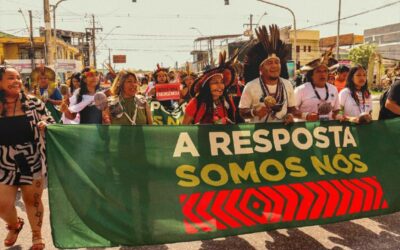
“Nothing was given”: Indigenous mobilization assesses COP30 and projects decisive agenda for 2026
APIB’s assessment highlights historical achievements, but demands territorial ambition and binding mechanisms for the climate future.
read more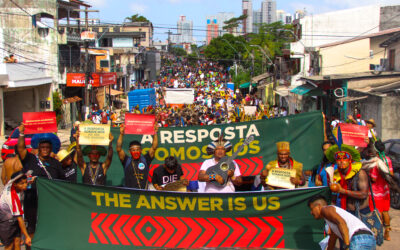
COP30 Assessment by the Articulation of Indigenous Peoples of Brazil (APIB)
IndexIntroduction: The Indigenous COP APIB highlights on COP30 Indigenous Participation at COP30EventsMarches and DemonstrationsPeople's SummitAchievements of the indigenous movement at COP30Progress in Demarcations and Land Protection at COP30COP30 Official...
read moreLearn more about the campaign “The Answer Is Us” → https://theanswerisus.org/
Follow APIB → https://www.instagram.com/apiboficial/
Support APIB → https://apiboficial.org/apoie/
Acompanhe
ADVOCACIA INDÍGENA
MOBILIZAÇãO INDÍGENA