22/Feb/2022
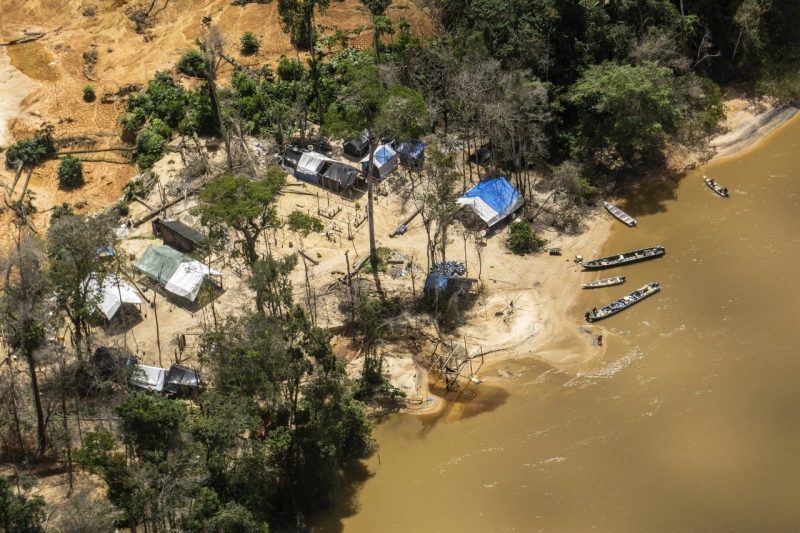
Brasília, February 22, 2022 – Today the Association of Indigenous Peoples of Brazil (APIB), alongside environmental and human rights organization Amazon Watch, launched Complicity in Destruction IV: How mining companies and international investors drive Indigenous rights violations and threaten the future of the Amazon. This research is the first compilation of case studies exposing International actors’ risks of potentially financing illegal mining interests on Indigenous Lands – such as Xikrin do Cateté, Waimiri Atroari, and Sawré Muybu – in the Brazilian Amazon. U.S.-based corporations remain some of the main financiers complicit in this destruction. Together, Capital Group, BlackRock, and Vanguard invested US$ 14.8 billion dollars in the nine companies investigated due to their research applications overlapping Indigenous lands, and track record of rights violations.
“While we struggle to guarantee our right to life, both in our territories and around the world, the Brazilian government and mining companies are trying to advance a ‘project of death.’ We cannot go on living side by side with activities that force Indigenous peoples to mourn the daily murder of our relatives, or to witness the destruction of biomes which we guard, in order to give way to projects that generate no real development, but only destruction and profits for a handful of individuals,” says Sonia Guajajara, of APIB’s executive coordination.
Complicity in Destruction IV reveals that over the last five years, Vale, Anglo American, Belo Sun, Potássio do Brasil, Mineração Taboca and Mamoré Mineração e Metalurgia (both from Grupo Minsur), Glencore, AngloGold Ashanti and Rio Tinto received a total of US$ 54.1 billion in financing from U.S., Brazilian and international investors. The companies profiled share a history of human and environmental rights violations and a long-lasting interest in expanding their operations into Indigenous territories – where mining is currently illegal.
“There must be a general understanding that these areas are not available for mineral exploration, nor should they be, both because there must be respect for our constitutional right to self-determination as Indigenous peoples over our territories, and because of our lands’ importance in combating climate change and guaranteeing life on the planet. The same goes for traditional territories and other areas of preservation. This understanding must come from the Brazilian government, but also from the companies – which are fully capable of proactively knowing in which areas they are filing requests – and from the financial corporations that finance them,” adds Dinaman Tuxá, from APIB’s executive coordination.
Brazilian institutions also hold a substantial share in the financing of large mining: PREVI (Banco do Brasil’s Employee Pension Fund) holds the highest investments in these mining companies, with more than US$ 7.4 billion, followed by the private bank Bradesco, with almost 4.4 billion dollars, Caixa Econômica Federal, with US$ 786 million. International private banks also stand out for their investments in these companies, including Crédit Agricole (France), Bank of America and Citigroup (U.S.), Commerzbank (Germany), and SMBC Group (Japan). All of these financial actors are complicit in mining-driven destruction.
“The COVID-19 pandemic, instead of bringing extractive industries to a standstill, actually drove the mining sector to break profit records over the last two years. These banks and asset managers still believe that investing in mining is ‘good’ for business, ignoring the extensive history of violations and impacts caused by this industry. Although many financiers were featured in previous editions of the report, this new edition demonstrates the urgency with which they need to commit to actual change in order to stop mining’s destructive trail. Their risk and exposure are only growing,” says Rosana Miranda, Campaign Advisor of Amazon Watch.
The company that received the most investments and loans in this period was Vale, with US$ 35.8 billion, showing that not even the successive disasters in the towns of Mariana and Brumadinho reduced investors’ appetite for the mining company. The data, obtained with the support of the Dutch institution Profundo Research and Advice, also show Canada’s interest in financing mining in Brazil. The Royal Bank of Canada, the country’s largest private bank, poured US$ 512 million into mining companies, and is the main institutional investor of the Volta Grande gold mining project, by Belo Sun Mining Corp, which is considered both socially and ecologically unfeasible.
Mining companies hold active applications to explore Indigenous lands
Complicity in Destruction IV reveals that, despite recent statements by big mining companies claiming they would abandon their interests in Indigenous territories in Brazil, thousands of mining applications overlapping these areas are still active in the National Mining Agency’s (ANM) database. Opening up Indigenous lands to mining and prospecting remains at the center of Bolsonaro’s agenda. With the advancement of federal policies such as Bill 191/2020 and Bill 490/2007 in Congress, these applications serve to grant mining companies priority to explore these territories if the bills succeed.
“The environmental damages and threats against the lives of forest peoples by mining activities are brutal and have only worsened under Bolsonaro’s administration. Last year, mining-related deforestation in the Amazon increased by 62% compared to 2018 – the year he was elected. We are aware that the approval of Bill 191 could cause the loss of 16 million hectares of the Amazonian rainforest. With the rainforest at the tipping point of ecological collapse, we need to involve all the actors behind this industry. Governments, companies, and investors must all be held to account and stop this destruction. If companies fail to act, investors must divest,” says Ana Paula Vargas, Brazil Program Director of Amazon Watch.
Following the release of Complicity in Destruction III, APIB and Amazon Watch began mapping the interests of large mining companies overlapping Indigenous lands in 2020. Despite statements by giants such as Vale and Anglo American, claiming they would withdraw their applications for research and mineral exploration in these territories, our research shows that many applications remain active in ANM’s system—in some cases, there was even an increase in the number of requests. Additionally, some applications were resubmitted so that exploration areas remained directly adjacent to Indigenous lands, still causing enormous impact.
The report focuses on the mining interests in Indigenous lands from nine companies: Vale, Anglo American, Belo Sun, Potássio do Brasil, Mineração Taboca/Mamoré Mineração e Metalurgia (both from Grupo Minsur), Glencore, AngloGold Ashanti and Rio Tinto. Together, as of November 2021, they had a total of 225 active mining applications overlapping 34 Indigenous Lands — an area that corresponds to 5,700 square kilometers or more than three times the city of London.
The Indigenous lands that are most affected by these applications are Xikrin do Cateté (PA), Waimiri Atroari (AM), and Sawré Muybu (PA). The bulk of applications are concentrated in the Brazilian state of Pará, which increased twofold between July and November 2021. The data was obtained through a partnership with the Mined Amazon project, from the InfoAmazonia portal, which resulted in an interactive dashboard — launched in tandem with the report — allowing real-time searches into the ANM database.
Complicity in Destruction IV also details the impacts and rights violations carried out by the mining companies Vale, Anglo American, Belo Sun, Potássio do Brasil, and Mineração Taboca in five case studies. With the support of the Mining Observatory, the history of these conflicts and their current developments were outlined, ranging from the invasion of traditional territories, contamination by heavy metals, and disregard for the right to Free, Prior, Informed consultation and Consent. Through testimonies from the affected communities, which challenge the companies’ official statements about their initiatives, the report shows how the presence and activities of these corporations forever alter the lives of these peoples and communities. Mining in the Amazon, specifically within Indigenous communities, can also destroy ecosystems and contribute to climate change.
To access the full report, videos, and Mined Amazon’s dashboard, visit: https://complicityindestruction.org/

02/Nov/2021
The Global Alliance of Territorial Communities issues a statement calling for a stronger commitment to land tenure as a key climate solution .
Declaration issued by: the Coordinator of Indigenous Organizations of the Amazon River Basin (COICA) and its member organizations from the nine countries of the Amazon basin; the Mesoamerican Alliance of Peoples and Forests (AMPB) and its member organizations from six Mesoamerican countries; the Articulation of Indigenous Peoples of Brazil (APIB); the Network of Indigenous Peoples and Local Communities for the Sustainable Management of Forest Ecosystems (REPALEF) in the Democratic Republic of the Congo; and the Alliance of Indigenous Peoples of the Archipelago (AMAN), which represents 17 million Indigenous Peoples throughout Indonesi
As an organization that represents Indigenous Peoples and local communities in 24 tropical forest countries, the pledge made at this World Leaders Summit to allocate $19.2 billion to support the recognition of land rights for Indigenous peoples and local communities is good news–and we are pleased by it. In making this commitment, major public and private funders acknowledge the critical role that we play in the fight against climate change and underscore the urgent priority that should be securing tenure over our lands.
However, we cannot receive this news with enthusiasm because we were not consulted in the design of this pledge. We suspect that many of these funds will be distributed through existing climate finance mechanisms, which have demonstrated great limitations in reaching our territories and supporting our initiatives. Furthermore, millions of dollars have already been invested to protect forests and halt deforestation, but have yielded minimal results. This is because governments are not present in these territories, which limits their capacity to implement long-term policies that protect natural resources.
Of the total funding committed to reduce deforestation, only a small fraction is likely to reach Indigenous Peoples organizations and local communities, as most of the funding flows through large intermediaries with excessive bureaucracy. Our suspicions are confirmed by the fact that practically none of these announcements have been previously consulted with us or our member organizations.
Nevertheless, we also have good news to contribute. Given that public and private donors, as well as philanthropies, have difficulty delivering funds at the community level, we have developed a series of recommendations to facilitate this process. These recommendations make up a new vision, the Shandia Vision: a financing ecosystem that will finally allow financial support to reach our territories.
As the Global Alliance of Territorial Communities, we commit to holding governments and investors accountable for the financial promises they made today, within the framework of our Shandia Vision, and we invite international cooperation to build a new mechanism for delivering climate finance. One that can truly reach the territories where the preservation of biodiversity and carbon stock is at stake.
“We protect most of the world’s remaining biodiversity, yet we receive less than one percent of international donor funding,” said Joseph Itongwa Mukumu, an Indigenous Walikale from the Democratic Republic of Congo who serves as coordinator for the Network of Indigenous Peoples and Local Communities for the Sustainable Management of Forest Ecosystems (REPALEF). “If it is serious about ensuring that the forests remain standing, the global community must do more to recognize the rights of Indigenous peoples and to support our traditional governance structures.”
“We propose a new way of investing resources directly into our communities, who are on the frontlines of climate change and risk our lives to protect nature. Transforming the way climate finance is delivered locally would ensure a greater impact for the good of all humanity,” said Tuntiak Katan, an indigenous leader from Ecuador, and head of the Global Alliance.
Forests managed by Indigenous peoples and local communities have lower deforestation rates than similar lands managed by others. Between 2000 and 2012, for example, the average annual deforestation rates in our forests in Bolivia, Brazil, and Colombia were two to three times lower than those not managed by Indigenous peoples. But those gains come only when our communities have secure rights over their land, which is why funding such initiatives must be of paramount importance.
In addition to the recognition and protection of our communal land rights and customary tenure systems, we demand compensation for the range of ecosystem services—including protection from emerging pandemics—generated from our lands. We demand that investment decisions be determined from within our communities and that our elected leaders and traditional ways of life be respected in all decision-making arenas. And we request direct financing to support our efforts to sustainably manage our land and resources, with tools for monitoring and protecting it from intruders such as agribusiness and illegal miners and loggers.
“The commitment announced today to halt forest loss and protect Indigenous Peoples’ rights is long overdue,” said Mina Setra, an indigenous leader from Indonesia, and the Deputy Secretary General of the Indigenous People’s Alliance of the Archipelago (AMAN). “We applaud the governments and donors involved for taking this step to protect our rights and the global climate. However, this pledge must not replace the fundamental actions they must take to stop their companies’ from bulldozing our ancestral forests. To fulfill their mission and avoid a climate catastrophe, they must stop all deforestation on the lands of Indigenous Peoples and Local communities and work with us to protect the world’s last remaining tropical forests.”
29/Oct/2021
Indigenous movement mobilized the largest delegation of Brazilian leaders in the history of the climate conference to put forward the demarcation of indigenous lands as a solution
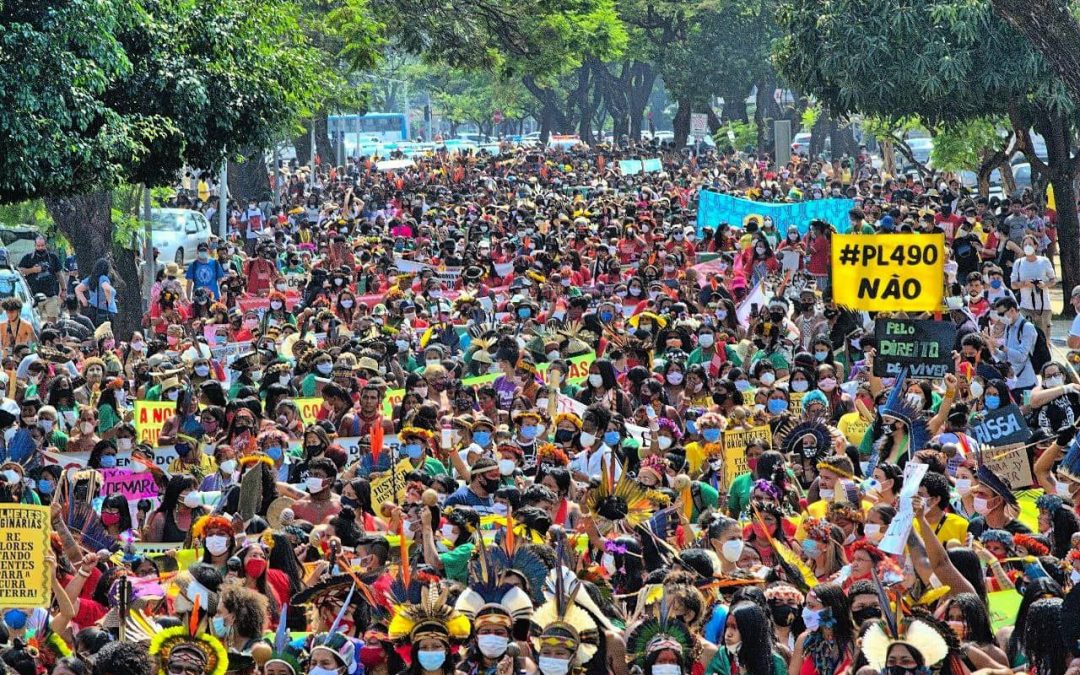
The Articulation of the Indigenous Peoples of Brazil (Apib), together with all its grassroots organizations, mobilized the largest delegation of Brazilian indigenous leaders in the history of the Climate Conference (COP26) to discuss solutions to the climate crisis. More than 40 representatives of the Indigenous Peoples will be in Glasgow, Scotland, between October 31st and November 12th with the proposal to occupy the Conference and alert the world about the need to demarcate the Indigenous Lands and protect the Indigenous Peoples for the future of the planet.
“We stand against false solutions based on technological innovations designed from the same developmental and productivist logic that causes climate change. We criticize solutions that do not recognize indigenous peoples and local communities as central to the defence of forests, the reduction of deforestation and fires, and as essential to ensure that we reach the stated goal of keeping global warming below 1.5 degrees Celsius.,” says an excerpt from Apib’s message to world leaders, businessmen and civil society organizations attending COP26.
The Brazilian indigenous delegation at the conference will denounce the ongoing indigenous genocide and ecocide that is underway in Brazil, aggravated by the Covid-19 pandemic and the Federal Government’s death project. On the international day of indigenous peoples, August 9, Apib filed an Unprecedented denounce at the International Criminal Court (ICC) to denounce the Bolsonaro government for Genocide.
“We have shaped and protected our biomes at the price of millions of our relatives. The genocide of the original people, the persecution of the defenders of territories and the illegal capture of our lands, is the largest and most widespread crime that humanity has produced throughout its history. This is a continuous and present crime, which we denounce in all the instances that we occupy”, reinforces the delegation in its message.
According to the delegation’s organization, this is the largest delegation of Brazilian indigenous leaders in the history of the COP. Apib has participated in the conference since 2014, and had mobilized, in 2019, a group of 18 people for the last COP, which was until then the largest participation of leaders in the meeting. In this context of the Covid-19 pandemic, which affected billions of people, indigenous people reinforce the need to respect the biodiversity present in indigenous territories.
For the indigenous delegation, the current policy of the Federal Government is harmful to the environment, the climate and traditional communities. Apib and its indigenous organizations have constantly denounced the invasions of territories, the contamination of rivers and springs by pesticides and mercury, the rampant deforestation of the Amazon forest, the Cerrado, and the Pantanal wetlands. According to the organization, despite this scenario, economic funds continue to financially support the unbridled greed that destroys the planet.
Even though they are responsible for protecting the largest part of the global forest heritage and, consequently, the capacity to store more than 293 gigatonnes of carbon, a third of indigenous and community lands in 64 countries are under threat due to the lack of land tenure rights.
Brazil, which originally was all Indigenous Land, today reserves only 13.8% of the national territory for its original people. And this portion of the territory has been the most preserved during the past 35 years, representing less than 1% of deforestation in Brazil in the period, according to data from Mapbiomas. This percentage does not mean the full extent of forests protected by indigenous peoples and, according to Apib, in addition to the halt in the demarcation of Indigenous Lands, traditional territories already demarcated are under strong legislative threat, in an unconstitutional attempt to deny the traditional presence of indigenous peoples in the country, and the occupation of their lands long before the formation of the Brazilian state.
“We are going to Glasgow to once again alert the world, and on this occasion with even more gravity: humanity is leading the destiny of all of us to chaos and death! Our Mother Earth is exhausted. The future of the planet and the species that inhabit it depend on our global capacity for cooperation to defend and strengthen indigenous peoples and local communities, to guarantee the security of traditional territories in the face of predatory economic interests, and to create and promote effective climate solutions based on nature and the communities that protect it,” reinforces the delegation.
Messages
Read Apib’s message to world leaders,policy makers, business leaders and civil society organizations gathered at COP26 here.
Read the declaration of the Brazilian indigenous population against the climate crisis (specifically of the Amazon) prepared by the Coordination of Indigenous Organizations of the Brazilian Amazon here
Service
What: Indigenous people from all regions of Brazil mobilized the largest delegation in the history of the Climate Conference.
When: October 31st – November 12th
Where: Glasgow, Scotland
Press contact:
Caio Mota (Apib): +55 65 99686-6289
Hony Sobrinho (Apib): +55 61 8210-1165
Paulo Martins (Apib): +55 11 95658-0753
29/Oct/2021
We, Indigenous Peoples of the Brazilian Amazon, have long observed climate change and its effects due to our relationship with the Mother Earth. From her, we receive all our sustenance needs in addition to the explanations for the phenomena that affects the lives of all living and cosmological beings.
In Brazil, climate crisis is directly related to the greed over Indigenous lands and the natural resources therein, coupled with the ongoing regression and rollback of Indigenous and environmental safeguards and rights. It is essential to think seriously about the need to respect the socio-biodiversity present in our territories, especially at this time that we are living in, in which a virus stopped the world and affected the routines of billions of people from all social classes and different cultures. However, the current government in Brazil is acting in lethal ways with anti-environment, anti-climate, and anti-Indigenous policies. Our territories, which belong to us by our Constitutional right, are being invaded by illegal miners and loggers; villages are surrounded by large-scale cattle and soybean farms; rivers are being contaminated with pesticides and mercury; and the Amazon rainforest is burning to ashes. Yet, governments and funds that operate internationally continue to finance this unbridled greed, this economy of destruction that kills and destroys lives and the planet.
Now more than ever, everyone needs to hear our call, that we Indigenous Peoples have been warning for centuries based on our traditional knowledge that guides our way of seeing and understanding the world. It is in this context that we once again call attention to the need to construct a climate justice that is inclusive and participatory with respect to our cosmologies, our safeguards, and our territories. It is necessary to go beyond the targets established in international agreements and begin to consider the vital role that we play in this process. All this in consideration of social and environmental responsibility.
We have now reached the tipping point. The recent report released by the Intergovernmental Panel on Climate Change, titled “Climate Change 2021: the Physical Science Basis,” clearly demonstrates that man-made changes to the climate are irrefutable, irreversible, and will worsen in the coming years and decades if we do not have practical actions to change the narrative of the climatic, environmental, and societal crisis. Likewise, even if we zeroed greenhouse gas emissions, we would already have had a significant increase in global temperatures with catastrophic effects.
There is no other way forward but to recognize, strengthen, and promote the very important role played by us, Indigenous Peoples, within our territories. For us, talking about climate justice is precisely thinking about the fate of the present and future generations, as well as those who have chosen different forms of social structures like the Indigenous Peoples in isolation or recent contact who live in the Amazon. This is related to the need of respecting diversity. Indigenous cosmology makes us understand the signs of Mother Earth, imposing the duty to recognize ecocide. The rivers, lakes, animals, forests, and all cosmological beings that live within are subjects of rights just like us human beings, and their rights must be respected. Therefore, when talking about climate crisis, it requires recognizing the important role of Indigenous lands, and our own, who give our lives to protect the forests and its biodiversity, in balancing the climate and benefiting all Humanity.
Yet, there exists a practical solution that we Indigenous Peoples have been pointing out. That is, demarcating our territories, shifting the production system, planting more trees, ending reliance on fossil fuels, and reducing the pressure on the Earth’s natural resources. This must be a commitment from everyone, including governments, the private sector, and individual people.
Protected territories and respected rights are the solution. We cannot let ourselves be seduced by the idea of carbon markets, false solutions based only on nature and financing mechanisms that is not consistent with our reality. Rather, we offer alternatives based on our traditional knowledge, which can be associated with technological innovations. For example, agricultural practices must be linked to food security. Therefore, we call attention to the joint responsibility of all stakeholders involved. Corporations and governments are responsible for the destruction in the Brazilian Amazon; however, criticism alone is not enough. Now more than ever, much more is needed to adopt measures to safeguard ecological interests.
It is urgent and essential to strengthen Indigenous funds and financing mechanisms that correspond to our reality,as the Brazilian Amazon Indigenous Fund – Podaali. Such resources should promote the implementation of Indigenous Peoples’ life plans in addition to socio-environmental policies. Nonetheless, none of these efforts will have an effect until all Indigenous lands are demarcated, 80% of the Amazon biome is protected, and all stakeholders have committed to ambitious and achievable goals. In this way, it becomes clear that it is necessary to change the entire current political and economic system.
The time has come for the Indigenous Peoples of the Brazilian Amazon, through the Coordination of the Indigenous Organizations of the Brazilian Amazon (COIAB) – which is the largest Indigenous organization in Brazil, representing approximately 480,000 Indigenous Peoples from 178 different groups and covering 23% of the Amazon region – to mobilize the world to ally with Indigenous Peoples in defense of life on Earth as we know it.
The struggle of Indigenous Peoples is a global one!
Brazilian Amazon, October 15, 2021
29/Oct/2021
We are a Brazilian Indigenous delegation heading to Glasgow, Scotland, as representatives of the yearnings and bearers of urgent messages from more than 305 Indigenous Peoples of Brazil.
We are men and women, descendants of millennial generations of guardians of the biomes of South America, and we are united with the original peoples from every corner of our Mother Earth.
On all continents, native peoples fight to protect their lands and guarantee the right to live to all species. Our struggle is for our lives and our territories, for the defence of the last ancestral lands and to confront the climate crisis on our planet. Our struggle is for the healing of the Earth. Therefore, we reiterate the urgency of the demarcation and land tenure rights of our territories.
Indigenous Land is a guarantee of the future for all humanity. Our relationship with territory is not one of ownership, exploitation, expropriation or appropriation, but one of respect and management of a common good, which serves all humanity as barricades to the extractive dynamics that cause the climate crisis. Until today – based on reports from the UN and several research institutes with the highest reputation that western science can demand – it is we, Indigenous Peoples, who are the most responsible for the preservation of the biomes of the planet.
As we leave our villages and cross the Atlantic Ocean to the most important climate convention that global governance has instituted, we carry in our bags our traditional knowledge and the authority to affirm that our territories are oases of biodiversity and models of climate solution. Our culture and our knowledge are originally environmentalist, even before the term was invented.
Many of those who listen to us today are unaware of all the effort we put into this mission. We have shaped and protected our biomes at the price of the blood of millions of our relatives. The genocide of the native peoples, the persecution of the defenders of our territories and the illegal capture of our lands, is the greatest and most widespread crime that humanity has produced throughout its history. This is a continuing and present crime, which we denounce in all the instances we occupy.
It is fundamental that the world understands that there is no solution for the healing of Mother Earth that does not have its feet on the ground. Connecting with the earth, feeling its needs, understanding its cycles and its imbalances is fundamental to reverse the damage caused in recent centuries by the thirst for an irresponsible, unequal and ecocidal accumulation and disposal behavior.
What we feel in our villages, territories protected at such cost, are the devastating symptoms of the climate apocalypse. The indigenous genocide and the continuous expropriation of our territories by legislative onslaughts and predatory interests is a clear sign that our lands are the last Reserves of the Future. The massacre of indigenous peoples is an omen of the irreversible devastation that is claiming victims in forests, fields, savannahs, and all biomes throughout the world. If left unchecked, it will bring all living beings to a tragic, painful and unjust end.
To the authorities and experts meeting now in Glasgow, we ask them to take real action for the protection of our territories and to work tirelessly for a fairer and less polluting production system for all societies.
We are going to Glasgow to warn the world once again, and on this occasion with even more gravity: humanity is leading the destiny of us all to chaos and death! Our Mother Earth is exhausted.
The future of the planet and the species that inhabit it depend on our global capacity to cooperate to defend and strengthen indigenous peoples and local communities, to ensure the security of traditional territories in the face of predatory economic interests, and to create and promote effective climate solutions based on nature and the communities that protect it.
Therefore, we stand against false solutions based on technological innovations designed from the same developmental and productivist logic that causes climate change. We criticize solutions that do not recognize indigenous peoples and local communities as central to the defence of forests, the reduction of deforestation and fires, and as essential to ensure that we reach the stated goal of keeping global warming below 1.5 degrees Celsius.
We hope that this message will reach global leaders, businessmen and civil society organizations present at COP26, vibrate in their hearts, and reforest their minds!
LAND BACK!
16/Oct/2021
Dear,
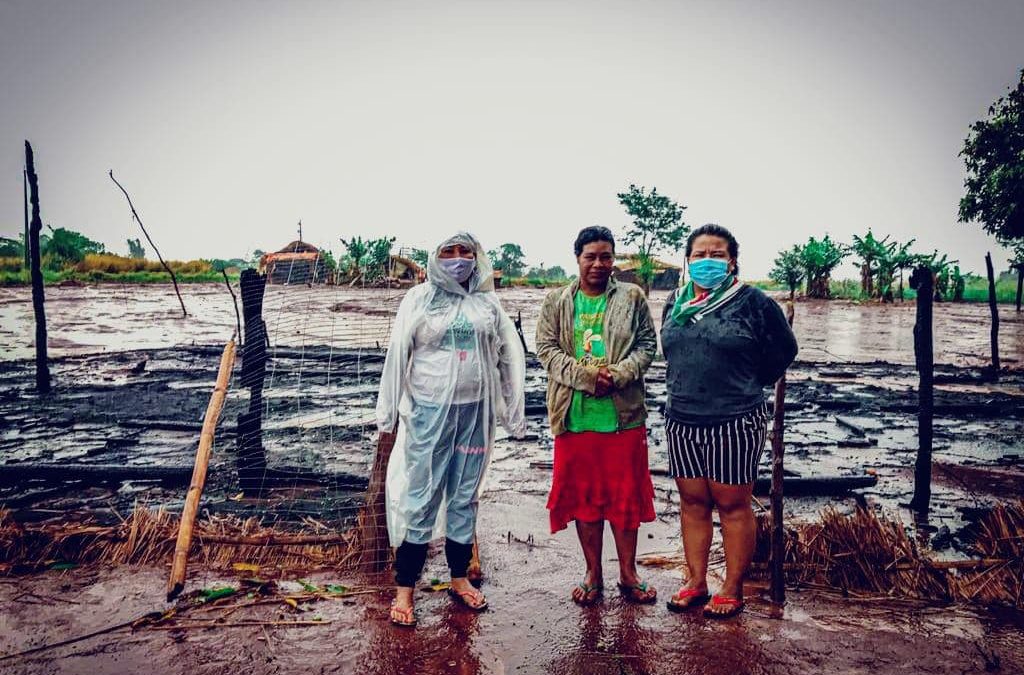
A week has passed since the arson of Ogusu Apykay in Amambai/MS, the traditional space that Kunangue Aty Guasu helped to build. Violence continues to rise in the Kaiowá and Guarani territories against women, girls, young people and Nhandesys, such as: harassment, physical and psychological violence and rape. There are many Raissas begging for help (for those who didn’t follow, Raissa, the 11-year-old Kaiowá girl, who was raped and murdered by five men and thrown from a height of 20 meters).
Kunangue Aty Guasu publicly demands action for so many crimes committed in Kaiowá and Guarani territories against our bodies. We call on civil society, state agents, social movements, indigenous leaders, indigenous organizations and heads of churches, to together build necessary measures for prevention, security and referrals of crimes committed in territories related to religious intolerance, religious racism, etc, which it is violating our traditional spaces, ways of organizing, being and existing.
[Encaminhado de Caio Mota]
Our cry for help runs through each letter of this document, sent here by the organization of women, elderly, youth, girls and Nhandesys of Kunangue Aty Guasu – Great Assembly of Kaiowa and Guarani/MS Women, and we ask that you send us confirmation of receipt of this email, and share with their networks.
How many traditional houses have already been burned without any investigation of the crime and how many prayer houses will still be set on fire so that something can be taken? How many bodies will still have to be raped for action to be taken? Until when?
Thursday, October 14, 2021, Kunangue Aty Guasu will launch the campaign via virtual kitty, on our platform kunangue.com, to cover the costs of securing traditional spaces and reforesting areas around prayer houses. With these resources collected, it will be possible to purchase security cameras, install alarms, solar panel, power wiring, wifi network, maintenance of the monthly security cost of OGUSU – CASAS DE REZA – CASAS DE CURA – TRADITIONAL SPACES KAIOWÁ and GUARANI. In November/2021, Kunangue Aty Guasu will resume the construction of four more traditional spaces in Kaiowa and Guarani territories, including: Limão Verde/Amambai-MS, Nhanderu Marangatu/Antonio João/MS, Laranjeira Nhanderu I/Rio Brilhante/MS and Guyra Kamby’i / Douradina/MS.
The collective support of everyone is fundamental, both for the security, construction and maintenance of traditional spaces and also the security of Nhandesys and Nhanderus in times of genocide and epistemicide in our history. Vivas we want to stay, and we will always fight. For as long as there is the sound of mbaraka and takuapu, there will be a fight.
This fight is for all nxs! Come with us!
Yours sincerely,
Advice of the kunangue Aty Guasu
Read the full story: Considerations_from_the_Kuñangue_Aty_Guasu_against_the_patriarchal
09/Sep/2021
Organização da II Marcha Nacional das Mulheres Indígenas convoca imprensa para pronunciamento oficial da mobilização, em Brasília, hoje (9) às 17h
Por Assessoria de Comunicação da Anmiga
A organização da II Marcha Nacional das Mulheres Indígenas definiu acompanhar o julgamento do marco temporal e realizar, nesta sexta-feira (10), a Marcha que estava prevista para a manhã de hoje, 9 de setembro, na programação do acampamento montado no espaço da Funarte, em Brasília.
As mulheres indígenas estão na linha de frente para enterrar a tese do marco temporal e apoiar as ministras e ministros do Supremo Tribunal Federal (STF) na votação que está em curso desde o dia 26 de agosto e irá definir o futuro de todas as demarcações de terras indígenas no Brasil.
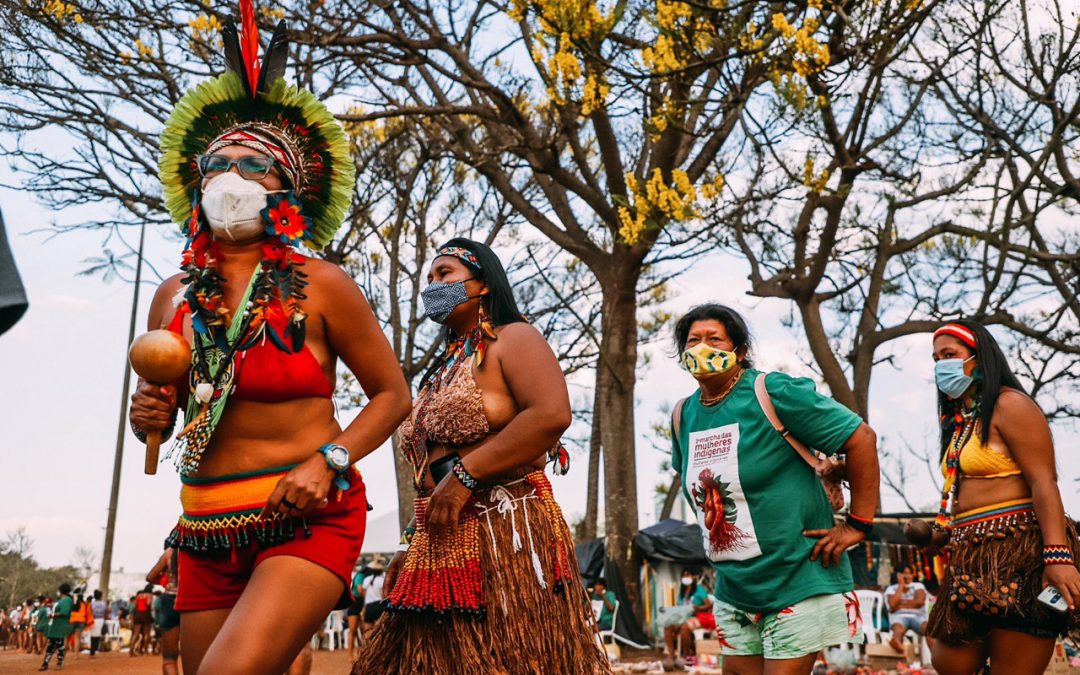
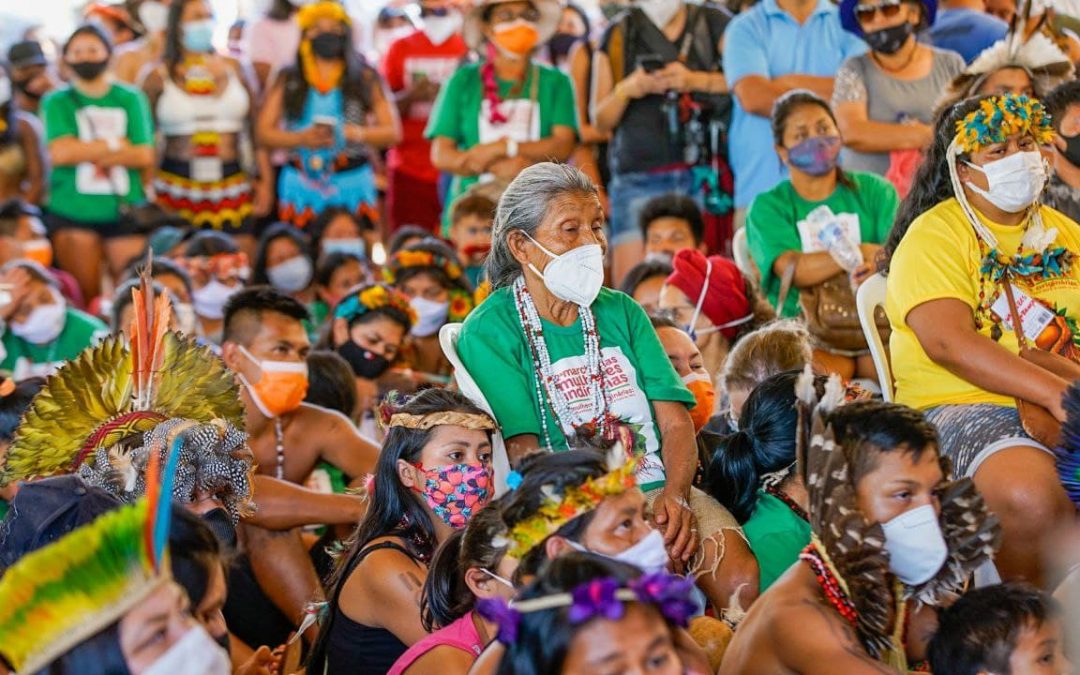
Pela garantia dos territórios, com a força das que as antecederam e na luta para as presentes e futuras gerações, as mais de 5 mil guerreiras da ancestralidade, de 172 povos, seguem acompanhando o julgamento de um telão montado na tenda principal do acampamento da Marcha.
A sessão está prevista para esta quinta-feira, 9, às 14h, com a leitura do voto dos ministros e ministras da Suprema Corte. Iniciando com o voto do ministro Fachin, que agora deve apresentar a parte mais central de sua posição sobre o tema das demarcações de terras indígenas.
Na sequência, votam os outros ministros, do mais novo na casa, ministro Kassio Nunes, até o mais velho, o decano do STF, ministro Gilmar Mendes. Também há a possibilidade de um pedido de vistas por parte de algum ministro, o que resultaria na interrupção e no adiamento da votação.
Julgamento sobre marco temporal
Na pauta de discussões há três semanas, o julgamento tem como um dos principais pontos a discussão sobre a inconstitucionalidade da tese do marco temporal. Na prática, a Corte analisa a reintegração de posse movida pelo governo de Santa Catarina contra o povo Xokleng, referente à Terra Indígena Ibirama-Laklãnõ, onde também vivem os povos Guarani e Kaingang. O caso recebeu, em 2019, status de “repercussão geral”, o que significa que a decisão servirá de diretriz para a gestão federal e todas as instâncias da Justiça no que diz respeito aos procedimentos demarcatórios.
Para as mulheres indígenas guerreiras da ancestralidade, a demarcação dos territórios é uma garantia, também, de segurança para os corpos das mulheres, como sustentou Samara Pataxó, assessora jurídica da Articulação dos Povos Indígenas do Brasil (Apib).
“Esse julgamento, com repercussão geral, que, para além de definir uma tese que irá definir o futuro das demarcações de nossas terras, também decidirá sobre o futuro de nossas vidas e da nossa continuidade existencial enquanto povos originários desse país. Pois não há como falar de terras, construir uma tese sobre terras indígenas, sem considerar a vida dos povos indígenas, e não há como falar de vida, sem a proteção dos nossos territórios.”
Pela garantia de seus direitos originários e contra o marco temporal, defendido por ruralistas e outros setores interessados na exploração das terras indígenas, os povos originários têm se mantido em mobilização permanente para acompanhar o julgamento do STF.
A expectativa é que a Corte rejeite a tese do marco temporal e reafirme o caráter originário dos direitos territoriais dos povos indígenas e a tradicionalidade da ocupação como único critério para as demarcações, conforme previsto na Constituição Federal de 1988. Segundo a tese do indigenato, consagrada na Constituição de 1988 e oposta ao marco temporal, o direito dos povos indígenas à demarcação de suas terras é originário, ou seja, anterior à própria formação do Estado brasileiro, e independe de qualquer marco temporal.
Serviços
O quê: Pronunciamento da II Marcha Nacional das Mulheres Indígenas
Quem: Mulheres indígenas de todos os biomas brasileiros
Organização: Anmiga – Articulação Nacional das Mulheres Indígenas Guerreiras da Ancestralidade
Quando: 9 de setembro, 2021
Horário: 17h, horário de Brasília
Onde: Em Brasília, no acampamento instalado no espaço da Funarte
Programação: https://anmiga.org/marcha-das-mulheres/
09/Sep/2021
Foto: Juliana Pesqueira
A II Marcha das Mulheres Indígenas será realizada nesta sexta-feira (10) e não mais na manhã de hoje, 9 de setembro, como estava prevista na programação da mobilização, em Brasília.
A decisão tem como objetivo garantir a vida das mulheres, anciãs, jovens e crianças presentes, na mobilização que acontece desde o dia 7 de setembro, na capital federal, com a participação de mais de 5 mil pessoas de 172 povos, de todas as regiões do país.
Grupos extremistas, fascistas, armados, muitos identificados com camisetas escrito Agro seguem invadindo a Esplanada dos Ministérios, com olhares coniventes do governo do GDF (Governo do Distrito Federal) e em apoio a Jair Bolsonaro. Em virtude disso, a Esplanada está bloqueada.
A nós interessa saber quem é o agro que financia esses criminosos? Quem são os golpistas que querem a todo custo impedir o Supremo Tribunal Federal de julgar o processo da Terra Indígena Ibirama-Laklãnõ do povo Xokleng, que marcará definitivamente a política de demarcação de terras no Brasil?
Viemos de todo o país realizar nosso encontro de mulheres, em um diálogo sobre as nossas pautas e acompanhar o que pode ser o julgamento mais importante para os direitos indígenas no país em décadas. O Marco temporal é uma aberração jurídica, elaborada por aqueles que financiam essas manifestações antidemocráticas, e que a todo custo, historicamente, tentam calar nossa voz, subjugar nossos corpos, assim como já fizeram no passado.
Todos os olhos do mundo estão voltados hoje para o Brasil, perplexos. A imprensa nacional e internacional está acompanhando a nossa mobilização, repercutindo em todo o mundo a nossa luta e o que pode acontecer.
Jamais aceitaremos que nossas mulheres e povos sejam submetidos novamente a tamanha violência! Esses capítulos são páginas de um passado, que estamos reescrevendo com a nossa luta, a partir do chão dos nossos territórios.
A II Marcha das Mulheres Indígenas sairá amanhã do nosso acampamento, para as ruas, com nossos corpos e nossas vozes ecoantes na luta por justiça, por liberdade e pela demarcação de nossas terras sagradas ancestrais.
Jamais aceitaremos o arbítrio do governo genocida. Cadeia para Bolsonaro! Fora!
Marco Temporal Não
Demarcação Já
Articulação Nacional das Mulheres Indígenas Guerreiras da Ancestralidade – ANMIGA
Articulação Nacional das Mulheres Indígenas Guerreiras da Ancestralidade – ANMIGA
Articulação dos Povos Indígenas do Brasil – APIB
Organizações regionais de base da APIB:
APOINME – Articulação dos Povos Indígenas do Nordeste, Minas Gerais e Espírito Santo
ARPIN SUDESTE – Articulação dos Povos Indígenas do Sudeste
ARPINSUL – Articulação dos Povos Indígenas do Sul
ATY GUASU – Grande Assembléia do povo Guarani
Comissão Guarani Yvyrupa
Conselho do Povo Terena
COIAB – Coordenação das Organizações Indígenas da Amazônia Brasileira
08/Sep/2021
The session has just began and the expectation is that the Court will guarantee the original rights of peoples; in Brasilia and in the territories, the indigenous are following the judgment
By Anmiga’s press office
More than 4,000 ancestral women warriors, gathered in the II National March of Indigenous Women, are mobilized to follow the judgment in the Supreme Court (STF) that will define the future of the demarcation of indigenous lands in Brazil.
Scheduled to start at 2 pm on Wednesday (8), the session of the Supreme Court has been resumed with the reading of the votes of the Justices. The previous session, held last Thursday (2), ended with the manifestation of the Attorney General’s Office (PGR) on the case. The week before, Minister Edson Fachin read the initial report, the parties involved in the process made their oral arguments and the amici curiae – “friends of the court” made their contributions to the understanding of the case.
“Today is a decisive day for the future of the trial, because it enters the stage of the votes of the ministers, starting with the vote of the reporting minister, Edson Fachin, then opening for the other ministers”, explains Samara Pataxó, legal advisor of the Articulação dos Povos Indigenous peoples of Brazil (Apib).
The prime minister to present his vote is the rapporteur of the case. Only then will the other votes be presented, in ascending order of seniority – from the newest to the oldest -, that is, from Minister Nunes Marques to Minister Gilmar Mendes (dean), with the President of the Court, Minister Luiz, voting last Flow
There is no way to predict how the session will take place. There is the possibility of a request for views, which can be made by any of the ministers; if it occurs, the judgment will be suspended and must be re-arranged. “This would be a bad scenario for the indigenous peoples, but there is also the possibility of the ministers asking to anticipate their votes, which would be a good scenario for the judgment to be able to proceed, even if one of the ministers up front asks for a view”, explains Samara.
What is certain is that “indigenous women will be on the front line to bury once and for all the thesis of the milestone thesis, during the II National March of Indigenous Women”, reaffirms the coordination of the National Articulation of Indigenous Women Warriors of Ancestrality (Anmiga ).
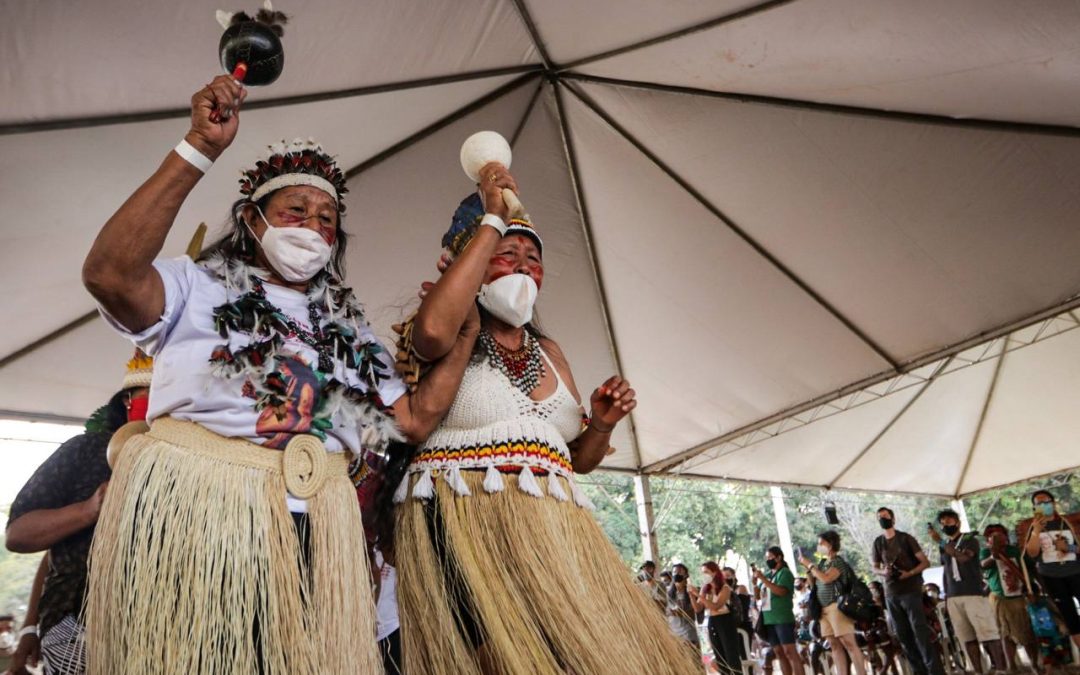
In defense of their original rights, indigenous peoples mobilized to accompany the trial in Brasília and in the territories. In the capital, for reasons of care and to protect the lives of women, children and elderly women, the more than 4,000 women who build the II National March of Indigenous Women will follow the trial on a screen mounted in the main tent of the camp installed in the space. of Funarte. The expectation is that the Court will guarantee the original rights of peoples and refute the thesis of the temporal thesis.
Know the disputed theses
The Supreme Court is analyzing the repossession filed by the IMA – Environment Institute (IMA), of Santa Catarina, against the Xokleng people, referring to the Ibirama-Laklãnõ IT, where the Guarani and Kaingang peoples also live. In 2019, the Court recognized the “general repercussion” of the case, that is, the decision will serve as a guideline for the federal management and all instances of Justice with regard to demarcation procedures.
At the center of the dispute are two theses: on the one hand the thesis of the so-called milestone thesis, defended by ruralists and which restricts indigenous rights, and on the other the defense of the original right and traditionality of indigenous occupation as a criterion for the demarcation of indigenous lands .
According to the restrictive thesis of the milestone thesis, indigenous peoples would only have the right to demarcate the lands that were in their possession on October 5, 1988, the date of promulgation of the Constitution. In addition to bringing the burden of proof of the dispute for their territories to the communities, the thesis ignores and at the same time legitimizes the history of expulsions and violence suffered by indigenous peoples before the date. This thesis is defended by the most backward sectors of agribusiness, as well as other sectors interested in exploring resources in indigenous lands.
Opposed to the milestone thesis is the “theory of the indigenous”, enshrined in the Federal Constitution of 1988. According to it, the indigenous right to land is original, that is, it predates the formation of the Brazilian State itself, and the public power is only responsible for declaring your recognition. Without making no mention about any milestone thesis, the 1988 Constitution establishes the traditionality of indigenous occupation as the only criterion for demarcation. This thesis is defended by indigenous peoples and organizations, indigenists, environmentalists and human rights organizations.
Indigenous peoples claim “our history did not begin in 1988, and our struggles are centuries old.
Permanent mobilization
Between August 22nd and 28th, six thousand indigenous people, from 176 peoples from all regions of the country, were present in Brasília, gathered in the “Luta pela Vida” camp to follow the trial in the Supreme Court and fight in defense of their rights, protesting also against the anti-indigenous agenda of the Bolsonaro government and the National Congress.
In order to continue following the trial, the indigenous people decided to continue their mobilization in Brasília and in the territories. Thus, around 1,200 indigenous leaders, representing their peoples, remained in the capital permanently and now the group joins forces with the II National March of Indigenous Women.
In Brasília or in the territories, “we are seeking to guarantee our territories, those that preceded us, for present and future generations, defending the environment, this common good that guarantees our ways of life as humanity. In addition to being a mere physical resource, it is also home to the spirits of forests, animals and the waters of life as a whole, source of our ancestral knowledge”, reinforces the March coordination.
03/Sep/2021
The event will gather about 4,000 women from 150 peoples, from all regions of the country and will continue the mobilizations of the indigenous movement in defense of their rights in the federal capital
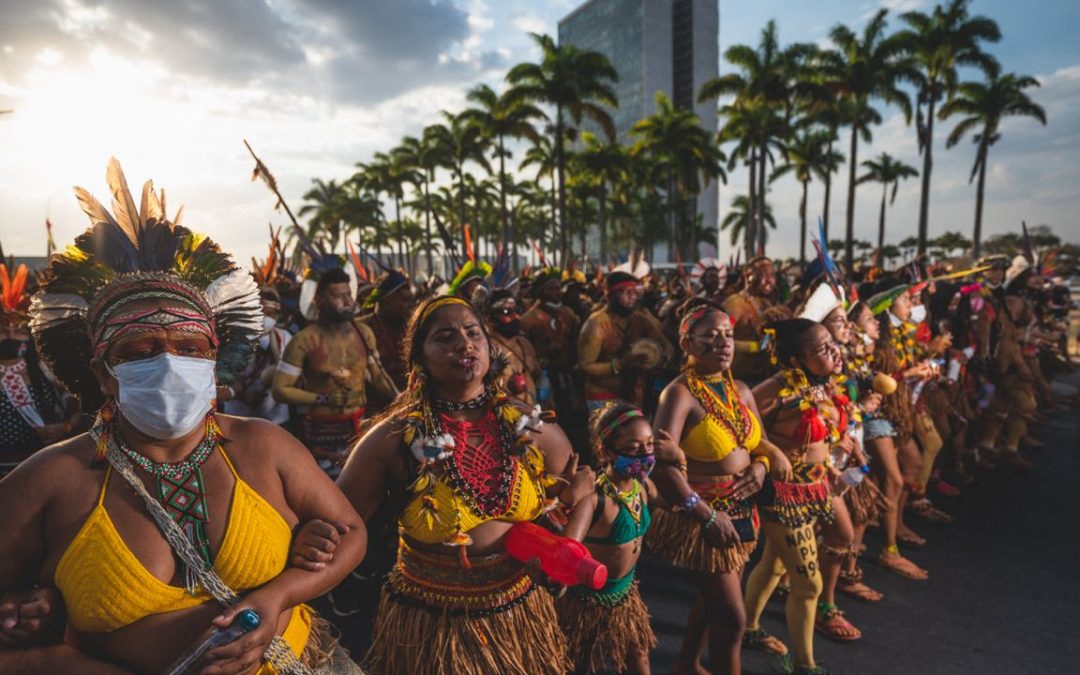
Between the 7th and 11th of September, the National Articulation of Indigenous Women Warriors of Ancestrality (Anmiga) holds the Second National March of Indigenous Women, in Brasília. With the theme “Original women: Reforesting minds for the healing of the Earth’, it is expected the participation of about 4,000 women, from more than 150 peoples, coming from all biomes of Brazil, during the 3 days of activities, which take place in the space of the National Arts Foundation (FUNARTE).
“We are seeking to guarantee our territories, those that preceded us, for present and future generations, defending the environment, this common good that guarantees our ways of life as humanity. In addition to being a mere physical resource, it is also home to the spirits of forests, animals and the waters of life as a whole, source of our ancestral knowledge”, reinforces Anmiga’s statement on the march.
The mobilization was carried out for the first time in 2019, and it took place virtually in 2020 due to the Covid-19 pandemic. The sanitary protocols of the second march reinforce all existing and recommended norms for combating coronaviruses.
According to the organization of the march, the women’s delegations were guided to prioritize the participation of people who had completed their immunization cycle against Covid-19, with at least two doses of the vaccine, or with the unique dose. The use of mask during the activities is mandatory and testing will be carried out upon the arrival of people at the event.
The march health team includes indigenous health professionals in partnership with the Brazilian Association of Collective Health (Abrasco), the Oswaldo Cruz Foundation (Fiocruz), the Indigenous Health Clinic from the University of Brasília (Asi/UNB), the Health Department of the Federal District with the University Hospital of Brasília (HUB).
Permanent Mobilization
“We state that indigenous women will be on the front line to bury once and for all the ‘milestone thesis’, during the 2nd march of indigenous women”, emphasizes the Anmiga coordination.
Since August 22, more than six thousand indigenous people, from 176 peoples, from all regions of the country, were present in Brasília, gathered in the “Luta pela Vida” camp, which is currently the largest mobilization in the history of the indigenous movement. Headed by the Articulação dos Povos Indígenas do Brasil (Apib), in association with all its regional organizations, the indigenous people are following the judgment by the Supreme Court (STF) that will define the future of the demarcation of Indigenous Lands and also protest against the anti-indigenous agenda of Bolsonaro government and within the National Congress.
After the beginning of the trial, on August 26, and the announcement that it would be resumed this Wednesday (1/09), the indigenous people decided to keep the mobilization in Brasília and in the territories. Around 1,200 indigenous leaders, representing their peoples, remained in Brasília, and the “Luta pela Vida” camp was transferred to a new location, Funarte.
The group will continue to follow the trial and join forces with the 2nd March of Indigenous Women in a proposal for permanent mobilization.
Schedule
September 7th will be dedicated to welcoming the delegations in Brasilia, with orientation and testing activities for Covid-19. The National Forum of Indigenous Women starts on Wednesday, the 8th, and the entire mobilization will follow the return of the judgment in the Supreme Court at 2 pm (GMT-3).
On Thursday (9), the March of Indigenous Women will head to the Três Poderes Square, and on the 10th the end of the mobilization activities will count on the launch of the mobilization “Reflorestarmentes”. All activities can be followed on the website: anmiga.org